
Google Ads for contractors in France: cost per client in 2026

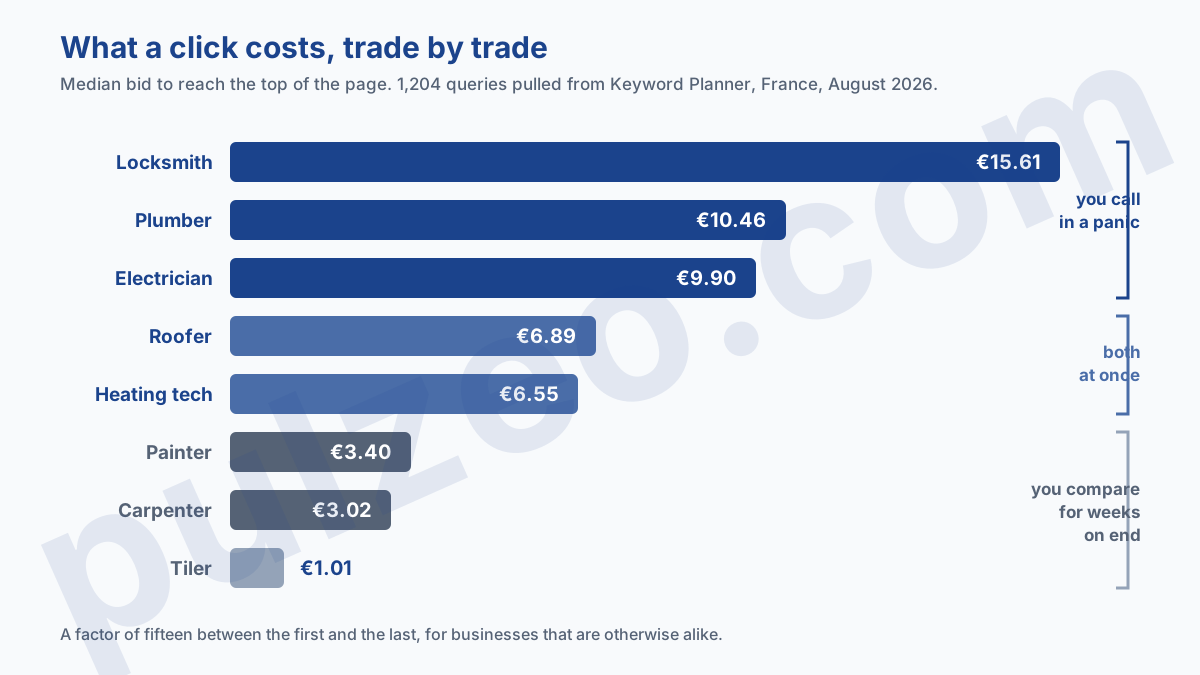
Google Ads for contractors doesn't cost the same from one trade to the next, and the gap is anything but trivial: measured in France, the median bid to reach the top of the page runs from €1.01 for a tiler to €15.61 for a locksmith. That's a factor of fifteen, between businesses that are otherwise alike.
French guides quote "between €3 and €10" without saying where that comes from. The range isn't absurd: five of my eight medians fall inside it. It's just useless, since it flattens the very gap that decides everything. So here are the numbers trade by trade, pulled from French Keyword Planner data, along with what they don't tell you yet: a cheap click doesn't get you a cheap client.
How much a click costs for each trade
I pulled these on August 16, 2026 from Google Ads Keyword Planner, set to France, across 1,204 queries, 809 of which belong to the eight trades in the table. They're estimated top-of-page bids, meaning what you have to offer to show up, not what you'll pay: the price actually charged is usually lower.
| Trade | Queries pulled | Searches / month | Median top of page bid (high range) |
|---|---|---|---|
| Locksmith | 46 | 33,270 | €15.61 |
| Plumber | 91 | 130,010 | €10.46 |
| Electrician | 39 | 17,670 | €9.90 |
| Roofer | 270 | 201,090 | €6.89 |
| Heating technician | 76 | 23,400 | €6.55 |
| Painter | 32 | 15,710 | €3.40 |
| Carpenter | 102 | 190,320 | €3.02 |
| Tiler | 153 | 261,390 | €1.01 |
The plumber breakdown, city by city, where the gap inside that one trade reaches a factor of five, is in what a client costs a plumber. The same spread exists in the other trades: a trade median lumps together very different cities, and your city can land far from it.
Electricians show a different kind of spread: between emergency work at €19.01 and renovation at €4.93, the gap comes not from the city but from the type of job being sold. The details are in what a client costs an electrician.
Why urgency sets the price
Sort that table another way and the pattern jumps out: the expensive trades are the ones you call in a panic, the cheap ones are the ones you plan for. The rule goes beyond the building trades, too: the most extreme case I've measured is the on-call vet, where a Sunday click climbs to €61, four times the locksmith.
A locksmith and a plumber step in when the situation is already a problem. You're locked out, the boiler gave out in February, water is running down the hallway. In that state, nobody asks for three quotes: you call the first credible number and accept the rate.
A tiler or a carpenter, on the other hand, steps into a project. The client compares for weeks, visits showrooms, asks for three quotes, and waits on their renovation grant. So the click is worth much less, because it's much further from a sale. The trade where this quote-shopping dynamic is harshest is still the moving business, where a quote search is worth three times a price search.
The peaks in the data point the same way, with a caveat worth spelling out. The highest is €68.64 on "gas boiler service call", followed by €43.78 on "emergency boiler repair" and €36.64 on "emergency locksmith service" (searches translated from French).
The caveat: they aren't all emergencies. Of the twenty-five most expensive queries, nine aren't, and six come from roofing, like "roof renovation company" at €27.51 or "roof replacement quote" at €26.93. A roofing job runs to several tens of thousands of euros, which is enough to push the bid up without any emergency at all.
What boiler brands reveal
One case deserves a closer look, because it opens up an opportunity few tradespeople take. "Frisquet repair", typed in both word orders (Frisquet is a French boiler brand), adds up to 340 searches a month at a €39 high-range bid, six times the heating technician median.
Someone who types in their boiler's brand has already pinned down the problem and is looking for a specialist in that equipment. It's the most qualified intent in the whole sector, and that's why it costs what it does.
If you're an approved installer for a brand, those searches are worth the bid. If you aren't, they'll cost you a lot for calls you'll end up turning down.
A cheap click doesn't make a cheap client
Here's the calculation I haven't seen anywhere on this topic, and it flips how you read the table.
The price of a click tells you nothing until you've multiplied it by the number of clicks it takes to sign a job. And that number moves exactly opposite to the price: the more expensive the trade's click, the fewer of them you need.
- a locksmith might convert one click in ten, because the caller is in an emergency and won't call anyone else. Ten clicks at €15.61 put the job at around €156;
- a tiler might convert one click in forty, because the visitor asks for three quotes and decides in March. Forty clicks at €1.01 put the job at around €40.
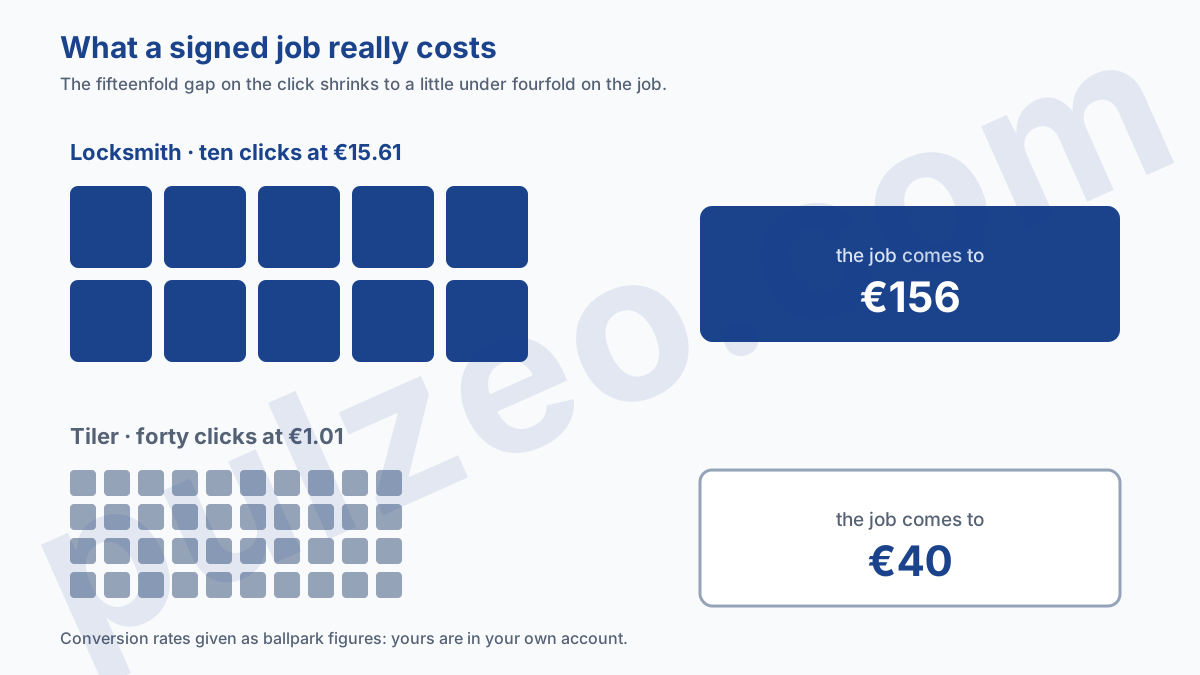
So the fifteenfold gap on the click shrinks to a little under fourfold on the job. The tiler still comes out ahead, but by much less than the click price suggested.
A €1 click paid forty times for a quote that goes to the competitor next door costs more than a €15 click that makes the phone ring.
Those rates of one in ten and one in forty are ballpark figures meant to show the mechanism, not benchmarks. Yours are in your account, and it's precisely the number nobody looks at.
How many clicks does it take to sign a job?
The only way to know is to count, and counting is harder for a tradesperson than for anyone else, because most leads come in by phone.
Without call assets and without call tracking, your account will show zero conversions on campaigns that keep the shop phone ringing all day. It's the first thing to set up, before you even talk budget, and the guide to checking conversion tracking goes through the settings that skew the count.
Once tracking is in place, you have to review it every week, which is exactly the kind of task that gets dropped when you spend your days on job sites. Pulzeo keeps an eye on those numbers for you and flags the campaigns that spend without making the phone ring.
Which keywords should contractors exclude?
The building trades attract a huge volume of searches that will never turn into a job. Three categories to exclude from day one:
- jobs and training: "roofer job openings", "CAP menuiserie" (the French carpentry trade certificate), "tiler salary", which spike every September when the school year starts;
- DIY and material prices: "lay tile yourself", "paint price per square meter", "tutorial", which pull in homeowners who only came for information;
- grants and subsidies: "MaPrimeRenov'" and "prime CEE" (two French renovation incentives), which bring in people after paperwork, not a contractor.
Add the names of the cities you don't serve. The location setting Google recommends by default is called "Presence or interest", and it also reaches people who show interest in an area without being there.
And a resident of your city looking for a roofer for their parents' house three hundred kilometers away will see your ad too, and you'll pay for their click. How exclusions work, and their broad match trap, is covered in the article on negative keywords.
Should you run ads all year round?
No, and it's the most underused lever in these trades. Demand for trade work is seasonal to a degree no other sector matches, and your budget should follow it.
A heating technician sees demand explode in the first cold week of October and collapse in April. A roofer's work follows storms, so it comes in unpredictable bursts on top of a steady fall baseline. Tilers and painters follow renovation projects, which get decided in winter for work in the spring. The locksmith is the only truly stable one, because people get locked out all year long.
Running the same budget all year round means paying full price for clicks in months when nobody's searching, and running short the week everybody calls. I'm not giving you a curve here because I haven't measured it, and made-up seasonality would be worse than none.
You, on the other hand, have that curve. Open your last twelve months of invoices, spot your two peaks, and concentrate your budget there instead of spreading it thin.
For a trade whose curve I have since measured month by month, see what a client costs a landscaper: mowing searches grow eightfold between December and March, and pruning takes over in winter.
What budget should you plan to get started?
Don't start with a budget figure; start with a number of jobs. How many do you need a month, and how many clicks does your trade take to sign one? Multiply, and you've got your budget.
A roofer aiming for three jobs, at thirty clicks per job and €6.89 a click, should plan for around €620 a month. A locksmith aiming for ten service calls, at ten clicks each and €15.61, comes to €1,561. Those amounts are higher than the ranges you read everywhere, and that's exactly why so many contractors' campaigns stop after two months without having proven anything.
One last benchmark the guides leave out: below about thirty conversions a month, your numbers swing on their own from one month to the next. Few tradespeople will reach that volume, and you need to know it before drawing conclusions from one bad month. The reasoning is laid out in the article on the minimum Google Ads budget, and our plans are on the pricing page.
Where to start this week
Find your trade in the table, then ask the only question that matters: does your client call you in an emergency, or pick you after thinking it over? The answer decides everything else, from the price you'll agree to pay to the message in your ad.
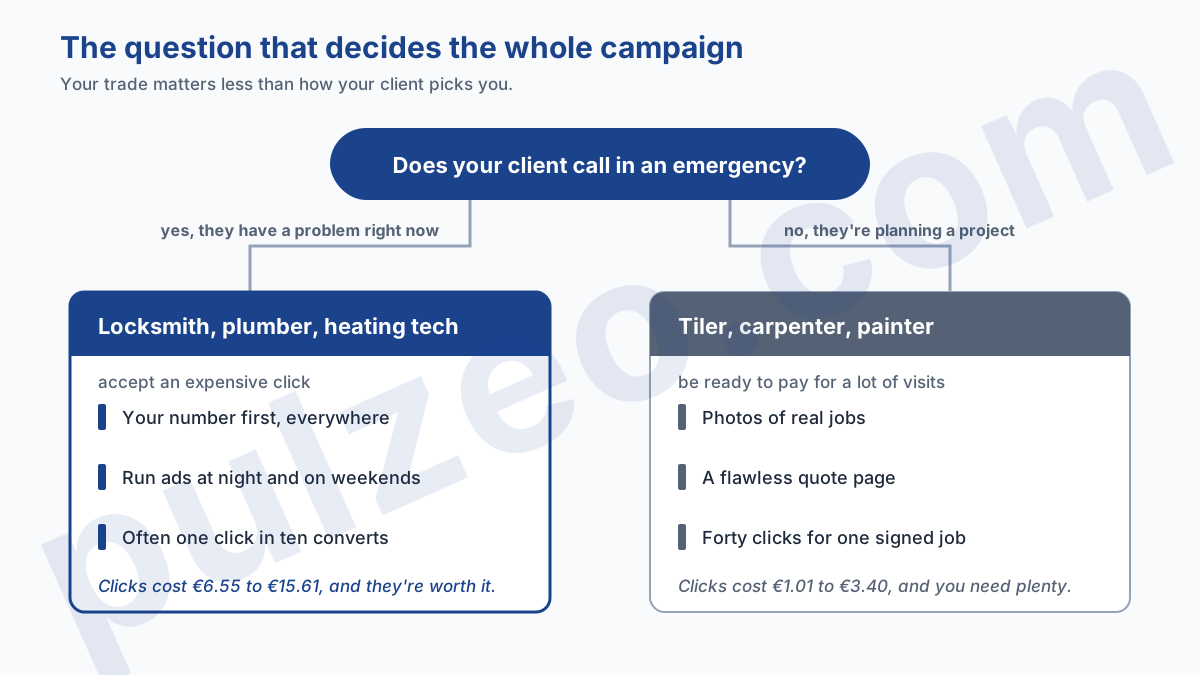
If it's emergencies, put your phone number front and center, run your ads during the hours when people panic, and accept an expensive click. If it's projects, polish your job-site photos and your quote page, because you'll pay for forty visits before one of them converts.
Common questions
How much does a Google Ads click cost for a contractor in France?
It all depends on the trade, and the gap is fifteenfold. Across 1,204 queries I pulled from Keyword Planner for France in August 2026, the median bid to reach the top of the page goes from €1.01 for a tiler to €15.61 for a locksmith. Roofers and heating technicians sit around €7, carpenters and painters around €3.
Why are clicks so expensive in emergency repair?
Because urgency kills comparison shopping. Someone locked out or left without heat calls the first credible number, which makes each click far more likely to turn into a job. Advertisers know it and bid accordingly: the highest bid in the data is €68.64, on "gas boiler service call".
What Google Ads budget should a contractor plan for?
Start from the number of jobs you're aiming for, not from a budget figure. Multiply the number of clicks you need for one job by your trade's click price: a locksmith who turns one click in ten into a job will land it for around €150, a tiler who turns one click in forty for around €40. That calculation is what gives you your budget, not a range you read somewhere else.
Is a €1 click a good deal for a contractor?
Not necessarily. The trades with cheap clicks are the ones where the client compares for weeks and asks for three quotes, so it takes many more clicks to sign a job. The cost per job in those trades often stays below that of emergency repair, but the gap is much smaller than the gap in click price.
