
Google Ads for veterinarians in France: cost per client in 2026

The most expensive click I found while researching Google Ads for veterinarians in France doesn't come from a surgical emergency or a rare specialty. It comes from a search a dog owner types on a Sunday morning, the French query for "vet open Sunday," which reaches €61.14 at the high end of the range in Keyword Planner, location set to France.
Meanwhile, an ordinary vet consultation is billed at €35 to €60 in France. So the click costs more than the visit it brings in. Here's what a client really ends up costing, keyword by keyword, and what the French code of veterinary ethics won't let you write in your ad.
What a click costs when you treat animals
From €3.91 on the generic keyword to €61.14 on the weekend emergency, French searches translated here. Comparing the high end of each range, that's a factor of fifteen within a single profession, the biggest internal gap I've measured.
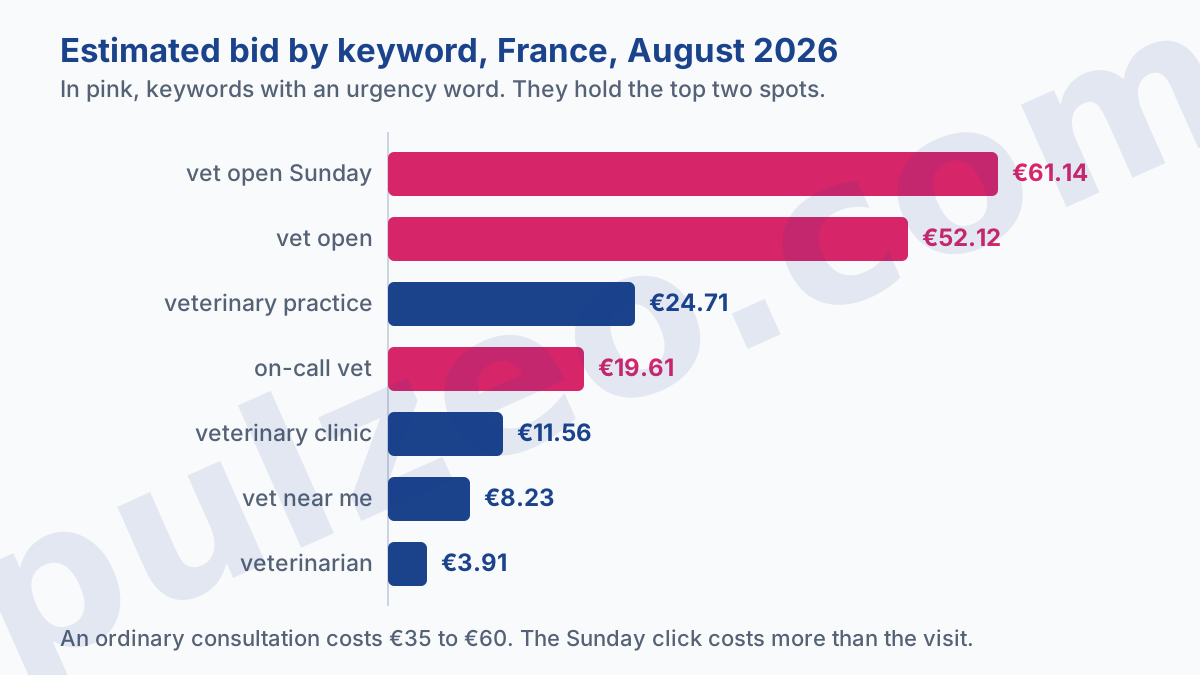
The pattern jumps out at you: the two most expensive clicks contain an urgency word, open and Sunday, and cost more than twice anything else. The query that simply names the profession is the cheapest of all.
A reminder before going further, because these figures get misread half the time. The estimated bid isn't what you'll pay: it's the amount to bid to aim for the top of the page, the Top of page bid (high range) column. Your real cost will come in lower, often much lower, and it will depend on your Quality Score as much as on your budget. I went through this in the article on how to read Keyword Planner volumes.
What these bids do measure reliably is how fierce the fight is. And on weekends, it's brutal.
The contrast with the other health profession in this series is striking: dentists, bound by equally strict ethics rules, pay €1.47 a click. The details are in what a patient costs a dentist.
Why is the Sunday click worth €61?
Three things combine, and none of them has anything to do with the quality of your medicine.
First, almost nobody is open. On a Sunday morning, the clinics that answer within a given radius can be counted on one hand, and they're all fighting over the same handful of searches.
Second, the person searching doesn't shop around. A cat vomiting blood on a Sunday doesn't set off a round of three quotes. The owner calls the first number that picks up and accepts the emergency rate, up to €150 versus €40 on a weekday.
Finally, the market has consolidated. Corporate groups have been buying up clinics for several years and run their client acquisition nationwide, with budgets an independent clinic doesn't have. On after-hours keywords, you're not up against the vet down the street.
The result deserves to be spelled out, and I'm working it out with the discount mentioned above, not on the raw bid. Say your real cost drops to a third of the estimate, around €20 a click: €300 buys you fifteen visits.
Even if one visitor in six calls, which is generous in an emergency, you get two or three contacts in the month. In a niche where that client may never come back.
What a veterinary ad isn't allowed to say
That's the second wall, and it surprises people who are new to the profession. Let's start with the good news: you're perfectly entitled to advertise.
"Any communication addressed to third parties or to fellow veterinarians is free, whatever its medium and form, provided it complies with the provisions regulating the practice of the profession."
That sentence, translated here from the French, comes from Article R242-35 of the French Rural Code, and it settles the question of principle. The same article then sets the conditions: communication has to be "fair, honest and scientifically supported," must not undermine respect for the public or the dignity of the profession, and must not mislead the public, abuse its trust or exploit its credulity.
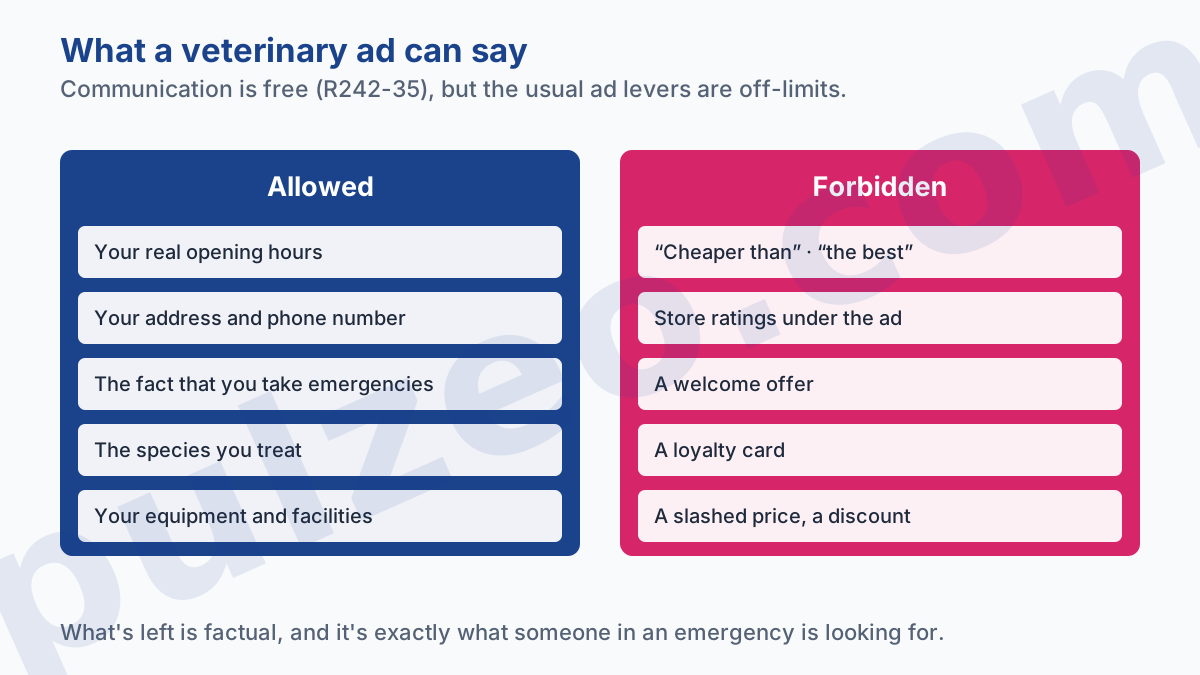
Then come two bans and one obligation, which bear directly on how you write an ad. The two bans apply, the code says, "when the veterinarian refers to professional skills or technical capabilities," which is exactly what an ad does:
- comparative claims, which rules out any "cheaper than," "the best" or "No. 1";
- third-party testimonials, which by definition include store ratings, the stars shown under an ad;
- and the obligation, for any offer that could lead to an extra cost, to come with precise information.
On top of that comes Article R242-33, whose paragraph XVIII, in force since March 2015, reads as follows in translation.
"A veterinarian may not practice the profession as a commercial business, nor put their own interest ahead of that of their clients or of the animals they treat."
The Ordre, the French veterinary board, derives its ban on promotions, commercial discounts, loyalty cards and discount coupons from this sentence.
Take stock. The slashed price, the welcome offer, the comparison with a fellow vet and the five stars under the ad: the four usual levers of a service ad are off-limits to you, all at once.
It's not a dead end, just a different playing field. What you have left is factual, and it happens to be exactly what someone in an emergency is looking for: your real opening hours, your address, your phone number, the fact that you take emergencies, the species you treat, your equipment and facilities. An ad that says "open Sundays from 9 a.m. to 6 p.m., X-rays and surgery on site" compares nothing and makes nothing up.
On store ratings, one clarification, because the text is narrower than it looks: the ban on third-party testimonials sits in the paragraph about the skills the veterinarian claims.
And your Google Business Profile shows reviews without you putting them forward, which isn't the same move as sticking them under a paid ad. That distinction is worth settling with your regional council of the Ordre rather than by guesswork. The rest of the wiring between the profile and the ad account is covered in the guide on linking your Business Profile to Google Ads.
From click to consultation
The bid amount means nothing until you've turned it into a cost per client. Here's the math, with assumptions you'll swap for your own.
What Google Ads decides
Google controls two things: how often your ad shows, and how many people click. With €300 a month and a click around €3 on local keywords, you buy about a hundred visits.
Careful with the volume shown: "vet near me" gets 110,000 searches a month, but that's a national figure, for all of France. Scaled down to your real radius, a few hundred are left, and that's just fine. Broad targeting for a local profession pays for visits you'll never be able to serve.
What happens in the waiting room
The rest is up to you. Out of a hundred visits, expect 5% to get in touch, by phone or by booking online, so five people. Seven appointments out of ten actually kept, a high rate because nobody calls a vet out of curiosity, and you have three to four new clients.
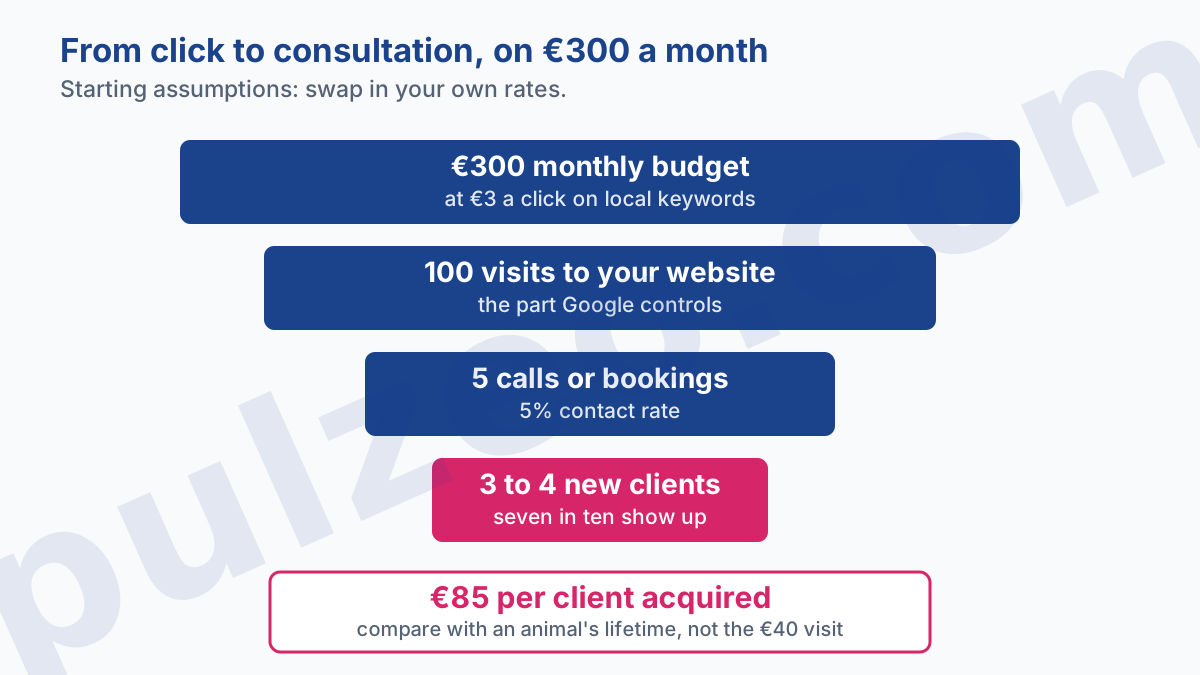
Three and a half clients for €300, so about €85 per client acquired. Next to a consultation billed at €40, the numbers don't add up. The first visit doesn't pay back the acquisition, and that's true in almost every general practice clinic.
This is exactly where the profession stands apart from every other one I've analyzed so far.
How much is a veterinary client worth over time?
A dog or a cat lives about a dozen years, sometimes fifteen. Throughout that time, it keeps coming back: yearly vaccines, spaying or neutering, dewormers, checkups, the summer limp, teeth that need scaling, then end-of-life care, which costs the most.
Run your own numbers rather than mine, because the number of visits and the average spend vary enormously from one clientele to another. But the rough numbers leave no doubt: between the first €40 consultation and the total over an animal's life, the gap is two extra zeros.
At that scale, the €85 acquisition cost barely registers. And the €61 Sunday click becomes worth discussing again, on one condition: that the weekend emergency brings in clients who stay, not passersby who'll go back to their usual vet on Monday.
It's the only question that matters on this channel, and it can be measured. You need to know how many of the people who came once for an emergency came back within the year. Nobody knows without counting, and almost nobody counts.
Two caveats, because I don't want to sell you math that looks too good. This reasoning assumes conversion tracking that works, otherwise you're flying by feel and you'll cut the wrong campaign the month the waiting room empties.
The second is specific to the profession: the call has to be counted, and it isn't by default. In a business where people pick up the phone rather than fill out a form, a campaign that only measures forms looks like a disaster while it's actually making the front desk ring. It's the kind of gap Pulzeo spots in your tracking before it leads you into a bad decision.
Which keywords to start with
If you're just starting out, leave Sundays to the corporate groups and go local. "Vet near me" at €8.23, "veterinary clinic" at €11.56, "veterinary practice" at €24.71: the volume is real once scaled down to your radius, the bids stay two and a half to seven times below Sunday's, and your local presence is an advantage nobody can buy out from under you.
Then add the services people plan, rather than the ones they go through in a panic. They bring in clients who pick their clinic with a clear head, so they stay, and they cost much less than after-hours care:
- spaying and neutering, decided weeks in advance;
- vaccines and yearly boosters, which build the relationship;
- microchipping, often a puppy's very first visit;
- the annual wellness exam, where loyalty is won or lost.
And keep an eye on your search terms, the queries that actually triggered your ads, because "veterinarian" pulls in searches about vet school, veterinarian salaries and pet insurance that you'll pay for at the same price without ever serving them. You can do that cleanup by hand every week, or let Pulzeo suggest it for you, with the terms to exclude already sorted.
The rest of the reasoning, starting budget and break-even point, holds for every care profession: I laid it out in detail in the article on what a client costs a tradesperson.
Common questions
Is a veterinarian allowed to advertise in France?
Yes. Article R242-35 of the French Rural Code states that "any communication addressed to third parties or to fellow veterinarians is free, whatever its medium and form." Online advertising falls within that scope. It has to remain "fair, honest and scientifically supported," and the same article closes three doors: comparative claims, third-party testimonials, and any offer that could lead to an extra cost without precise information.
Can a veterinary ad show customer reviews?
That's the point to have your regional council of the French veterinary board (the Ordre) settle before you let them show. Article R242-35 rules out third-party testimonials when the veterinarian refers to professional skills or technical capabilities, which every ad does, and store ratings fall under that by definition. Watch out: once earned, they show by default. Your Business Profile, on the other hand, displays reviews without you putting them forward: the distinction matters, and it can't be settled by guesswork.
How much does a Google Ads click cost for a veterinary clinic in France?
From €0.30 to €61 depending on the keyword, measured in France in August 2026. "Veterinarian" tops out at €3.91, "vet near me" at €8.23, "veterinary clinic" at €11.56, and "vet open Sunday" climbs to €61.14. Anything that contains an urgency word is expensive, because few clinics are open and the client doesn't shop around.
What budget should a veterinary clinic plan for?
With a click around €3 on local keywords, €300 a month buys about a hundred visits, so three to four new clients at a 5% contact rate. Expect about €85 per client acquired, and compare it not with the €40 consultation but with what an animal brings in over its whole life.
