
Google Ads for electricians in France: cost per client in 2026

The most expensive click I found while pulling French Keyword Planner data on Google Ads for electricians isn't for an industrial installation or for bringing a building up to code. It's "electrician urgently": €19.57 at the top of the range, to bring in someone whose repair call will be billed at €150.
Right next to it, the search that brings in a full renovation job tops out at €4.93. Four times cheaper, for a client worth ten to fifty times more.
That's the whole paradox of this trade on Google Ads, and almost everyone makes the same mistake. Here are the bids I pulled in August 2026, search by search, and what a client really costs you depending on what you choose to sell.
How much a click costs in electrical repair
From €2.24 on electricity supplier searches to €19.57 on emergencies. Pulled on August 31, 2026 from Keyword Planner, set to France, across the trade's 33 queries, totaling 18,850 searches a month.
| Keyword (translated) | Searches / month | Top of page bid (high range) |
|---|---|---|
| electrical repair | 4,400 | €10.52 |
| electrician emergency | 1,600 | €10.83 |
| urgent electrician | 720 | €15.57 |
| renovation electrician | 590 | €4.93 |
| electrician call-out | 590 | €10.85 |
| SOS electrician | 480 | €12.86 |
| 24/7 electrician call-out | 320 | €16.53 |
| emergency electrician | 210 | €19.01 |
| electrician urgently | 90 | €19.57 |
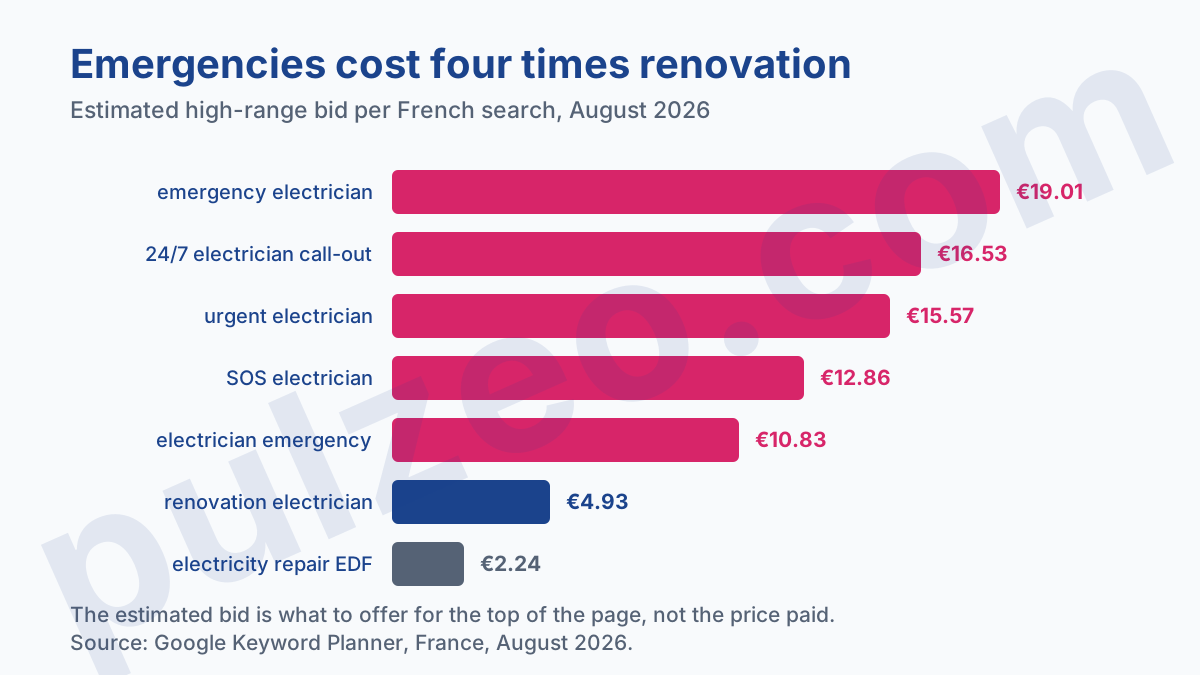
A reminder before going any further, because these numbers get misread half the time. The estimated bid isn't what you'll pay: it's what you'd need to offer to aim for the top of the page. Your actual cost will come in lower, often by half, depending on your Quality Score as much as your budget. I went through how to read these figures in the article on how to read Keyword Planner volumes.
What the bid does measure accurately, though, is how fierce the fight is. And on emergencies, it's ferocious.
Why emergency clicks cost four times renovation clicks
The gap between €19.01 and €4.93 comes down to how many people are fighting for the same client, not to what that client is worth. And on that front, the two markets have nothing in common.
Emergency repair: a crowd fighting over few searches
On emergencies, your competitor is no longer the electrician down the street but the middleman platform, the one that takes the call, sends out the first available tradesperson, and bills a commission. Its model absorbs a high acquisition cost because it resells the contact, not the job.
On top of that, the person typing "SOS electrician" at 10 p.m. isn't comparing anything. They call the first number. That behavior drives up everyone's bids, yours included.
Renovation: few bidders on big-ticket jobs
On renovation work, the market is calmer. There's less demand, but every contact is worth a four-figure quote, and the time it takes to decide gives you room to win the client over.
The number that sums it up: at a €4.93 high bid, a renovation quote request costs you less to get than a simple repair call, even though it brings in ten to fifty times more.
The 950 searches a month you should never buy
Here's the most expensive trap in the trade, and it doesn't show up in your reports until you go looking for it.
Four searches in the electrical field mention EDF or Enedis, France's historic electricity supplier and its grid operator: "electricity emergency EDF" (320 searches), "EDF electricity repair" (260), "electricity repair EDF" (260), "electricity repair Enedis" (110). Nearly a thousand searches a month from people stuck in a power outage and looking for their utility.
These people will never call a tradesperson. The market already knows it: those searches go for €2.24 to €2.39 a click, four to five times less than repair searches, because nobody's fighting over them.
Without exclusions, your broad match catches every one of them. You pay for them at the rate of your other keywords, and they never convert.
A cheap search in an expensive market is almost always a bad sign: if nobody's bidding, it's because nobody's making money there.
The exclusion list doesn't stop there. Three groups to add from day one:
- utility suppliers and grid operators: EDF, Enedis, ERDF (Enedis's former name), outage, Linky meter (the French smart meter);
- the trade rather than the service: jobs, training, CAP (the French trade certificate), salary, self-employed, collective agreement;
- DIY: tutorial, how to, wiring diagram, NF C 15-100 (the French wiring standard).
The second group brings in people who want to become an electrician, the third, people who want to do without you. The full method is in the article on negative keywords.
Pulzeo spots these search terms in your campaigns and suggests the exclusions, which saves you from reading a report nobody opens unless they have to.
How many clicks does it take to land a job?
Thirteen on emergency repair, forty-five on renovation. Here's how you get there, assuming an actual cost of half the estimated bid.
On emergencies, a click costs you around €8. The call rate is good in this segment, say one visitor in ten who picks up the phone: ten clicks per contact, so €80. If you convert three contacts out of four, it takes thirteen clicks and €107 to land one job.
A standard repair call is billed at €100 to €250 including tax, according to French specialist sites, with an hourly rate of €35 to €95 and a trip fee of €20 to €40. On a €150 job, once you take out the trip, the time, and the parts, a €107 acquisition cost leaves nothing. You're working for Google.
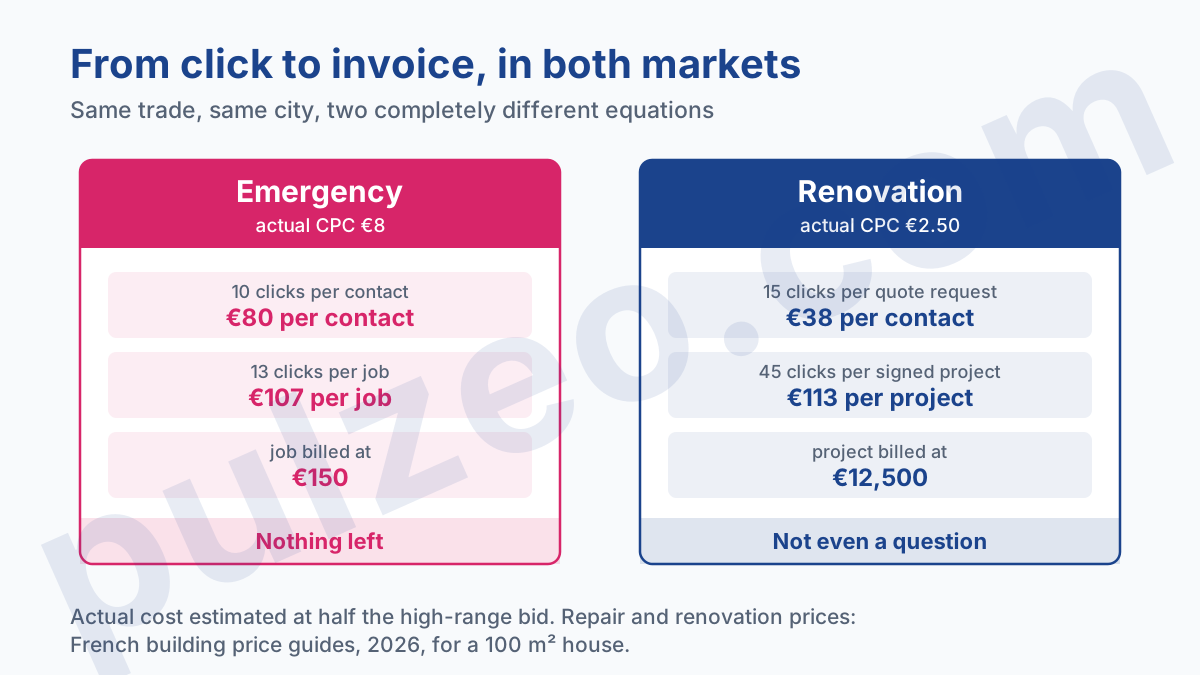
Run the same numbers on renovation. An actual click at €2.50, one visitor in fifteen asking for a quote: fifteen clicks per contact, so €38. One quote in three signed, and it takes forty-five clicks and €113 to land the project.
French price guides put that project at €125 to €205 per square meter for a full renovation, so €12,500 to €20,500 for a 100 m² house (about 1,075 sq ft). Even a simple safety upgrade, a lighter job, is billed at €75 to €120 per square meter. At those amounts, profitability isn't even a question anymore.
At what margin Google Ads becomes profitable
The threshold is easy to set, and it comes down to a calculation you can do tonight.
The rule I apply comes down to one division: your acquisition cost has to stay under a third of your margin. With a thinner margin than that, one lost quote or one slow week is enough to put you in the red.
Applied to the two figures calculated above, that means:
- emergency repair: acquisition at €107, so at least €320 of net margin per job;
- renovation work: acquisition at €113, so at least €340 of margin per project.
The two thresholds look alike, since the acquisition costs look alike. What differs is how easy they are to clear. A repair call billed at €150 will never get there, even with the 30 to 50% surcharge charged in the evening and on weekends. A renovation project, on the other hand, clears the threshold automatically.
And if your jobs run around €120 with no room for a surcharge, the honest answer is that Google Ads isn't your channel. Your Google Business Profile and local SEO will cost you less to get the phone ringing just as often, as I explain in the comparison between SEO and paid search.
The two markets you're probably not targeting
While researching the searches in this trade, I came across two pockets of demand that I haven't seen in any of the electrician campaigns I've taken over.
The first is home EV charging: about 720 searches a month for "home charging station," and the click runs around €0.80. Eighty euro cents, for a job billed at €1,200 to €2,000 installed, in a market that grows along with the number of electric cars on the road.
The second is bringing a home's wiring up to code: about 480 searches a month, with a click around €1.50. Again, a big job, often triggered by a home sale or an inspection, so by someone with a deadline and no time to drag their feet.
These two markets share the same trait, and it's what makes them interesting: the demand is still taking shape, so few tradespeople bid on it yet. The price of the click says it better than I can: €0.80 and €1.50, versus €19 on emergencies.
What changes everything: your city
Here's the most brutal variable in the trade, and it has nothing to do with how you work.
I pulled the same search in two cities. "Electrician call-out Paris": 480 searches a month, €16.01 high bid. "Electrician call-out Lyon": 260 searches, €1.42. An elevenfold gap in the price of a click, for the same trade and a job billed at roughly the same price.
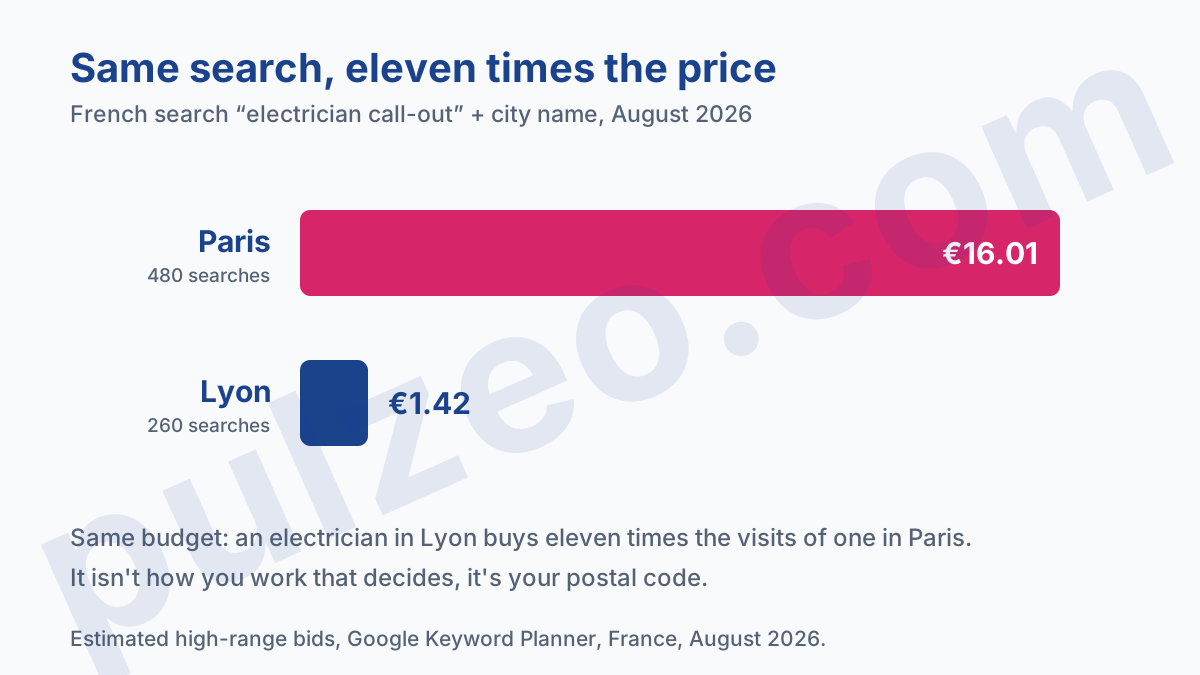
That gap decides whether your budget is enough. At actual cost, meaning half the bid, €200 a month buys nearly three hundred visits in Lyon and twenty-five in Paris. The first electrician can judge the campaign after a month; the second will have nothing to go on.
The pattern isn't unique to electrical work. It shows up in every call-out trade, and I broke it down city by city in the episode on plumbers. Above all, remember its corollary: your service area is better tight than wide, because every extra mile brings in requests you'll turn down, paid at the price of the good ones.
The second variable specific to the trade is seasonality. In my experience, repair requests cluster in the heating season, when electric heaters and water heaters give out, and renovation requests follow the real estate calendar.
I haven't measured it search by search, so check it against your own data before turning it into a budget rule. If the pattern holds for you, there's no reason for your annual budget to be flat.
What budget to start with
€400 to €600 a month for three months, focused on renovation searches, and adjusted to your city as we just saw. That's the figure I give, and here's what it buys.
At an actual cost of around €3 a click on those searches, €450 gets you 150 visits a month. At a 7% contact rate, which is realistic for a quote form, that makes about ten requests a month. Enough to judge by the end of the second month, which is the real point of the early days.
Below €300, you drop to seven requests, and seven requests in a month can't be told apart from chance. It's the same reasoning as for building tradespeople in general, except that electrical work has this huge gap between emergencies and projects, which the other building trades don't have to the same degree.
One last word on how to read your results. Don't judge this channel on cost per contact, which will always look high to you. Judge it on the margin from signed projects, and accept that emergency repair is a sideline rather than the engine.
Common questions
How much does a Google Ads click cost for an electrician in France?
Between €2.24 and €19.57 depending on the search, pulled in August 2026. "Electrical repair" tops out at €10.52, "urgent electrician" at €15.57, "emergency electrician" at €19.01. At the other end, "renovation electrician" doesn't go past €4.93. These aren't the prices you pay but the bids needed to aim for the top of the page: your actual cost comes in lower.
Should an electrician target emergencies or renovation work?
Renovation work, in most cases. A renovation click costs a quarter of an emergency click, for a project worth ten to fifty times a repair call. Emergency work only makes sense if you're genuinely reachable at night and on weekends, and if your surcharge can absorb a three-figure acquisition cost.
Which keywords should an electrician exclude?
Anything containing EDF, Enedis (France's historic utility and its grid operator), or electricity supplier: those searches add up to about 950 a month and are about a grid outage, not about finding a tradesperson. Add "jobs," "training," "CAP" (the French trade certificate), "salary," and "self-employed," which bring in people who want to become an electrician, not hire one.
What budget should an electrician starting out plan for?
Plan on €400 to €600 a month for three months, focused on renovation searches rather than emergencies. At an actual cost of around €3 a click on those searches, that buys about 150 visits a month, or around ten quote requests at a 7% contact rate. Below €300, you won't have enough data to know whether it's working.
