
Google Ads for movers in France: cost per client in 2026

Open Keyword Planner for France and you'll see 49,500 people a month type the French word for "moving", and you'll figure the market is right there. It is, but that number tells you nothing useful: it barely moves all year, and it mixes in people who'll never buy anything. Google Ads for movers plays out somewhere else.
It plays out on a handful of far more expensive queries, which double in summer while the generic one stays flat. Here are the numbers I pulled across 292 of the sector's queries in France in August 2026 (French searches, translated here), and what they change about running the account.
How much a click costs in the moving business
A word on method first, because it changes how you read the table. The amounts below are the bids Google estimates you need to aim for the top of the page, as Keyword Planner publishes them for France. They're amounts to bid, not amounts you'll be charged.
| Keyword (translated) | Searches / month | Estimated bid |
|---|---|---|
| moving | 49,500 | €2.10 to €7.44 |
| movers | 18,100 | €2.49 to €8.00 |
| movers near me | 6,600 | €1.82 to €6.51 |
| moving price | 4,400 | €0.98 to €3.83 |
| moving quote | 4,400 | €4.18 to €13.46 |
| cheap moving | 4,400 | €1.74 to €6.65 |
| moving company | 2,900 | €2.61 to €8.30 |
The sector's median high-range bid comes to €5.13. That's four times the level for an auto repair shop, which I pulled the same month at €1.18. And the market has a reputation for being tough, for a reason that jumps out when you put two rows of the table side by side: "moving price" and "moving quote".
Two queries with the same volume, one worth three times the other
Look at "moving price" and "moving quote". Exactly the same volume, 4,400 searches a month each. And yet: a €3.83 high-range bid for the first, €13.46 for the second. A ratio of three and a half between two queries that, read quickly, say the same thing.
They don't say the same thing at all. "Moving price" is typed by someone doing research, often months ahead, who wants a ballpark figure. "Moving quote" is typed by someone who has a date, a new home, and every intention of bringing in a professional.
The market has already run that calculation, and it's the market that sets the gap. If your competitors are willing to pay three times more for the second visitor, it's because they find that visitor clearly more profitable, and enough of them think so for the bid to hold at that level.
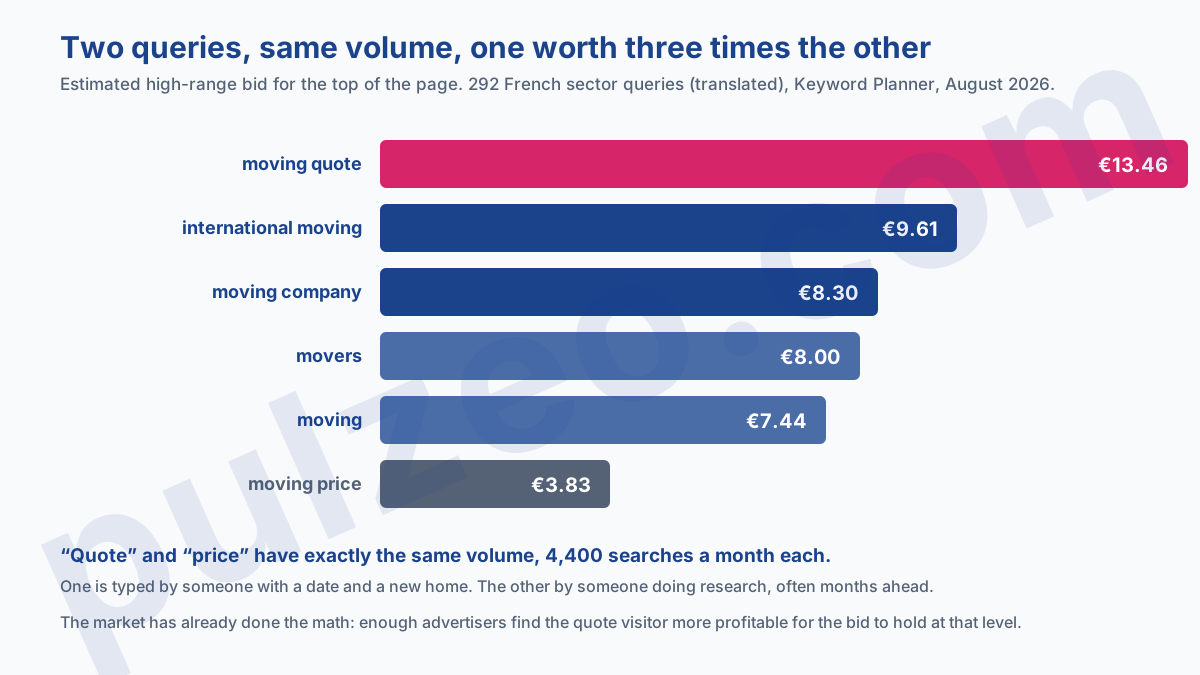
The practical consequence fits in one sentence: if your budget is limited, it shouldn't go to the most searched word, but to the one that signals the intent to get a quote.
The segments that escape the price war
The table above covers the most searched queries, and so the most fought over. The sector has others, with less volume, where competition is weaker because the service calls for specific skills.
Here's what I pulled for the four main ones, with their estimated high-range bid:
- office moving, 1,900 searches a month, up to €7.36;
- piano moving, 1,000 searches, up to €5.37;
- international moving, 880 searches, up to €9.61;
- furniture storage, 880 searches, up to €7.20.
International is the most expensive of the four, and that makes sense: few companies know how to handle that kind of job, and the ones that do are fighting over the same visitors.
None of these queries will fill a truck on its own. Taken together, they add up to a volume comparable to "moving quote", from visitors who already know what they want, and who shop around less because fewer companies offer the service.
Seasonality isn't where you think it is
Everyone knows moving is a summer business. I was about to write that too, then I pulled the month-by-month breakdown Google publishes behind its volumes, and it tells a different story.
On the generic query "moving", the low point is 49,500 searches and the peak 60,500. A ratio of 1.2, which is as good as a flat line. On "moving quote", the low drops to 3,600 in December and the peak climbs to 8,100 in July: a ratio of 2.3.
In other words, the number of people interested in moving hardly changes from one month to the next. What changes is the number who actually take the plunge, and it doubles.
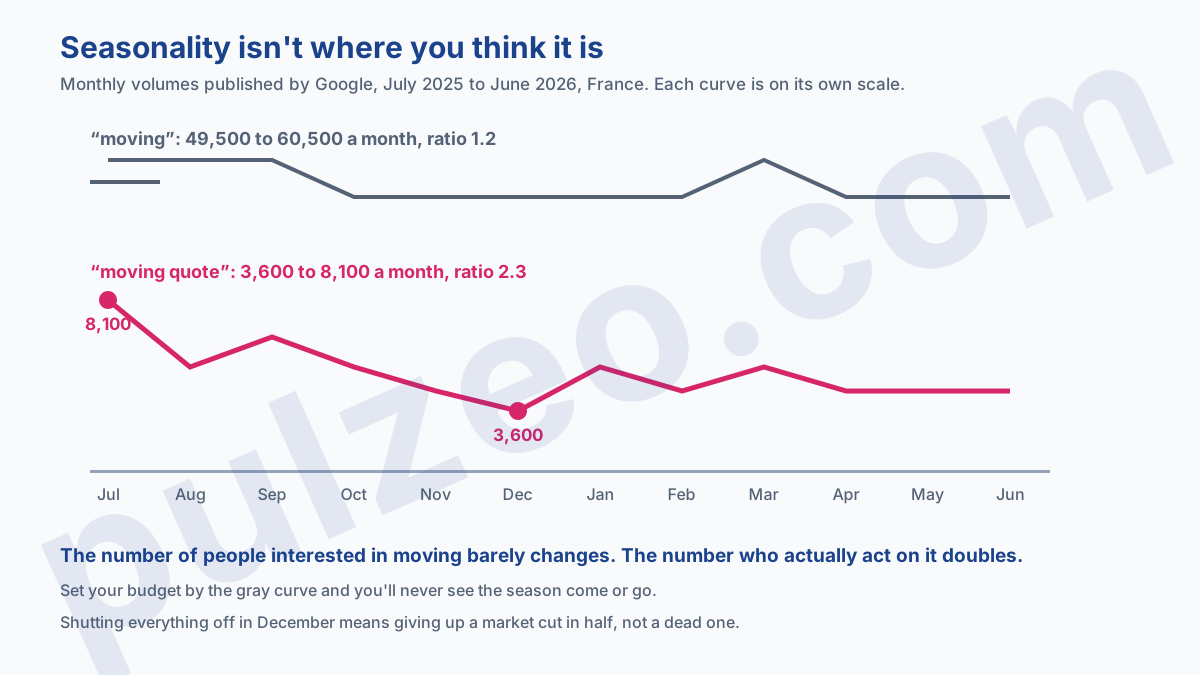
That changes two things about how you run the account. A mover who goes by generic volume to set the budget will never see the season arrive or leave, since the curve is flat. And one who shuts everything off in November is giving up a market cut in half, not a market that's gone.
Generic volume measures curiosity. Only the quote query measures demand.
A trade where the starting point matters more than the destination
One quirk of this trade deserves a closer look, because it translates directly into a setting. A move gets decided where it starts: the person leaving their home is the one who searches, compares, and signs, not the one at the other end.
So your location targeting has to cover the area your trucks leave from, not the one they arrive in. It sounds obvious put like that, and yet I regularly see accounts that target wide because the company "covers all of France", forgetting that a Paris client moving to Bordeaux looks for a mover from Paris.
Google's default setting doesn't help: it's called "Presence or interest", and it also reaches people who show interest in an area without being there. In this trade, someone getting ready to arrive in Bordeaux falls into that category, even though they're not your client if you're based in Bordeaux.
From click to signed move
The bid amount tells you nothing until you've turned it into a cost per client. The calculation takes two rates that only you know, so I'm laying down working assumptions here, for you to swap for your own.
What Google Ads controls
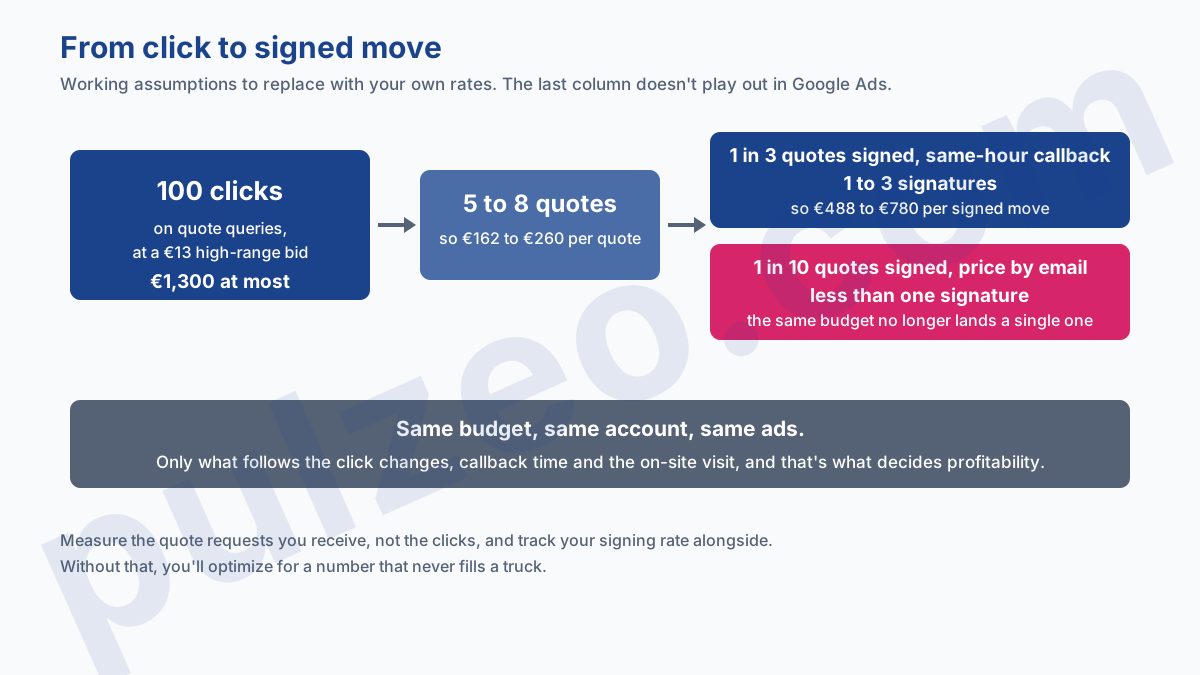
Take a hundred clicks on quote queries. At a €13 high-range bid, they cost €1,300 at most, and less in practice. With a properly built quote request form, expect five to eight requests: that's the ballpark I see for this kind of service.
That's where the ad account's job ends. Everything that follows is completely out of its hands.
What really decides it, and happens afterward
Then comes the step that makes or breaks profitability: your signing rate on quotes. A mover who calls back within the hour and comes out for an on-site visit signs around one quote in three; one who emails a price and waits drops much lower.
So at one quote in three, you end up with one to three signatures for €1,300 of advertising, which works out to between €488 and €780 per signed move, depending on whether the form converts at 5% or 8%. At one quote in ten, the same budget produces less than one, and the campaign becomes untenable without anything having changed in the account.
Should you bid on "cheap moving"?
This query gets 4,400 searches a month and its bid goes up to €6.65. It's tempting, and I see it switched on in almost every account in the sector that I take over.
The problem isn't what it costs, it's what it signals. The person typing it is telling you, before they've even clicked, that they'll ask for several quotes and go with the lowest bidder. So you're paying for an expensive click to enter a comparison where you have one chance in three or four, and where winning often means working at zero margin.
Two cases make it legitimate. If low prices are your deliberate positioning, it brings you exactly your customers. And if you have slow slots to fill, a low-margin move beats a truck sitting idle.
Outside those two cases, it's a query to exclude, just like job searches or searches for free boxes. That's the kind of sorting Pulzeo's action plan already delivers ranked by waste, based on your own search terms.
Where to start
Three decisions matter more than all the settings that will follow:
- split quote queries from price queries, into two separate ad groups, with different bids and different ads;
- base your monthly budget on the curve of quote searches, which doubles in summer, not on the curve of the generic word, which doesn't move;
- measure the quote requests you receive, not the clicks, and track your signing rate alongside: that's what decides profitability.
The last point deserves a word. In this trade, the gap between a profitable account and one that loses money rarely comes down to Google Ads. It comes down to how fast you call back and how good the quote is, and the conversions you track have to reflect that, or you'll optimize for a number that never turns into business.
That leaves the calculation nobody will do for you, and it has to be done in the right unit. Take your average margin on a signed move and divide it by ten: that's what you can pay for a SIGNATURE, not for a click.
Compare that amount with the €488 to €780 per signature worked out above, never with the €13 bid. A mover with a €3,000 margin can put €300 toward signing one, and so sits well below the threshold; at a €200 margin, the account can't hold up, however finely it's tuned.
Common questions
How much do movers need to bid on Google Ads in France?
Across the sector's 292 queries I pulled from Keyword Planner for France in August 2026, the estimated bid to aim for the top of the page has a median high range of €5.13. On the top queries, it runs from €3.83 for "moving price" to €13.46 for "moving quote", two queries that nonetheless have the very same volume. These are amounts to bid, not amounts charged: your actual cost will be lower.
Should movers pause their campaigns in winter?
No, but you should lower the budget. Google's monthly breakdown for France shows quote searches going from 8,100 in July to 3,600 in December, a ratio of 2.3. Demand doesn't disappear, it drops by half: shutting everything off means leaving the field to competitors while moves keep getting signed.
Which searches should movers exclude?
Job searches and searches for free boxes first, since they never bring in anything. Then, depending on your positioning, "cheap moving": in France this query gets 4,400 searches a month and its bid goes up to €6.65, but the person is telling you they'll compare quotes and go with the lowest bidder. If low prices aren't your positioning, you'll pay for a quote you won't sign.
What Google Ads budget does a moving company need?
Start from the number of moves you want to sign, not from an amount. With this article's assumptions, a hundred clicks at a €13 high-range bid cost €1,300 at most and come out to €162 to €260 per quote request, then €488 to €780 per signed move depending on your signing rate. And base that budget on the curve of quote searches, not on the curve for the word "moving".
