
Google Ads for restaurants in France: cost per customer in 2026

Google Ads for restaurants starts with good news, at least on the French Keyword Planner data I pulled in August 2026: aiming for the top of the page takes a median bid between €0.23 and €0.96, about twelve times less than in emergency home repair. So a modest budget buys a lot of visits.
That's also the trap in this business. A cheap click makes a campaign look profitable, when the only question that counts is whether the table would have been filled without it. Here are the prices I pulled this week, the math all the way down to the cover, and the time slot where it really pays off.
How much does a click cost for a restaurant?
Figures pulled on August 14, 2026 from Google Ads Keyword Planner, location France, across 981 queries in the restaurant cluster. They're French searches, so each one below is my translation.
One methodology note changes how you read the table. These amounts are the estimated top of page bids as Google publishes them: the low range approximates the 20th percentile of bids, the high range the 80th percentile.
So it's what you have to offer to show up, not what you'll actually pay. The price you pay is often lower, sometimes much lower: in Google's auction, you only pay what it takes to hold your position, up to your maximum bid.
| Keyword (translated) | Searches / month | Estimated top of page bid |
|---|---|---|
| sushi near me | 246,000 | €0.23 to €1.27 |
| restaurant paris | 110,000 | €0.40 to €1.57 |
| restaurant lyon | 74,000 | €0.15 to €0.66 |
| brunch paris | 60,500 | €0.12 to €0.59 |
| fine dining restaurant | 49,500 | €0.31 to €1.77 |
| italian restaurant paris | 18,100 | €0.20 to €0.60 |
Across the whole pull, the median comes to €0.23 for the low range and €0.96 for the high range. Emergency home repair, measured the same way the week before, showed a median around €12 and peaks above €45 inside Paris proper. Twelve euros against less than one: these are two different economies.
A few pockets cost more, and they're telling. "cuisine paris" climbs to €9.42, "japanese caterer" to €7.18, "food truck paris" to €6.28. On these searches, the person typing may be a business or an event planner, with a budget in a different league from dinner for two.
What a customer costs, not a click
A click is only the start of the trail. Getting to a customer takes two more steps, and each one is a division.
WordStream's annual benchmark report, based on 13,474 US campaigns between April 2025 and March 2026, gives the restaurant category a median conversion rate of 8.05%. One caveat before you use it: that rate counts conversions in the broad sense, forms and calls included, not booked covers.
Applied to a €0.50 click, it puts a conversion at around €6. If you assume one reservation means a table of two, each cover you acquire comes to around €3.
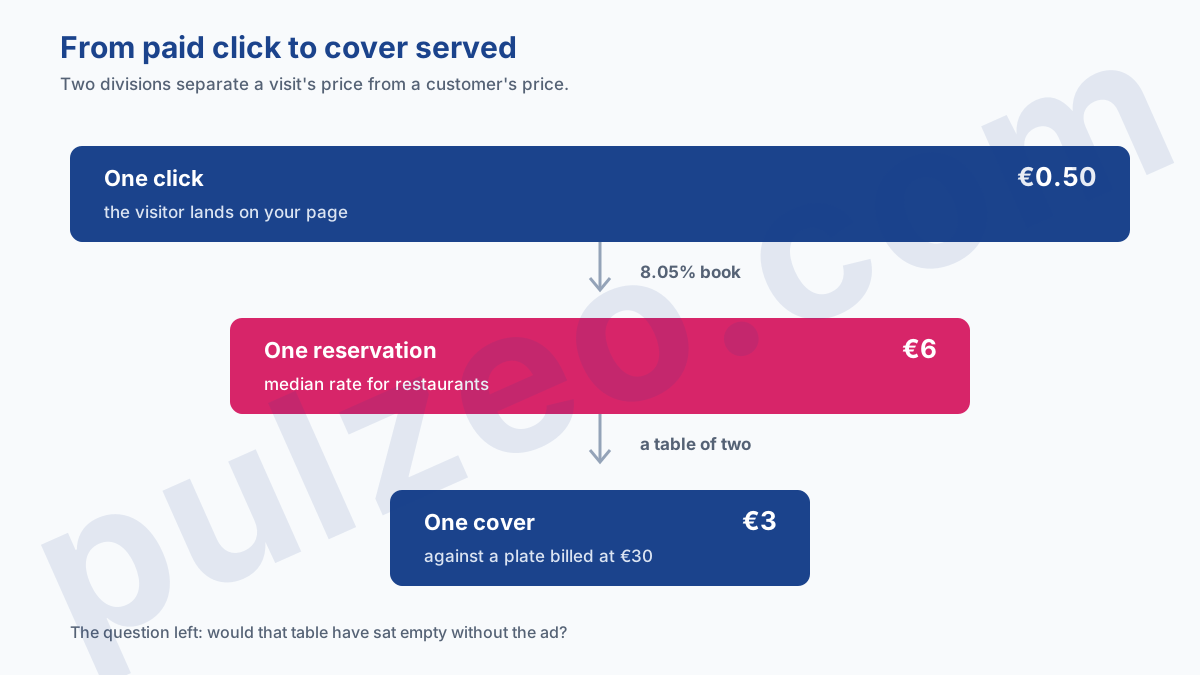
Three euros a cover, against a meal billed at twenty-five or thirty euros, looks like a done deal. It's also where most guides stop counting, when there's still one variable left, and it's the deciding one.
The only question that matters: would the table have stayed empty?
In a restaurant, profitability isn't worked out on averages, it's worked out at the margin. One extra cover only costs its ingredients, since the rent, the staff and the utilities are already paid for.
Food cost runs between 30% and 35% of revenue for a traditional French restaurant, drops to 25% to 30% in fast food and climbs to 35% to 40% in fine dining. A €30 cover therefore brings in around €20 once the plate is paid for, as long as the dining room runs with the staff already on shift.
Against €3 of acquisition cost, that margin is comfortable. But it only holds in one case.
A cover bought on a service that's already full doesn't cost €3: it costs €3 and brings in nothing.
On Saturday night at a place that's turning people away, every euro spent on ads buys a customer who would have come anyway, or worse, who takes someone else's seat. At Tuesday lunch in a half-empty dining room, the same euro fills a table that would have stayed empty.
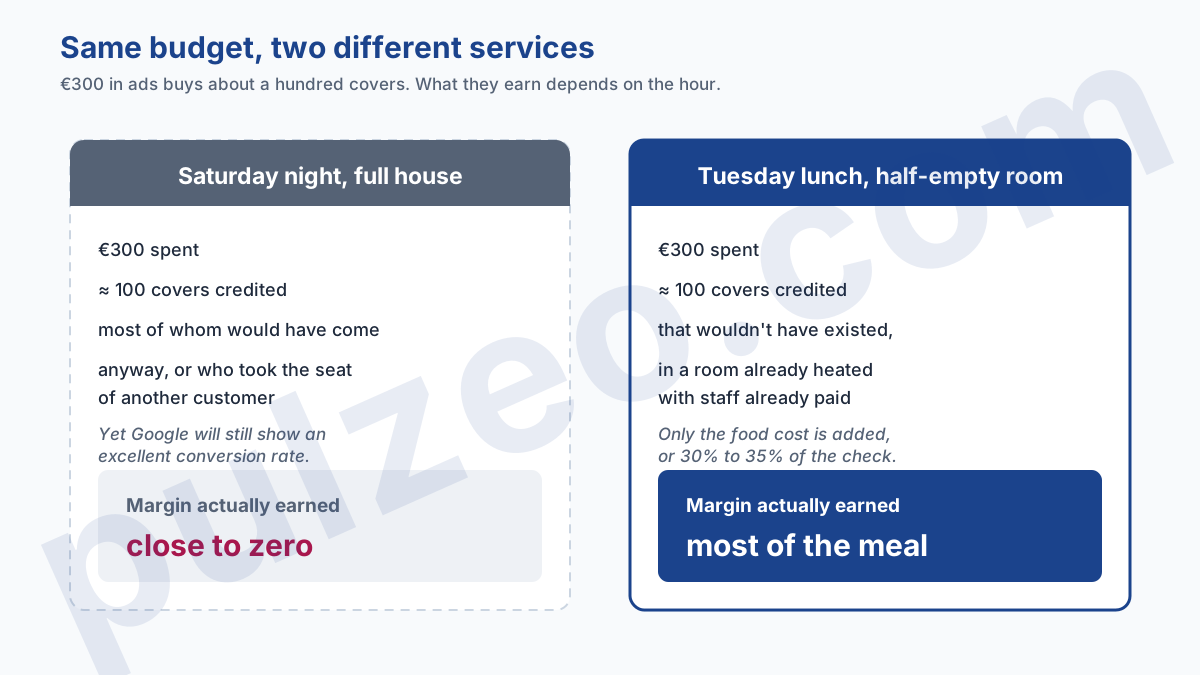
No dashboard shows this tipping point. Google will tell you the Saturday campaign converts better, because people are more willing to book for a Saturday. That's true, and it's exactly why you should look at your ad schedule before you even look at your conversion rates.
Three million searches, and almost none of them for you
Volume is this sector's second illusion, and it's even bigger than the cheap click.
The 981 queries in the pull add up to 3,240,420 searches a month. Of that total, the ones with an explicit intent to book add up to only 14,910 searches a month, less than half a percent. "Near me" and "around me" searches account for 388,200, or twelve percent.
Everything else, the overwhelming majority, falls into three categories, and none of them belongs to you:
- the names of other restaurants, which pull huge volumes on their own: "bouillon paris" 27,100 searches, "la coupole paris" 22,200, "buddha bar paris" 22,200;
- pure discovery searches, like "fine dining restaurant", where the searcher is still wondering what they want to eat;
- curiosity searches, guides, rankings and best-of lists, which never end at a table.
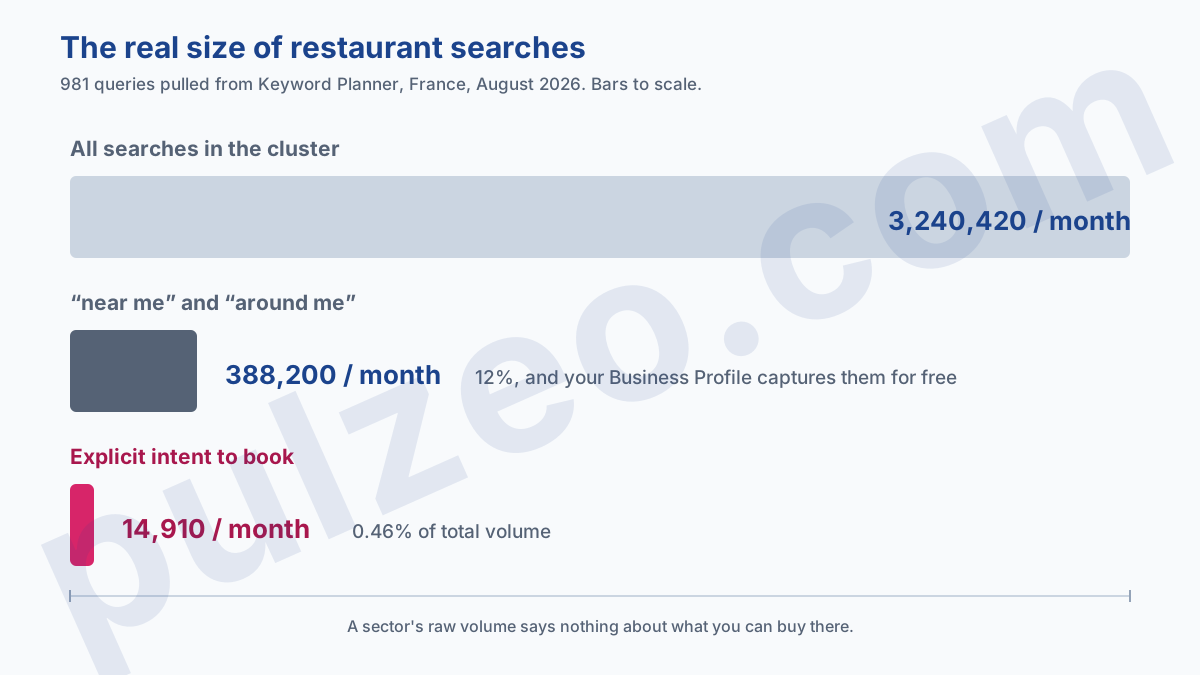
Buying the first category is possible, and it's even a known tactic, but it pits you head-to-head against a restaurant on its own name, where your click-through rate will be low and your relevance poor. On the other two, you're paying for a searcher who hasn't decided to go out yet.
What your conversions will never see
The €3 cover math rests on the reservations Google knows how to count. In this business they're the minority, and the undercounting runs the opposite way from the generous attribution described above: there, covers were wrongly credited to the ads; here, covers never get counted at all.
The customer who calls
A good share of reservations still comes in by phone, especially at independent places and with customers who don't feel like creating an account for a table for two. Google Ads can count those calls, but only if call assets are set up and call tracking is turned on.
Without that, the campaign shows a dreadful cost per reservation and you shut it off, when it was actually making the phone ring. How the tracking works, and its most common gaps, are covered in the guide to misconfigured Google Ads conversions.
The customer who walks in
That one will never be counted, and you have to accept it. Someone who searches "italian restaurant" on their phone, sees your ad, looks at your photos and comes in for dinner that same evening has left no trace you can use.
Google does offer store visit measurement, but its conditions rule out the small restaurant from the start. You need active location assets, "enough ad clicks or impressions", and your business must have "enough foot traffic". If your assets come from a Business Profile, Google also requires all your store locations to be set up and verified.
Google adds that the more locations you have, the more likely your account is to have enough data. Which tells you pretty clearly where a single restaurant stands.
The wording is Google's own, and no figure comes with it: the thresholds exist, they just aren't published. In other words, an independent restaurant won't know in advance whether it'll qualify.
The workaround is low-tech and it works: for one month, ask your team to note where each customer came from. Asking eighty customers beats a dashboard that shows zero.
What your Business Profile does for free
Before paying for anything, look at what you already have. Your Google Business Profile appears in the local pack, shows your photos, your menu, your hours, your reviews and your booking button, and it costs nothing.
It's what captures most of those 388,200 "near me" searches, because Google answers them with a map and three addresses, not with an ad. A campaign that points to a profile short on reviews or still showing photos from 2019 wastes every click it buys. And once the profile is clean, it links to your Google Ads account to feed the address and hours into your ads.
Advertising comes after, then, and for one specific reason: filling a slot the profile doesn't fill on its own. Launched before the profile is clean, it buys clicks that land on a grimy shop window.
Once the campaign is live, your attention shifts to what it produces. Pulzeo analyzes the account every day and flags campaigns that burn through budget without converting anything.
Which keywords should a restaurant exclude?
Restaurants attract a huge volume of searches from people who will never eat at your place. Here are the negative keywords to add from day one:
- jobs and hiring: "waiter job", "hiring commis chef", "restaurant job offer", which spike every September when France goes back to work;
- home cooking: "recipe", "how to make", "ingredients", which pull in curious cooks by the thousands;
- buying and franchising: "restaurant for sale", "open a restaurant", "franchise", aimed at would-be restaurant owners;
- freebies and contests: "free", "giveaway", "deal", which fill a room once and never twice;
- the names of your direct competitors, unless you've made a deliberate call to go after them.
How negative keywords work, and their most expensive trap, are covered in the article on negative keywords and broad match, which applies to every trade.
A realistic starting budget
The ranges French agencies pass around sit at about €300 to €800 a month for an independent restaurant, and they're plausible. At €0.50 a click, €300 buys six hundred visits, which is plenty to measure something.
The real decision isn't the amount, it's focus. A budget spread from Monday to Sunday, over a twenty-kilometer radius and forty keywords, gets diluted until it fills nothing and teaches you nothing. The same amount focused on your two slowest services, within a three-kilometer radius, with ten or so precise searches, gives you clear numbers by the second week.
A word on volume, because it gets misread in this business. Six hundred visits at 8.05% would give around fifty conversions a month, well above the thirty or so that make a number stable.
But that's the US rate, across every kind of conversion, and the section on what your conversions never see explains why your account will record far fewer: whatever gets booked by phone without tracking, or by simply walking in, won't show up anywhere.
So the number to watch is the one you actually measure, and that one takes a while to reach thirty. The full reasoning is in the article on the minimum Google Ads budget, and the plans for running all of this are on the pricing page.
Where to start this week
Open your reservation book and find your two slowest services over the last three months. That's your target, and your only one.
Next, check that your Business Profile is up to date, photos included. Then build a single campaign: a short radius, ten or so searches, an ad schedule limited to those slots, and let it run for a month before you judge it. You'll then know what a cover really costs you, which almost no restaurant owner knows.
Common questions
How much does a Google Ads click cost for a restaurant in France?
To aim for the top of the page, you have to bid between €0.23 and €0.96 at the median on restaurant searches, according to the estimates I pulled from Keyword Planner for France in August 2026. That's about twelve times less than in emergency home repair, where the median pulled the same month was around €12. A few niche searches go higher, up to €9.42 on "cuisine paris".
What Google Ads budget should a restaurant plan for?
The ranges quoted by French agencies sit around €300 to €800 a month for an independent restaurant, and they're plausible: with bids under one euro, €300 already buys several hundred visits. What decides the outcome isn't that amount but the time of day it gets spent, because a cover bought on a service that's already full earns you nothing.
Is Google Ads worth it if you already have a Business Profile?
Your Business Profile is free, appears in the local pack, and handles reviews and reservations: that's where you start, every time. Google Ads becomes useful once that profile is already in good shape and you're trying to fill a specific slot it doesn't fill on its own.
How much does a reservation from Google Ads cost?
Around €6 as a ballpark, starting from a €0.50 click and the 8.05% median conversion rate reported for the restaurant sector. For a table of two, that puts each cover you acquire at around €3, which is still far below the margin a meal leaves once the food is paid for.
