
Google Ads for real estate in France: cost per client in 2026

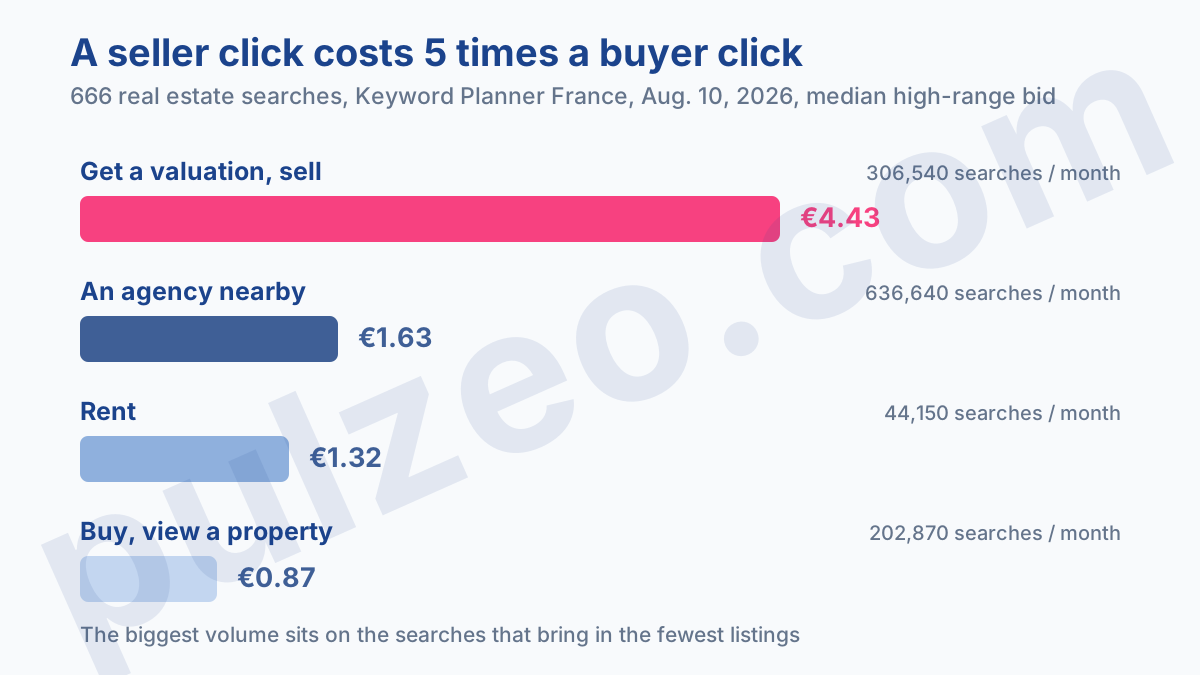
How much does Google Ads for real estate cost? I pulled 666 real estate searches from Keyword Planner for France on August 10, 2026, and the interesting number isn't the average: it's the gap. At the median Top of page bid (high range), a buyer click calls for €0.87 and a seller click for €4.43. Those are the bids Google estimates for reaching the top of the page, not the prices you'll pay, which always come in lower.
Five times more expensive. And the €4.43 click is the one you should buy.
It's the counterintuitive truth of this business, and I haven't seen it written down anywhere: in real estate, optimizing your cost per click almost always means buying traffic that will never sign anything.
How much does a Google Ads click cost in real estate?
Between €0.14 and €4.43, depending on what the person is looking for. Here are the sector's four types of searches in France, with their volume and their price per click.
| What the person is looking for | Queries | Searches / month | Estimated bid |
|---|---|---|---|
| Get a valuation, sell | 495 | 306,540 | €1.53 to €4.43 |
| An agency nearby | 43 | 636,640 | €0.22 to €1.63 |
| Buy, view a property | 103 | 202,870 | €0.14 to €0.87 |
| Rent | 25 | 44,150 | €0.22 to €1.32 |
Look at the second row. It's the biggest volume in the sector, 636,640 searches a month, at a modest click price. Everything tells you to rush in, and yet it's the one I'm most wary of: someone typing "real estate agency" is usually trying to find a brand they already know, or the storefront closest to home. You're paying to slip into a decision that's already been made.
These figures come from Google's Keyword Planner for France, pulled on August 10, 2026, and the searches are French ones, translated here. They move with competition and the season, so treat them as a ballpark rather than a price list. That's the catch with any cost-per-click figure, which I went into in the article on what Google Ads really costs.
Why the cheapest click brings in nothing
Your business doesn't live off buyers. It lives off listings.
A buyer who finds your ad, views the property and buys it earns you a commission you'd have collected anyway, since the property was already on your books. A seller who lists their property with you, on the other hand, creates inventory. Inventory is what drives an agency's revenue, and it's what explains the price gap: every agency in your area is after the same owners.
The buyer click: plentiful and already lost
At €0.87 a click, "apartment for sale" and its variants look like a bargain. The problem isn't the price.
These searches put you head to head with SeLoger, Leboncoin and Bien'ici, the big French listing portals, which have the catalog you don't. A buyer arrives with a specific property in mind, in a specific area, on a specific budget. If you don't have it, they leave, and you've paid for their visit.
The seller click: scarce and decisive
"Property valuation" gets 18,100 searches a month at €2.35 to €5.52 a click. "House valuation" follows with 14,800 searches and €2.15 to €4.71.
These people have a clear intent. You get a property valued because you're thinking about selling, often in the coming months. It's the only point in the journey where your advertising can create something that didn't exist before.
A buyer click introduces you to someone looking for a property. A seller click introduces you to someone who has one.
What a listing costs
The click price is useless until you've turned it into a cost per listing. The general mechanics of the calculation are the same in every sector, and I laid them out in the article on SEO versus paid search; what changes here is the rates.
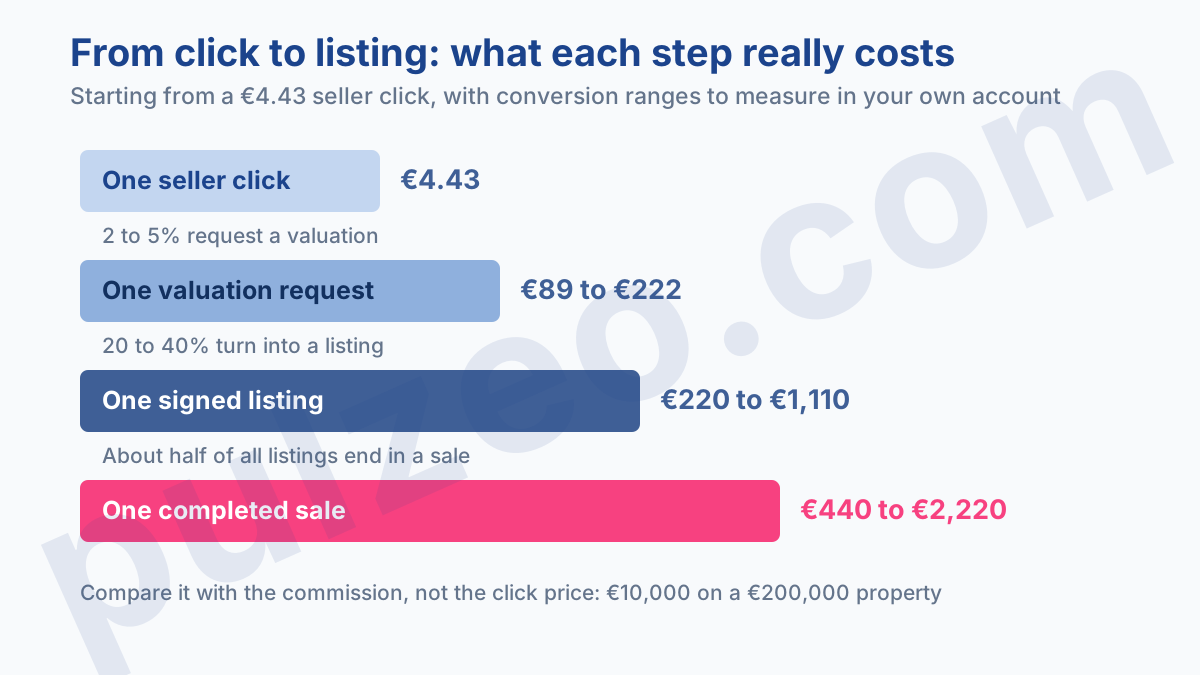
Let's start from the €4.43 seller click and work in ranges rather than from an average nobody can check:
- a valuation page turns between 2 and 5% of its visitors into a request, which puts a valuation request at €89 to €222;
- a valuation request becomes a listing in 20 to 40% of cases, which brings a listing to €220 to €1,110.
That's your real range. It's wide, and that's normal: it depends on two rates that only you know, and that you have to measure before judging anything.
A listing isn't a sale yet. If half your listings go through, your cost per transaction doubles: between €440 and €2,220. Remember that number: it's the one to compare with the commission.
Both rates can be measured in your account, as long as valuation requests actually come through as conversions. This is where I see the most agencies get it wrong: the form is hooked up, but it records visits to the thank-you page rather than submissions, and the rate on screen has been wrong for months. Pulzeo audits that wiring and flags conversions that count what they shouldn't.
What commission makes it profitable
Think in terms of the commission you collect, not the price of the property. Agency fees are set freely in France: they vary from one network to another and shrink as the price climbs, so no average percentage applies to your case. You know yours, so use it.
Against a cost per transaction of €440 to €2,220, here's what acquisition takes from you.
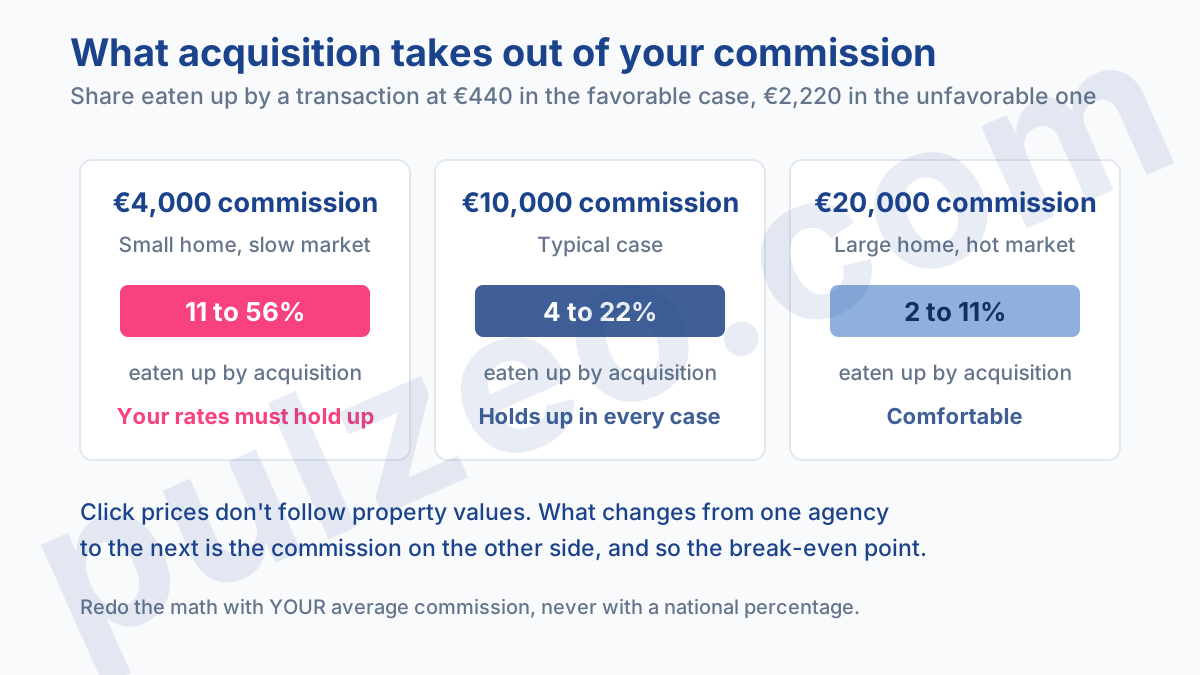
On a €4,000 commission, the unfavorable scenario swallows more than half of what you earn. On €10,000, it takes 22%, and 4% in the favorable scenario. So the tipping point sits somewhere between the two, and exactly where depends on your rates, not on some universal threshold I could give you.
Here's what can be said plainly: above a €10,000 commission, Google Ads holds up in every scenario. Below €4,000, it only holds up if your conversion rates are good, and you need to have measured them before putting a budget behind it.
One distinction matters if you're an independent agent working under a network. You keep 70 to 99% of the fees depending on your network, whereas an agency collects the full commission but pays for its premises, its salaries and its storefronts out of it. The math is done on what's left once those costs are deducted, and it's often the independent agent who has the healthiest margin to invest in acquisition.
What moves the bill in real estate
Three things, and the first is so specific to this trade that it makes national averages useless.
Your area decides everything. Commission is calculated on the property's price, so the same €4.43 click buys a listing worth a few thousand euros where houses sell for €90,000, and several times that in a tight big-city market. Two agencies paying exactly the same price per click don't have the same break-even point at all.
That's what makes real estate agency advertising so hard to advise on from the outside. The acquisition cost doesn't follow property prices: it depends on the bids in your area, not on what you sell. It's the commission on the other side that varies, and with it the share that acquisition eats up. At the same click price, the same monthly budget buys the same number of listings, but those listings aren't worth the same on the books.
Seasonality plays a part, in an unexpected place. Valuation searches hold up all year round without collapsing: "property valuation" swings between 12,100 and 18,100 a month, with its lows in June and December.
Professionals' interest in the topic, however, falls off a cliff: "google ads real estate" drops from 260 searches in March to 10 a month from July to December.
Be careful about what this measurement really says: it's about professionals doing research, not about the bids themselves. It shows that the sector's interest in the topic is seasonal, not that the seller click costs less in October. If you want to know for your area, the only reliable answer is your own CPC history.
Finally, the market has contracted. France recorded 952,000 transactions over twelve months as of the end of March 2026, far from the 2021 records. Fewer properties changing hands, just as many agencies competing for them: the pressure on the seller click isn't going to ease.
The searches to exclude before you start
A real estate account with no negative keywords starts out at a disadvantage, because the sector's vocabulary attracts a pile of searches that have nothing to do with a listing. Three groups to rule out from day one:
- job searches: "real estate agent salary", "become a real estate agent", "real estate training";
- searches for a free online valuation, if you charge for the home visit, otherwise you're paying for the merely curious;
- the names of your competitors and of the portals, unless you have a deliberate brand strategy and a dedicated budget.
The mechanics and pitfalls of exclusion are covered in the article on negative keywords, especially the fact that a carelessly set broad match negative blocks more than you'd expect.
What budget to start with
Don't start with an amount, start with a listings goal. Two listings a month, at €220 to €1,110 each, mean planning for €440 to €2,220 a month, and budgeting for the high end until you've measured your rates.
Focus it on valuation searches in your area and exclude the rest. You'll pay far more per click than the competitor raking in buyers, and you'll be signing listings while they're giving tours.
All that's left is to watch how it performs, week after week. That's where Pulzeo takes over: it reads your numbers continuously and alerts you when the cost per valuation request leaves its range, without you having to open the interface every morning.
The same math, applied to other trades, gives very different thresholds: see what a client costs a lawyer or a plumber, and a moving company, where seasonality changes everything.
Common questions
Why does a seller click cost more than a buyer click?
It comes down to scarcity. At any given moment, an area has far more people browsing property ads than owners ready to list their home, and every agency in the area is chasing that same small group. The bid inevitably goes up. Across 666 searches I pulled from Keyword Planner for France on August 10, 2026, the buyer click comes to €0.87 at the median high-range bid, against €4.43 for the seller click, a ratio of 5.1.
Should you bid on "real estate agency"?
It's the biggest search in the sector, 201,000 searches a month in France, and one of the least profitable. The people typing it are looking for an agency near them, often for a project already under way elsewhere, and many just want to find the agency brand they already know. You're paying to show up in front of someone who was going to pick the storefront down the street anyway.
What Google Ads budget does a real estate agency need?
Set a goal first, and the amount follows from it. Based on the French figures, a signed listing costs between €220 and €1,110 depending on your rates, so two listings a month mean committing between €440 and €2,220. Plan for the top of that range for the first two months: until your conversion rates are measured on your own data, you don't know which end you'll land on, and a budget pegged to the optimistic scenario runs dry before it has proven anything.
Is Google Ads profitable for an independent agent?
Run the math on your commission split and it answers itself. On a €10,000 commission where your network lets you keep 80%, or €8,000 in your pocket, a transaction acquired for €440 to €2,220 takes 5 to 28% of it. So the question isn't whether the channel is profitable in the abstract, but whether your volume of listings justifies the time it takes to manage.
