
What is the best Google Ads bidding strategy?

Search for "which Google Ads bidding strategy should I use" and you'll find the same thing everywhere: a list of eleven strategies, from Manual CPC to Target impression share, laid out flat like a restaurant menu. The trouble is, you order from a menu based on what you feel like that day, and you don't pick a bidding strategy that way. It's dictated to you.
The right strategy is dictated by one thing only: your conversion volume. There's a staircase to climb, and it's your account that decides which step you're on, not you. Here's that staircase, the three strategies that really matter, and two misconceptions to throw out along the way.
Which Google Ads bidding strategy should you choose? The short answer
The one your conversion volume allows you to use, no higher and no lower. If you don't have reliable conversions yet, you start on manual bidding or Maximize clicks. As soon as the volume follows, you move to Smart Bidding, first on a volume goal, then on a cost target, then on a value target.
In other words, "which one should I choose?" is the wrong question. The real question is "which step am I on?" An advertiser doing five conversions a month and an online store doing eight hundred aren't facing the same choice: they're on two different floors of the same staircase.
Mix the two up and you either hold back a campaign that could scale, or turn the algorithm loose on an account that has nothing to feed it.
The three bidding strategies that matter
The official list is long, but most of its entries are variants or special cases. To run campaigns that go after sales or leads, three types cover most situations. The rest (Target impression share, Enhanced CPC) serves niche needs or is already a thing of the past.
Manual bidding, to get started
Manual CPC and Maximize clicks do one job: priming the pump. As long as Google doesn't have enough conversions to learn from, there's no point asking it to optimize a cost per acquisition it can't predict yet.
You set your bids yourself or let the machine hunt for cheap clicks, and above all you watch which keywords convert. It's a collection phase, not a performance phase, and trying to skip it is the classic beginner's mistake.
Smart Bidding, to scale
Once conversion tracking is in place and the volume shows up, you move to Smart Bidding. Three steps here, in order: Maximize conversions to build volume, then Target CPA to anchor a cost, then Target ROAS to steer by value. Each step needs more data than the one before, and that's exactly why you don't jump straight to the last one.
The conversion volume each strategy requires
Here's the thread that ties everything together. Every strategy has a prerequisite, and that prerequisite is conversion volume. Climb a step too early and you're asking the algorithm to decide on too little data, so it ends up bidding on noise.
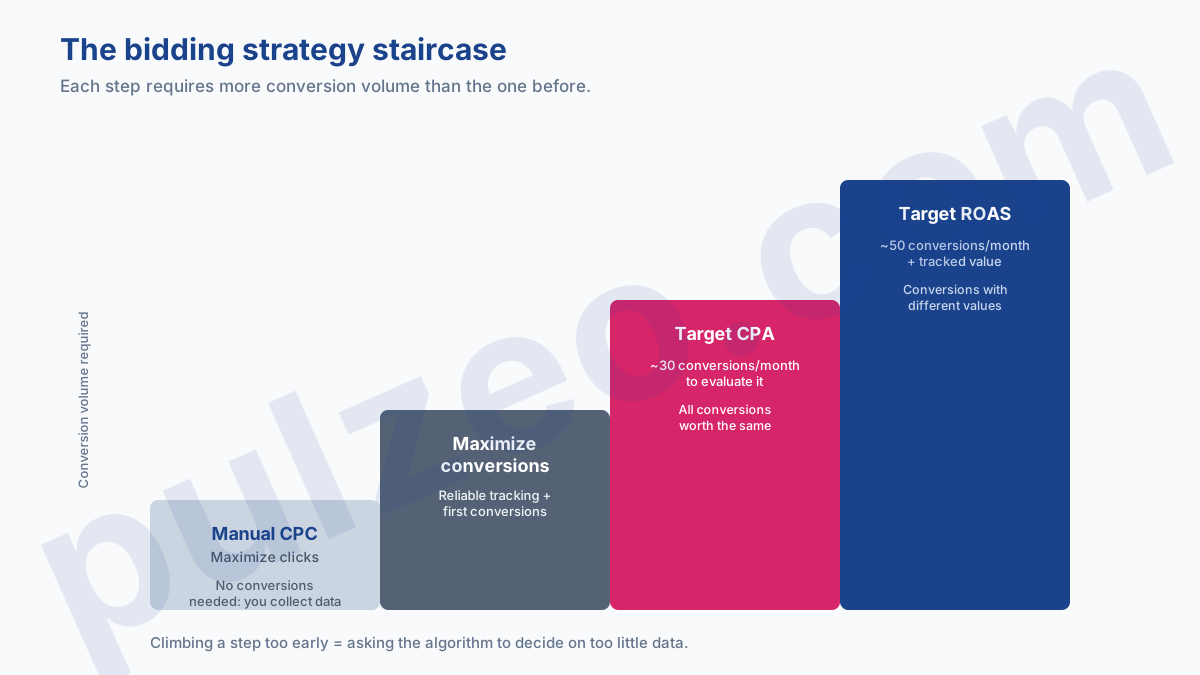
The progression I recommend follows four stages. Nothing about it is mandatory, but it avoids nearly every management mistake:
- start on Manual CPC or Maximize clicks while you collect clean conversions;
- move to Maximize conversions once tracking is reliable, to let the algorithm build volume;
- switch on Target CPA as soon as your tracking holds up; you'll be able to judge its cost per acquisition at around 30 conversions a month;
- move up to Target ROAS once you track the value of each conversion, with even more volume.
That 30-conversion threshold has a specific origin: it's the volume Google uses to evaluate a strategy reliably, and it's also the reasoning that sets your minimum budget. Bidding and budget are two sides of the same constraint: without enough conversions, neither one holds up.
Here's a concrete case. A client comes to me with a Target ROAS campaign that's spinning its wheels, results see-sawing, impossible to make sense of. I look at the volume: twelve conversions a month. The top step of the staircase, set on an account that only had enough to feed the first one.
We stepped back down to Maximize conversions while we rebuilt volume, then climbed back up one step at a time. Results smoothed out within three weeks.
That leaves the case nobody likes to bring up: accounts that will never reach thirty conversions a month, because of a small budget or a niche market. Don't bother dreaming of Target ROAS. Stay on Maximize conversions, which runs on less data than a strict target, or consolidate your campaigns to concentrate the few conversions you have instead of scattering them, exactly as when you structure an account without fragmenting it.
Target CPA vs Target ROAS: which one, and when should you switch?
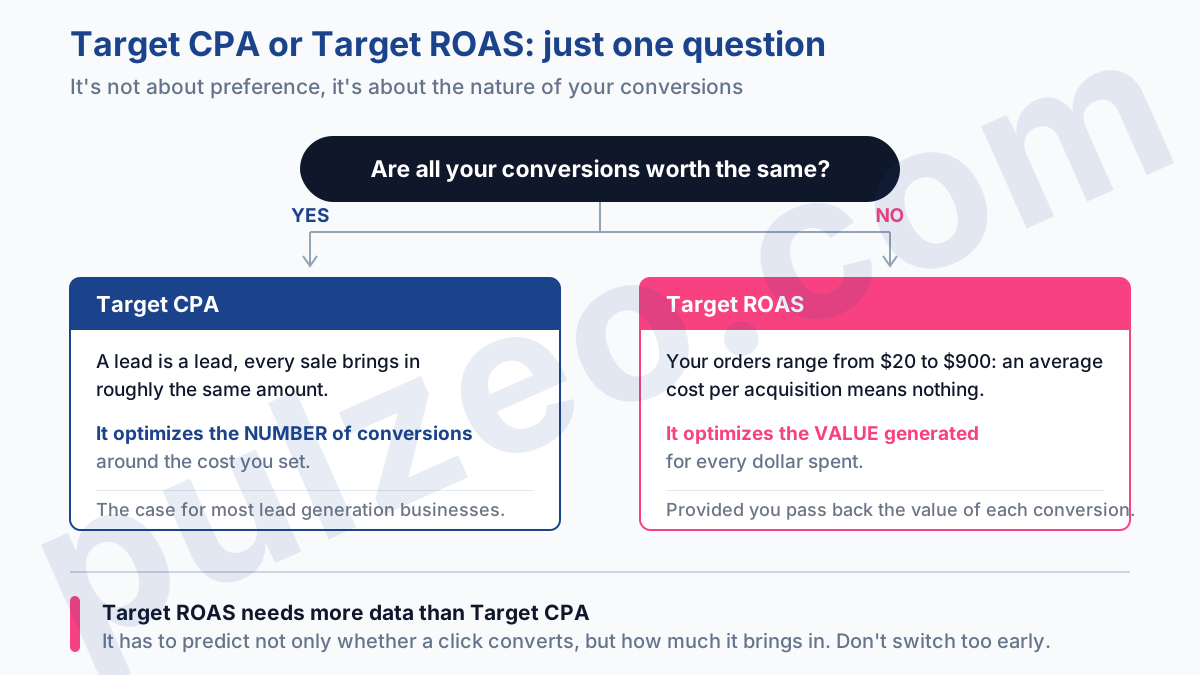
The difference comes down to one question: are all your conversions worth the same? If a lead is a lead, if every sale brings in roughly the same amount, Target CPA is made for you. It optimizes to get as many conversions as possible around a cost you set. That's the case for most lead generation businesses.
If your conversions have very different values, Target ROAS takes over. An online store whose orders range from $20 to $900 has no use for an average cost per acquisition: what matters is the value generated for every dollar spent. Target ROAS optimizes that value, provided you actually send the revenue from each conversion back to Google.
Only switch to it once that value tracking is in place and the volume allows it. Target ROAS needs even more data than Target CPA, because it has to predict not only whether a click converts, but how much it brings in.
The "15 conversions" myth for turning on Target CPA
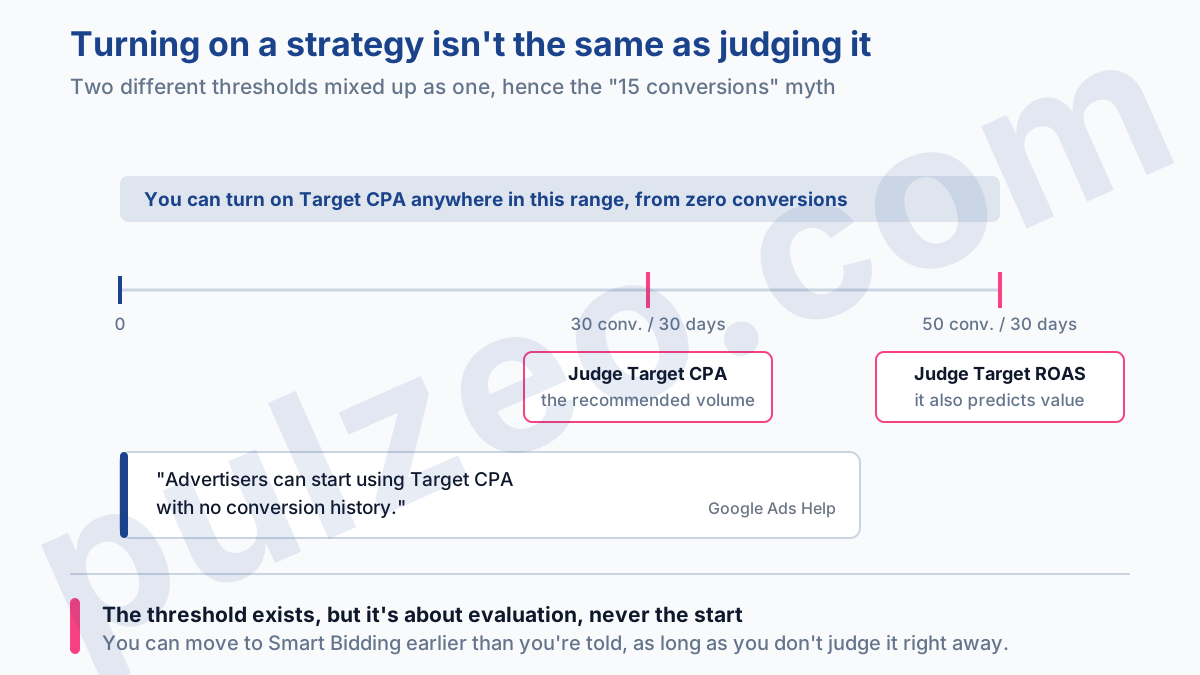
You'll read everywhere that you need fifteen conversions in thirty days to turn on Target CPA. It's false, and Google says so in black and white: "Advertisers can start using Target CPA with no conversion history." There's no activation threshold, period.
Where does the confusion come from? From mixing up two different things. Turning a strategy on and being able to judge its results don't take the same volume. You can switch on Target CPA tomorrow on a brand-new account. But to know whether it delivers, Google recommends measuring over thirty days with at least thirty conversions, and fifty for Target ROAS.
So the threshold exists, but it's about evaluation, not getting started. That distinction changes everything: it lets you move to Smart Bidding earlier than you're told, as long as you accept not judging the result before you have the volume.
The August 17, 2026 change to Target CPA
It's been in effect since August 17, 2026: Google changed its bidding systems so that campaigns limited by budget optimize toward the target you set, instead of drifting away from it.
Two things follow from it, and they go in opposite directions:
- a campaign that was beating its target will slip until it meets it, because the target becomes binding where it used to be just a guideline;
- a campaign that was paying more than its target should instead come down toward it.
So if you run Target CPA or Target ROAS on a tight budget, expect fluctuations while things settle, and don't rush to change your targets before the system has had time to recalibrate. Google has offered a Bid Target Adjustment Tool since July 6, 2026.
The full details, the four options it offers and how to choose between them are in the dedicated article: what's changing for your Target CPA. This change didn't come alone: it was one of the three Google Ads updates from July 2026, along with version 25 of the API and the postponed migrations.
How often should you change your bidding strategy?
The best choice of strategy is worth nothing if you don't stick with it. Every time you change your bidding strategy, the algorithm goes back into learning. And while changing your target CPA doesn't restart it, a big jump shifts delivery in one go.
Performance fluctuates while the machine reassesses everything, and that delay is counted in conversion cycles, so a few days for an online store and several weeks for a B2B account. Stacking changes means resetting the clock over and over, and never letting a strategy prove what it's worth.
The other version of the same mistake is forcing the result by slashing your target CPA to spend less.
It doesn't magically lower your costs; it strangles delivery: volume collapses and you end up with a flattering CPA on three conversions a week, as I explain in the article on a CPA that's climbing. Discipline beats fidgeting here. You pick the right step, switch it on, and let it run until the numbers mean something.
That's exactly the kind of patience Pulzeo makes sustainable. Zeo watches your accounts continuously, spots when a campaign drifts off its target or when a switch pushes the cost per acquisition up, and flags the real problem instead of pushing you to change everything on a whim.
The right bidding strategy, in the end, is as much about knowing which one to switch on as knowing when to leave it alone.
You don't pick a bidding strategy on gut feeling, you earn it with volume. Climb the staircase one step at a time, and stay on each step long enough to judge it.
Common questions
Which Google Ads bidding strategy should you start with?
Without reliable conversion history, start with Maximize clicks or Manual CPC. The goal of the first few weeks isn't to optimize cost per acquisition, it's to collect clean data and find the keywords that convert. You'll move to Smart Bidding once conversion tracking is in place and the volume follows.
What's the difference between Target CPA and Target ROAS?
Target CPA aims at a cost per acquisition: it optimizes to get as many conversions as possible around a given cost. Target ROAS aims at a return on ad spend: it optimizes the value generated, not the number of conversions. You choose Target CPA when all conversions are worth the same (a lead is a lead), and Target ROAS when they have different values (a $40 order and a $900 one).
How many conversions do you need for Target CPA?
There's no mandatory threshold: Google says you can turn on Target CPA with no conversion history. The often-quoted 30 conversions in 30 days isn't a condition for turning it on, it's the recommended volume for evaluating results reliably (50 for Target ROAS). Below that, the strategy works, but you can't yet tell whether it's delivering.
What changed for Google Ads bidding on August 17, 2026?
Since August 17, 2026, Google steers campaigns that are limited by budget toward the target you set, instead of letting them drift away from it. A campaign that was beating its target therefore slips until it meets it, and a campaign that was paying more comes down toward it. A Bid Target Adjustment Tool has been available since July 6, 2026, and temporary fluctuations are expected.
