

On the surface, July was a quiet month for Google Ads news, but it has real consequences. Three changes deserve your attention, and one of them has a deadline two weeks from now.
The most urgent one lands on August 17. If you use a target-based bid strategy and your campaigns are limited by budget, you have two weeks to decide.
- Target-based bidding will stick closer to the target, starting August 17.
- Version 25 of the API removes resources, as of July 22.
- Display is moving to Demand Gen, and DSA to AI Max in February 2027.
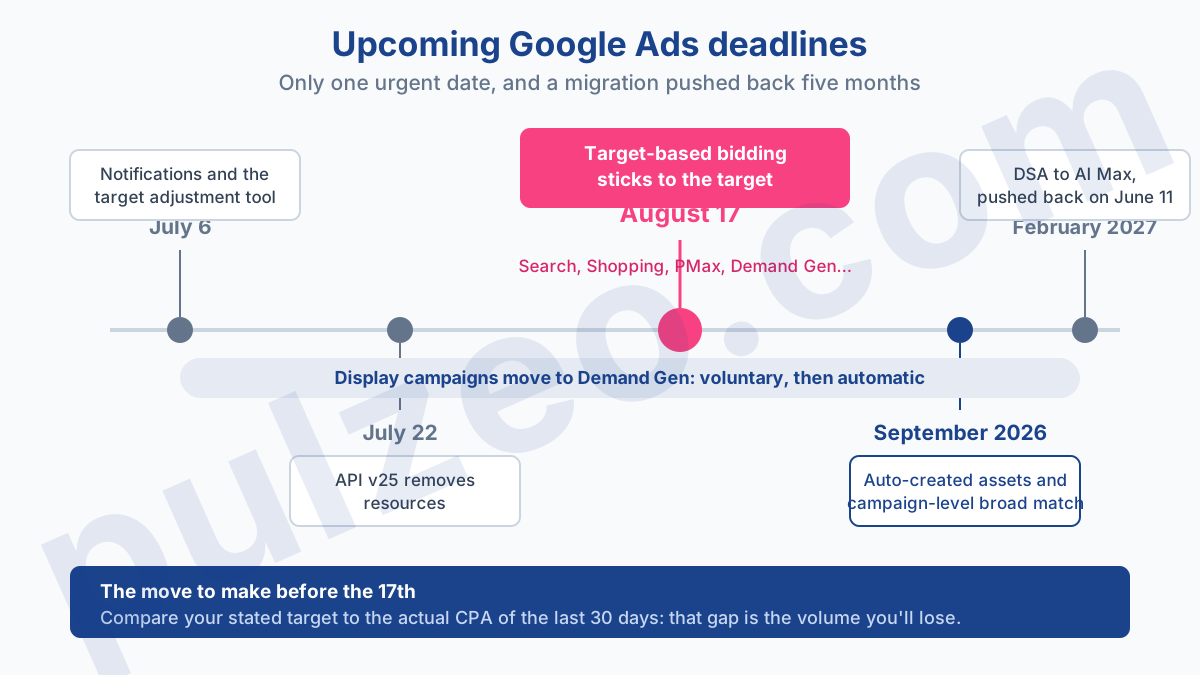
Target-based bidding changes on August 17
This is the change that will hit the most accounts, and what it actually means is often misunderstood.
Starting August 17, 2026, Google is changing its systems so that budget-limited campaigns deliver closer to the target you set, even when you adjust the budget.
It applies to Search, Shopping, Performance Max, Demand Gen and Travel campaigns. Google Ads Help specifies that App campaigns, Video reach campaigns and Video view campaigns keep their current behavior, and that Display and Hotel campaigns already work this way.
Watch the direction, because it's counterintuitive. The campaigns affected are the ones currently doing better than their target. Google's example couldn't be clearer: a $10 target, an actual CPA of $5, and from August 17 the campaign will deliver a CPA close to $10.
In other words, if one of your campaigns runs well below its target, that's about to end. The CPA will climb back toward the stated target, and at a constant budget you'll lose volume. It's not a glitch, it's the new behavior, but the effect on your costs is very real.
Since July 6, Google has been sending notifications that point to a Bid Target Adjustment Tool, which lists the affected campaigns and offers four ways out: keep your current target, adjust it in line with recent performance, set a custom one, or change your bid strategy. Increasing your budget is presented separately, as a way to win back the lost volume.
The move that pays off, and Google explicitly recommends it: align your target with recent performance before August 17. A $50 target for an actual CPA of $35? Set the target to $35, and you keep your current performance.
So start by measuring, for each budget-limited target campaign, the gap between the stated target and the actual CPA over thirty days. No gap, nothing moves. A 30% gap is exactly what you'll lose if you do nothing.
Version 25 of the Google Ads API removes resources
Released on July 22, 2026, this major version takes things away, and it's the kind of news that only matters to you if someone has plugged a tool into your account.
Out go customer and campaign lifecycle goals, along with the email field in Local Services lead contact details. In come YouTube attribution through third-party partners, retention goals for loyalty programs, and new engagement metrics for Shorts ads, including comments, likes and shares. The full details are in the release notes.
For an advertiser, the effect is indirect but real: if a connector, a dashboard or a homegrown script reads these fields, it will break at the next update. Serious vendors handle the transition. Scripts cobbled together in-house don't.
It's the source I recommend following first, because it announces changes before they show up in the interface.
The migrations, and a deadline that moved
They weren't announced in July, but their timeline just changed, so it's well worth setting the record straight.
Display campaigns are moving to Demand Gen, as the format's documentation states. The switch has been voluntary since June 2026, and it will become automatic later.
Migrating yourself lets you pick the moment, with time to review your audiences and supply creatives in the right formats. I've covered what that changes in the article on what a Demand Gen campaign is for, including the fact that its metrics don't read like Display's.
Dynamic Search Ads are no longer moving to AI Max in September. Announced on April 15, the switch was pushed back to February 2027 by a June 11 update, with the creation of new DSA campaigns closing in January 2027. If you read the September deadline somewhere, it's out of date.
What does migrate in September 2026, on the other hand: automatically created assets and the campaign-level broad match setting. Check your exclusions now, because AI Max widens targeting and yesterday's guardrails don't all have an equivalent.
What to do this week
Three moves, in this order, and they take less than an hour.
- List your target-strategy campaigns that are limited by budget, and compare their target with the actual CPA over the last thirty days. The adjustment tool Google is pushing does part of the sorting for you.
- Check who reads your account through the API, whether a reporting connector or a script, and ask the vendor whether they've handled v25.
- If you run Display, launch a test Demand Gen campaign while migration is still voluntary.
This kind of monitoring is exactly what Pulzeo keeps running on your accounts, flagging the gaps the moment they appear rather than at the end of the month. What came next for these announcements, and how they played out once in effect, is in the August roundup.
A bid target you haven't reopened since you first set it is an old decision, not one you're actually making.
