

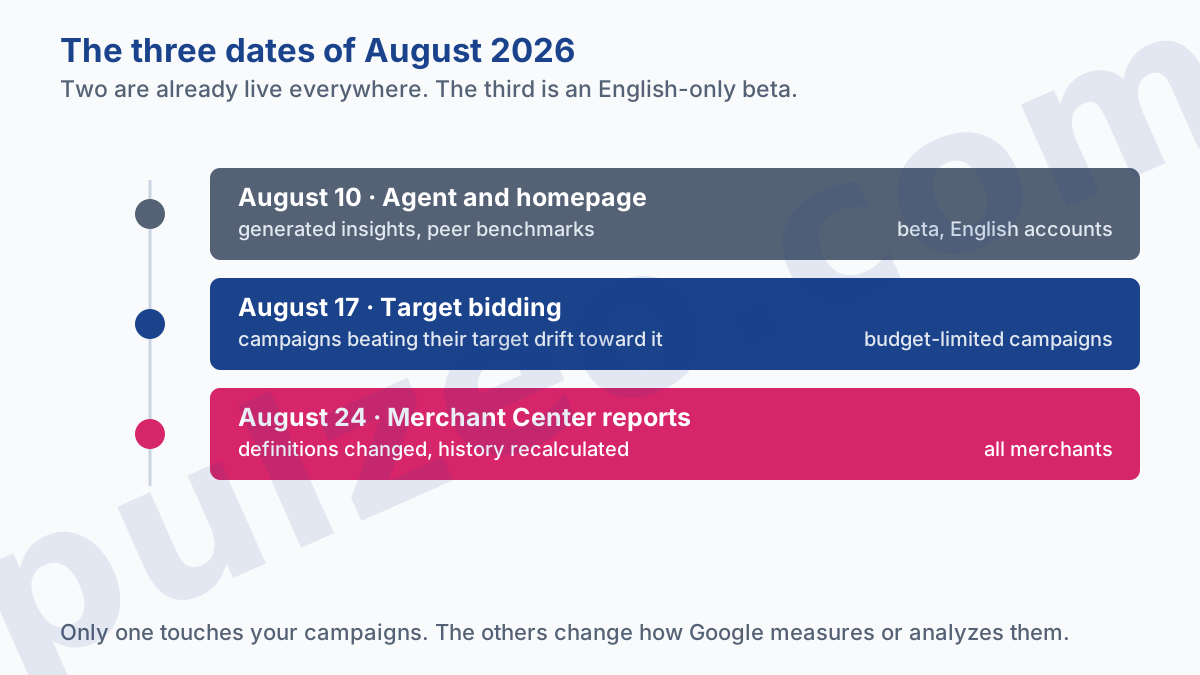
A month without a big announcement, and yet the one where your numbers moved the most. Three dates in August, and only one of them really touches your campaigns: the other two change how Google measures and analyzes what you're already doing.
Here's what changed, in order of what actually affects you.
Merchant Center recalculates your reports, and your history
Since August 24, Merchant Center performance reports have been changing on three counts at once. If you sell online, it's the one change this month that affects you for sure.
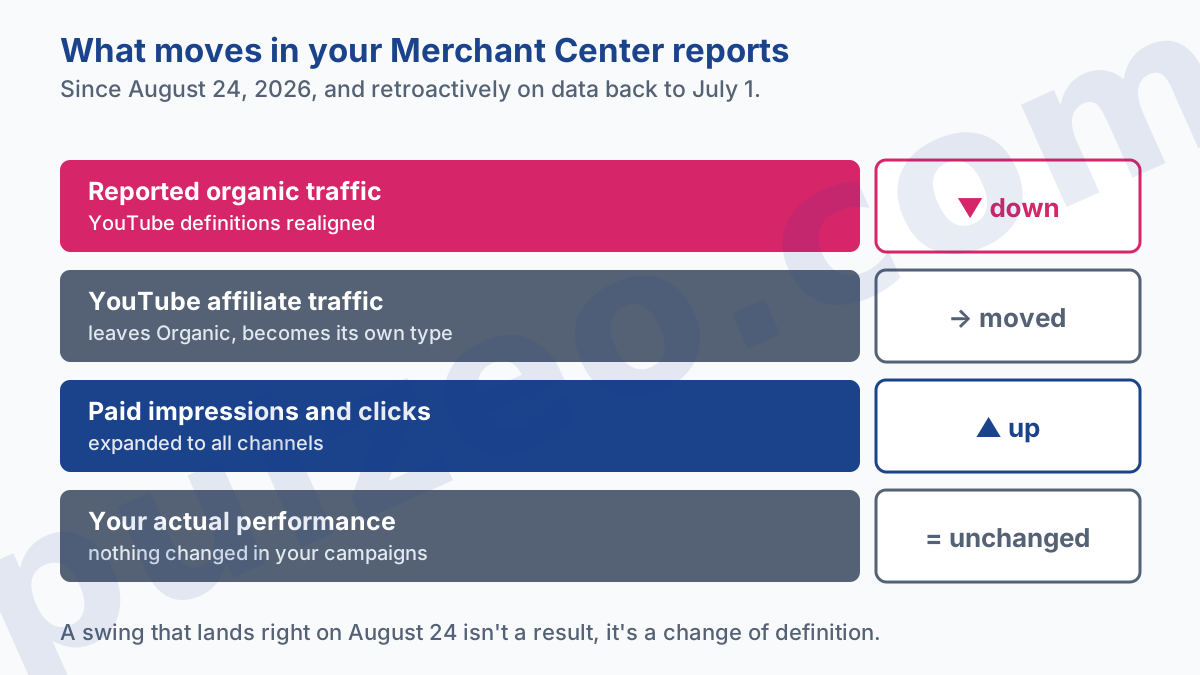
YouTube affiliate traffic, the traffic generated by creators who earn a commission on your products, becomes its own interaction type, "YouTube affiliate." And Google is blunt about the effect: "This will be excluded from the 'Organic' reporting value potentially causing a one-time significant drop in organic traffic."
At the same time, the definitions of organic clicks and impressions coming from YouTube are being aligned with YouTube's measurement standards. Same story: "This one time change can lead to a drop in your reported organic traffic."
The third change runs the other way: product-level reports expand to performance across all channels and ad formats. "This may cause a one-time increase in metrics such as impressions, clicks, and more." Note the "and more": the list is open-ended.
Put the three together and keep track of which way each one moves, because that's where it all plays out:
- "Organic" drops twice, first because affiliate traffic leaves it, then because the definitions change;
- ad metrics go up, because of the expansion to all channels;
- your actual performance hasn't moved an inch.
And here's the detail almost nobody will catch: the first two changes also apply to historical data, starting July 1, 2026. Your July reports no longer say today what they said last week.
It's a classic trap, and an expensive one. Anyone comparing September with July, on a dashboard fed by this data, will see organic collapse and paid take off. The natural conclusion would be to cut something. It would be wrong.
Google also mentions a "Network" dimension for segmenting the data, but it's still to come.
Google expands its agent, but not in manager accounts
On August 10, Google announced new agentic capabilities in Google Ads and Analytics. Three things stand out.
The homepage is redesigned around insights cards personalized to your business, with a prompt box to request a custom insight. Dashboards turn raw data into visualizations from a simple sentence, and produce a summary explaining the why behind the numbers.
Above all, Ask Advisor gains a benchmarking feature that compares your performance against anonymized averages from similar businesses, and it opens in one click from any insights card, bringing the context along.
And here's the kicker, in a footnote to the post: "Currently available in beta for English language accounts." All of these features are in beta, limited to English-language accounts.
One thing Google's help center says hasn't changed, though: for now, "Ask Advisor isn't available in MCC accounts." That shuts out every agency and every freelancer who manages clients from a manager account.
Target bidding switched on August 17
The change is in effect, and the Bid Target Adjustment Tool has been in the interface since July 6. One detail changes everything, and you rarely see it mentioned: the change only affects campaigns on a target strategy that are limited by budget. App campaigns, Video reach campaigns, and Video view campaigns keep the previous behavior.
And the effect runs the opposite way from what you'd expect. Google writes that "campaigns currently performing more efficiently than their set targets now see campaign performance trend toward your set target." So it's not the struggling campaigns that move, it's the ones that were beating their goal: a $10 target CPA held at $5 will drift toward $10.
In other words, what protected you until now was a target set too loose, one the system wasn't trying to hit. The details, the four possible options, and how to choose between them are in the article on what has changed since August 17.
How to read your numbers after these changes
This month's common thread fits in one sentence: your measuring instruments moved, not your campaigns. Your reports will tell a different story from your sales, so you need to know which side to look at.
Start by recording a baseline. If you sell online, write down your organic and ad numbers for July and August as you see them today, with the date you pulled them. It's your only protection against a skewed comparison three months from now, when nobody will remember that a definition changed in late August.
Next, be suspicious of any swing that lands right on these dates. A drop in organic on August 24 isn't an SEO problem, and a jump in impressions the same day isn't an improvement in your ads. If a gap shows up elsewhere in the month, on the other hand, it's real and worth digging into.
Finally, if you run on Target CPA or Target ROAS, the real question this month isn't in your reports but in your settings: when did you last revisit that target? Since August 17, a value that's become unrealistic no longer gets absorbed on its own, and the Bid Target Adjustment Tool Google is pushing in the interface only does part of the sorting.
This is exactly the kind of thing Pulzeo monitors continuously on your accounts, flagging gaps the moment they appear rather than at the end of the quarter, when nobody knows what changed anymore.
August changed nothing in your campaigns. It changed the numbers you judge them by, and rewrote July's.
