
How long is the Google Ads learning phase?

You switch bid strategies on a Tuesday, the CPA is up 40% by Thursday, and the only answer anyone gives you is "let it run for two weeks." Except the Google Ads learning phase doesn't last fourteen days. That number doesn't come from Google. It's been copied from blog to blog for years.
Google gives a different answer, and a far more useful one: the duration isn't counted in days, it's counted in conversions and conversion cycles. That's why the advertiser next door is out of it in five days while you're still biting your nails three weeks in.
How long does the learning period last?
First, what it is: the learning phase is the stretch after you launch a bid strategy or switch to a new one, while Smart Bidding calibrates to its new objective and the strategy shows the "Learning" status. The official documentation, which calls it the learning period, is short and unambiguous on how long that takes.
"It can take up to around 50 conversion events or 3 conversion cycles for the bid strategy to calibrate to the new objective."
Read the sentence again: there isn't a single day in it. Google counts in conversions and in cycles, two units that depend entirely on your business. The most telling benchmark is the second one: three conversion cycles, because you can measure it yourself.
Google also spells out the three factors that make that duration vary: the number of conversions recorded, the length of your conversion cycles, and the bid strategy used. Two of the three are characteristics of your account, not settings you can act on.
One more detail: Google says conversion data from previous campaigns can speed up calibration. So an account with history starts from less of a blank slate than a brand-new one.
In other words, the question "how long does learning last?" has no universal answer, and any page that gives you one in days is politely lying to you.
What is a conversion cycle?
A conversion cycle, in Google's vocabulary, is the time it takes a click to turn into a conversion. Nothing more. Someone clicks today and buys on the spot: your cycle is under a day. Someone clicks today, asks for a quote, compares, and signs three weeks later: your cycle is three weeks.
The gap between those two accounts is staggering, and it explains half the disagreements you read on the subject. An online store selling $40 products gets through three cycles in a week. A B2B software company with a twenty-day cycle needs two months to get through the same three cycles. Both are right when they describe their own experience, and both are wrong when they present it as the rule.
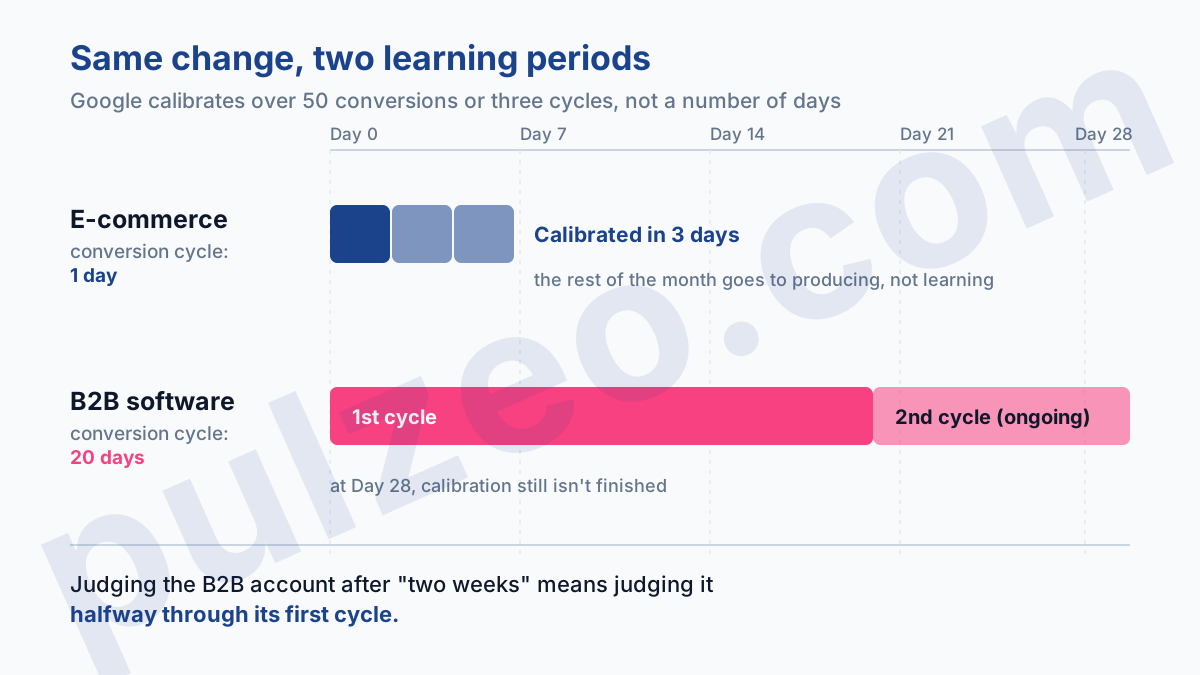
Good news: you don't have to guess. Google offers a Days to conversion report that measures the time between the click and the conversion on your account. You'll find it under Campaigns: click "Segment," then Conversions, then "Days to conversion."
It's a figure almost nobody goes looking for, even though it turns a vague wait into a precise date. Look at it once, note the window in which most of your conversions land, and you'll finally know how long to wait. Not what some article says: what your market actually does.
When the learning phase never ends
There's one case that articles on the subject almost never cover, and yet it's the reality of a lot of small accounts: learning that never wraps up. The first factor Google cites is the number of conversions recorded, and an account that produces three a week simply doesn't build up enough to calibrate anything.
The symptom is easy to recognize: the strategy exits "Learning," goes back into it at the first change, and performance stays erratic from one week to the next without any trend emerging. It isn't a patience problem, it's a volume problem, and waiting longer won't change a thing.
Last year I took over an account running at three conversions a week, spread across six campaigns. Its previous manager changed strategies every two weeks, convinced none of them worked. None of them had ever had time to finish calibrating. We consolidated everything into two campaigns and didn't touch anything for six weeks: the CPA eventually stabilized, without us changing a single bid.
That's the way out: budget, or consolidation. Concentrating spend on one campaign rather than spreading it across five gives the algorithm a signal it can use, whereas spreading it thin condemns all five to uncertainty. It's the reasoning I lay out in the article on the minimum budget Google Ads needs to have something to learn from.
Which actions restart the learning period
Second source of confusion: the list of actions that reset the counter gets longer with every article you read, until it feels like you shouldn't do anything at all. Google itself cites only three causes for the "Learning" status, plus a fourth reserved for Shopping campaigns.
The changes that reset the counter
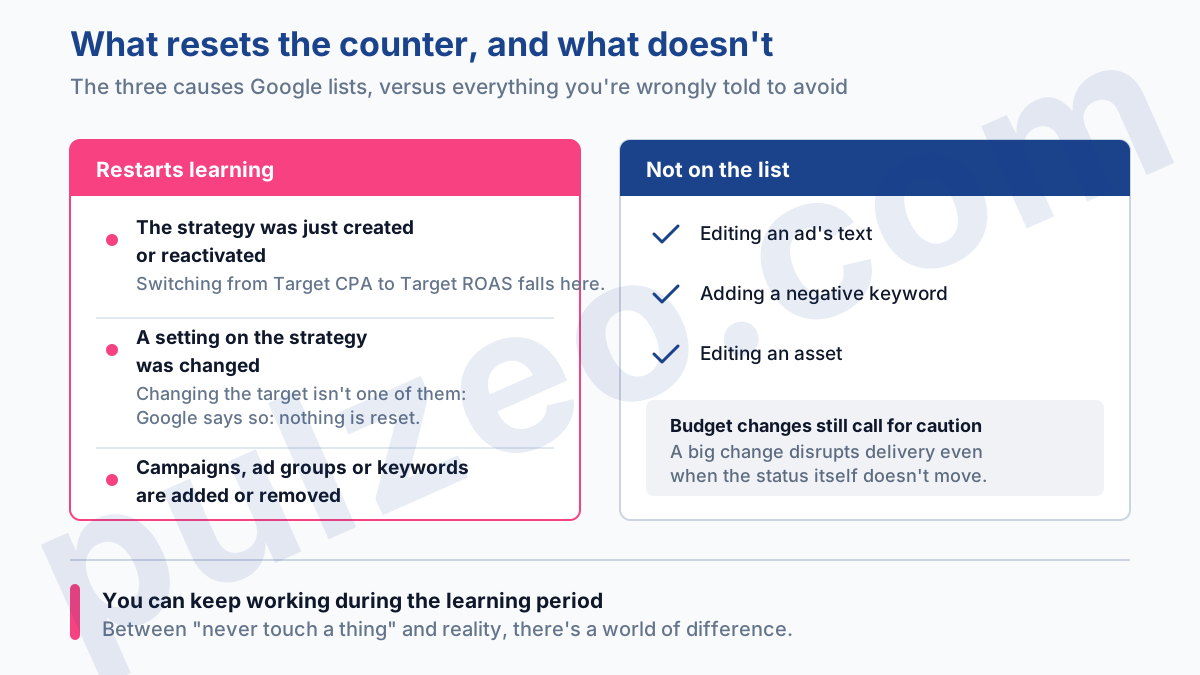
According to the documentation on bid strategy statuses, your strategy goes back into learning in three cases:
- the bid strategy was recently created or reactivated;
- a setting on that strategy was changed;
- campaigns, ad groups, or keywords were added to or removed from the strategy.
A fourth cause applies only to Shopping campaigns: an ad group target change (Google's documentation).
Don't misread the second case: changing the target isn't part of it. Google says so in black and white: lowering a target CPA from $40 to $30 won't trigger a "Learning" status and won't reset anything Smart Bidding has already learned.
The strategy applies the new target right away, so a big jump shifts delivery in one go. Switching from Target CPA to Target ROAS, on the other hand, falls under the first case: you're starting up a different strategy, and that's what goes into learning.
The ones that aren't on that list
Nothing else shows up as a trigger in the documentation, a point the alarmist articles gloss over. Editing an ad's text, adding a negative keyword, changing an asset such as a sitelink: Google doesn't present any of these as resetting the strategy.
In my experience, caution is still in order with big budget changes, which shift things enough to disrupt delivery even when the status doesn't move. But between "never touch a thing" and reality, there's a world of difference: you can keep working on your ads and your negative keywords during learning.
Why CPA goes up during the learning phase
This is the phase that makes people panic, and the mechanism is worth understanding because it completely changes how you read it. During Smart Bidding's learning period, the algorithm isn't trying to get you the best possible CPA: it's trying to find out what works. So it bids on combinations it wouldn't have picked in steady state, just to see what they deliver.
It pays to learn, literally, and that spend is the entry fee for calibration. A $38 CPA for ten days on an account that was running at $26 is nothing unusual if you've just changed goals.
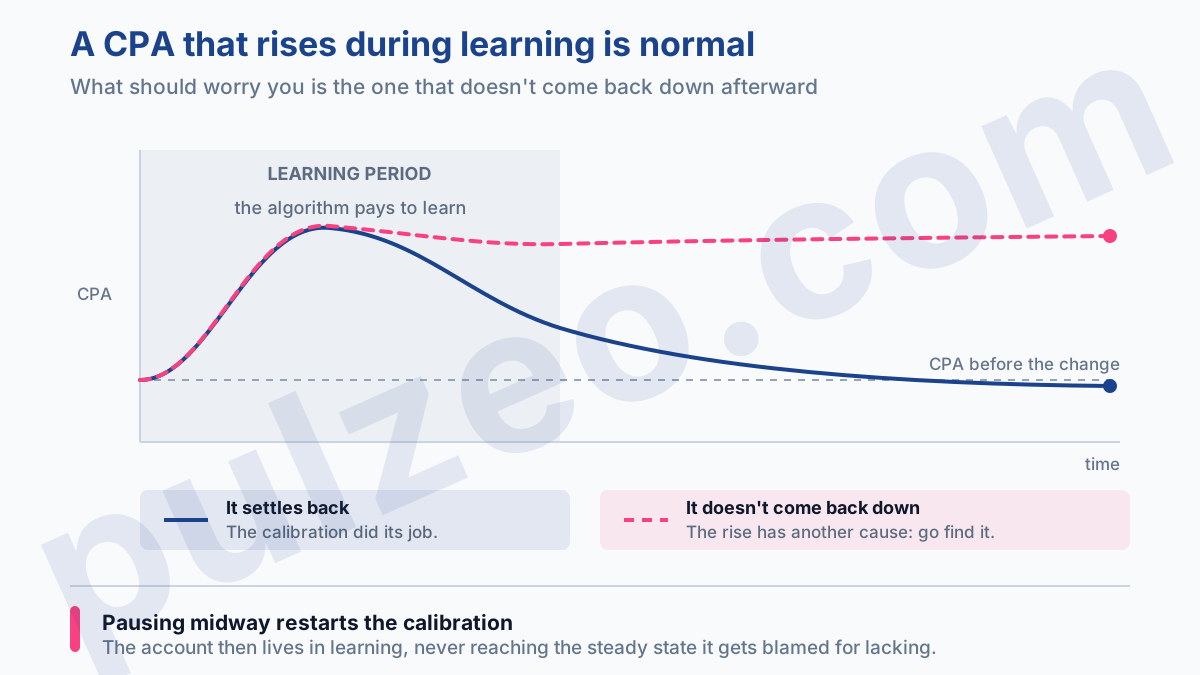
The trap springs when you read that number as a sign that something's broken. You pause, you put the old strategy back, you lower the target CPA again: every change of strategy restarts calibration, and every jump in the target muddies the numbers you wanted to judge. The account then spends its life in learning without ever reaching the steady state it gets blamed for not having.
So what should worry you isn't a high CPA in the first few days, but a CPA that doesn't come back down once the period is over. At that point the rise has another cause, and the reasons a CPA climbs are a subject in their own right. It's also what Pulzeo monitors for you continuously, alerting you when a gap is genuinely out of the ordinary instead of leaving you to interpret a ten-day curve on your own.
How long to leave it alone, in practice
A practical answer, in three steps. First, open your Days to conversion report and note your real cycle. Next, multiply it by three, as Google does: that's your observation window. Finally, if that math gives you less than a week, give it a full week anyway, because a low-volume account produces numbers too unstable to call any sooner.
So a short-cycle online store waits a week. A B2B account with a twenty-day cycle waits two months, even if it feels long, even if you're itching to act. This isn't patience for its own sake: judging earlier means judging on data the algorithm itself treats as provisional.
That leaves the discipline that separates healthy accounts from the rest. Batch your changes. Rather than tweaking one detail every morning, set aside a weekly session where you do everything that needs doing, then let it run. Five micro-adjustments spread over five days cost five times more in calibration than one well-prepared batch.
And keep a written log of what you change, with the date. Without it, three weeks later you won't be able to tell whether the rise you're seeing comes from your change on the 12th or from something else. It's the kind of detail that decides the quality of a diagnosis, and if bidding still leaves you hesitant, the article on choosing a bid strategy explains which one deserves that wait.
Is learning over when the "Learning" status disappears?
Not quite, and it's the detail I find most interesting in the whole documentation. Google writes that its algorithms keep learning after the status disappears.
"Our algorithms continue to learn even when the bidding status no longer shows 'Learning'."
So the status isn't a timer that goes off, it's a warning light that switches off once the bulk of calibration is behind you. In practice, don't judge your performance the day after it disappears: let a few more days of clean data build up.
And don't look for a perfectly stable moment to compare against, because it doesn't exist. Compare periods of the same length, far enough from the last change, and accept that a Google Ads account is a system in constant motion.
That long-run reading is what Pulzeo automates: tracking how an account is really trending rather than today's number, and telling calibration in progress apart from what actually calls for action. The difference between the two is often all that separates an account you let work from an account you keep from learning.
Common questions
How long does the Google Ads learning phase last?
Google says calibration can take up to around 50 conversion events or three conversion cycles. So it isn't measured in days: a conversion cycle is the time it takes a click to turn into a conversion for your business. An online store whose customers buy the same day gets out of learning in a few days; a B2B account with a three-week cycle can stay in it for two months.
What resets the Google Ads learning period?
Google cites three causes for the "Learning" status: a bid strategy recently created or reactivated, a setting changed on that strategy, or campaigns, ad groups, and keywords added to or removed from the strategy. A fourth applies only to Shopping campaigns: an ad group target change. Lowering a target CPA isn't one of them: Google says changing a target won't trigger a "Learning" status. Switching from Target CPA to Target ROAS, on the other hand, falls under the first case, since you're starting up a different strategy.
Should you pause a struggling campaign during the learning phase?
No, unless the spend becomes genuinely dangerous. Pausing in the middle of learning costs you the result you were waiting for and resets the counter when you turn it back on. If the budget worries you, lower it rather than stopping everything: a big budget change disrupts delivery, even though it isn't among the reset causes Google cites.
Is a high CPA during the learning phase normal?
Yes, in fact it's expected. During this phase, the algorithm tests bids and combinations it wouldn't have kept once calibrated: it pays to learn. What should worry you isn't a high CPA in the first few days, it's a CPA that doesn't come back down once the period is over.
