
How to choose a PPC agency

To choose a PPC agency, forget the price and the badge for a moment. What separates two agencies comes down to four pieces of proof you can ask for before signing: who will actually work on your account, what the agency saw in that account before quoting you anything, what it promises you, and how you'll be able to check its work once the contract starts.
Price matters, of course. But two quotes at $900 are not alike, and the cheaper of the two may well be the one that costs you the most. I've taken over enough accounts left behind by agencies to know that a bad choice shows three months later, in the account history, far more often than in the quote.
If you're still wondering whether to outsource at all, the budget question comes before the choice, and I've covered it in the article on the budget at which an agency pays for itself. Here, we assume the decision is made and the candidates need sorting.
Specialist PPC agency or SEO and PPC agency
Three profiles show up for the same search, and they don't sell the same thing. The general web agency builds websites, does a bit of social media, and Google Ads among the rest. The SEO and PPC agency sells both search channels, organic and paid. The PPC specialist, finally, does nothing but advertising, often across several ad platforms.
None of them is bad in principle, but each has its blind spot. At the generalist, the Google Ads account is often run by the person who also has three websites to ship this week. At the SEO and PPC agency, paid search is frequently the side business, with a smaller team than organic search. Ask how many people do PPC full time: the answer tells you which of the two trades keeps the lights on.
Combining both channels makes real sense when your site needs to grow organically at the same time: search terms from paid campaigns show which queries convert, and therefore which ones deserve an SEO effort. If that's your case, how the two channels split the work is worth settling before the first meeting.
For an account that lives mostly on paid search, my advice is simpler: hire a specialist. It's the only profile where PPC is never the first thing to slip in someone's schedule.
Who will actually work on your account
The person who sells you the service is almost never the one who delivers it. That's normal, and it's not a problem as long as you know who the other person is. Insist on meeting, even on a video call, the person who will open your account every week.
Ask them three things directly. How many accounts they already manage, first, because that number decides the real time spent on yours. How long they've been doing this job, second. And whether the work stays in house: some agencies hand PPC to an outside provider on a white-label basis, and the client rarely finds out on their own.
Subcontracting is defensible when it's disclosed. Hidden, it makes you pay a middleman's margin on work done by someone you never chose.
Why ask for an audit of your account before the quote?
It's the most useful piece of proof of all, and the one least often requested. An agency that quotes without opening your account is selling you a standard package. An agency that has opened it can tell you what's wrong in your case, and that diagnosis is what you should compare from one agency to the next.
Give them read-only access. Google Ads has five access levels, described on its page About access levels in your Google Ads account, and read-only lets a user view campaigns and reports without being able to change the campaigns. That's enough for an audit, and you remove it in two clicks if you don't sign.
What comes back after a week tells you most of what you need to know about the agency.
What a serious audit shows
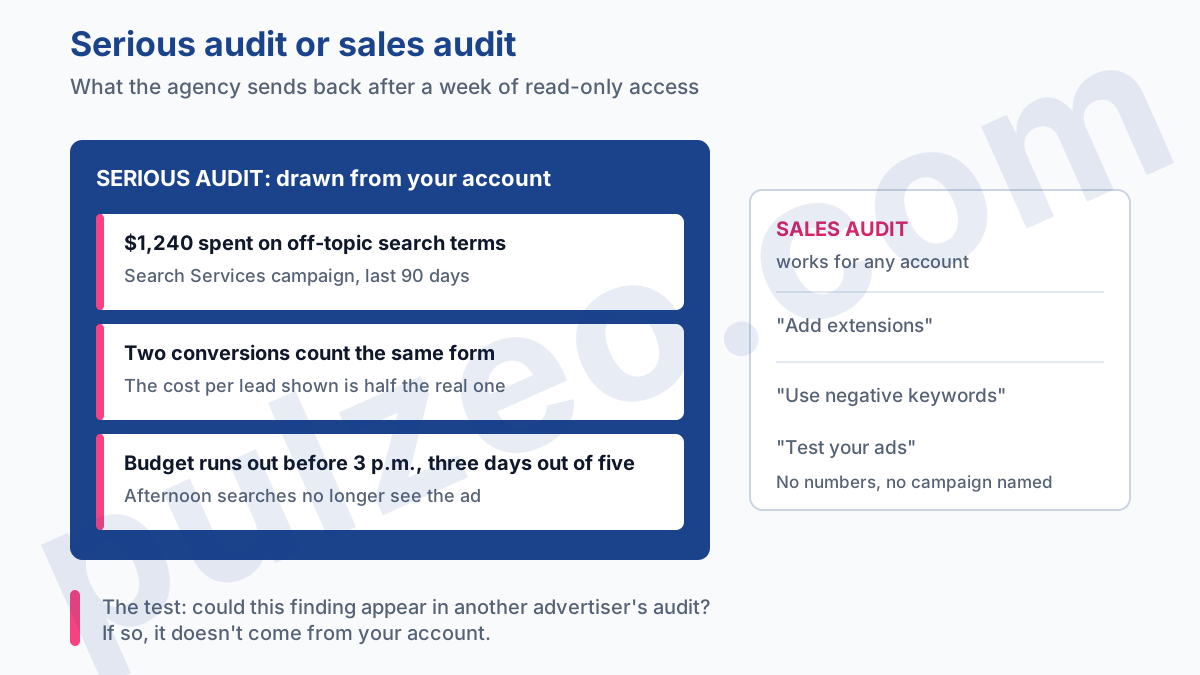
Findings that can only come from your account. "Your Search Services campaign spent $1,240 on terms unrelated to your offer", "two conversion actions count the same form", "your budget runs out before 3 p.m. three days out of five". Each finding comes with a number, a campaign, and a sense of what it costs.
Order matters too. A serious audit starts with conversion tracking, because everything else rests on it, then works up to structure, keywords and ads. That's the order I follow in my own audit checklist, and an agency that follows it shows it knows where an account breaks.
What a sales audit shows
A list of best practices that would apply to any advertiser. "Add extensions", "use negative keywords", "test your ads". None of it is wrong, none of it comes from your account, and the same page was probably sent to the previous ten prospects.
The second warning sign is optimization score presented as a diagnosis. Google calculates it from its own recommendations, and it can go up while your cost per acquisition climbs.
To judge the audit without being an expert yourself, you need a point of comparison. Zeo, the Pulzeo assistant, analyzes the account and writes a diagnosis you can set next to the agency's: if it sees none of what Zeo sees, that tells you something.
What an agency isn't allowed to promise you
Google regulates what agencies tell their clients, and it publishes the rules. Its third-party policy prohibits certain promises, and its guide for advertisers lists what should set off alarms. The most useful passage fits on one line.
"It's not possible to guarantee a specific ad position on Google.com search results pages." Google advertiser guide, working with third parties.
A promise of the top position is therefore either a misunderstanding of how the auction works, or a sales pitch that won't survive the first month. The other warning signs Google lists are no better:
- guaranteeing placement, on a specific channel or at a given position;
- claiming that advertising will improve your organic search ranking, which Google explicitly denies;
- claiming to work for Google without a google.com email address;
- pushing you to sign quickly, through pressure or intimidation.
The policy also sets obligations, and they give you rights. The agency must tell you in writing, before the first sale, whether it charges management fees separate from the Google spend. When it reports costs to you, it must give the exact amount charged by Google, excluding its own fees. And you have the right to know, at a minimum, the clicks, impressions and cost of your ads.
That's the point to check on quotes that announce an "all-in budget": if ad spend and fees are blended into a single amount, ask for them to be separated, which the policy entitles you to.
How do you compare two PPC agency quotes?
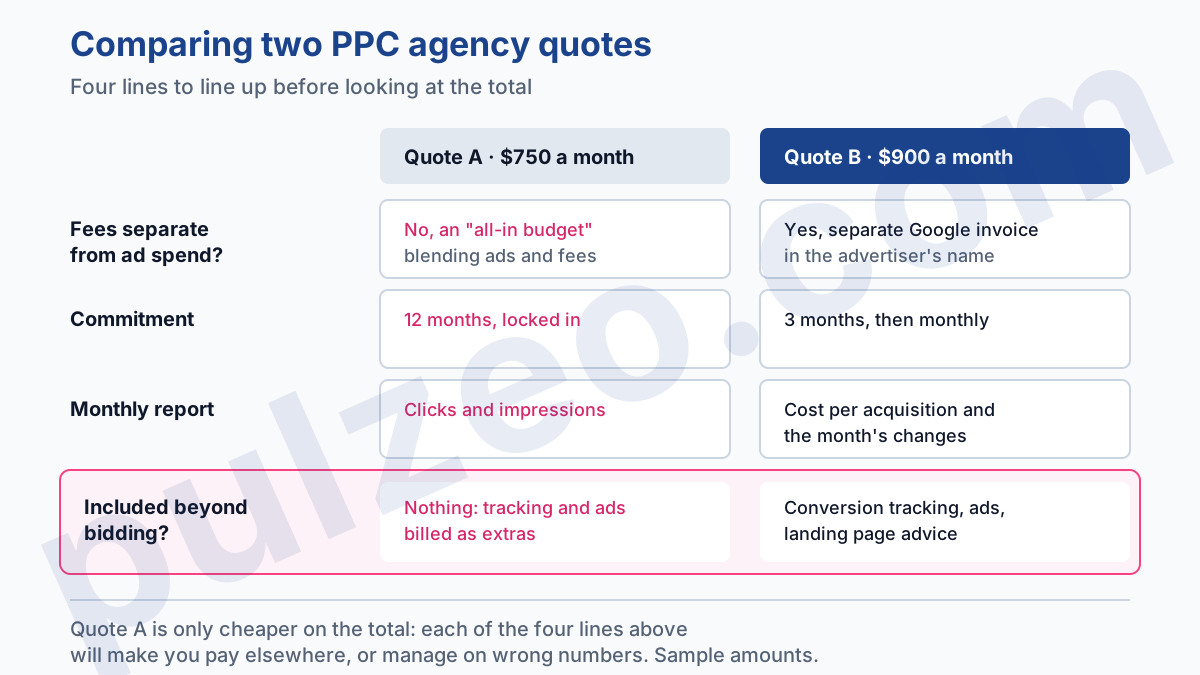
Two quotes from a PPC agency can't be compared on their bottom line. You first have to bring them to the same unit, and that unit is what you get for what you pay. Four lines are enough: fees separated from ad spend, the length of the commitment, the content of the monthly report, and what's included beyond bidding.
That last point is the one that creates the biggest gaps. Conversion tracking, ad creation, recommendations on your landing pages: some agencies include them, others bill them separately, and others don't do them at all. A lower fee that excludes conversion tracking is a more expensive fee, since you'll pay for that work elsewhere or, worse, you'll manage on wrong numbers.
On the amounts themselves and the three pricing models, I won't redo the math here: market ranges and the trap of the minimum fee are in the article on what an agency costs, along with the three contract clauses to lock down.
Should you pick the best PPC agency from a ranking?
Searching for "best PPC agency" brings up rankings and directories. They're useful for drawing up a first list. For the choice itself, they don't help much: a ranking doesn't know your account, your budget or your industry, so it can't tell which agency suits you.
The best agency for you is first of all one where you'll be an ordinary client. A $2,000-a-month account at an agency that handles six-figure budgets will go to the least experienced person on the team, and that's nobody's fault. On the other hand, a small shop that lives on accounts like yours has every reason to look after it.
Same reasoning for the Partner badge on the home page: it shows that activity exists, it says nothing about what the agency will do with your campaigns. I've covered what the Google Partner badge really measures and why it isn't enough to decide.
The first three months with a Google Ads agency
The choice doesn't end at signing. The first three months are your real trial period, and that's when you check whether the proof from the meeting holds up. Google even recommends, in the same guide, testing one partner at a time rather than splitting the budget across several.
A good start looks like this. In the first month, the agency repairs: conversion tracking, structure, obvious exclusions. Performance may even dip while bidding relearns on corrected data. In the second and third months, it optimizes, and the first effects should show up in cost per acquisition.
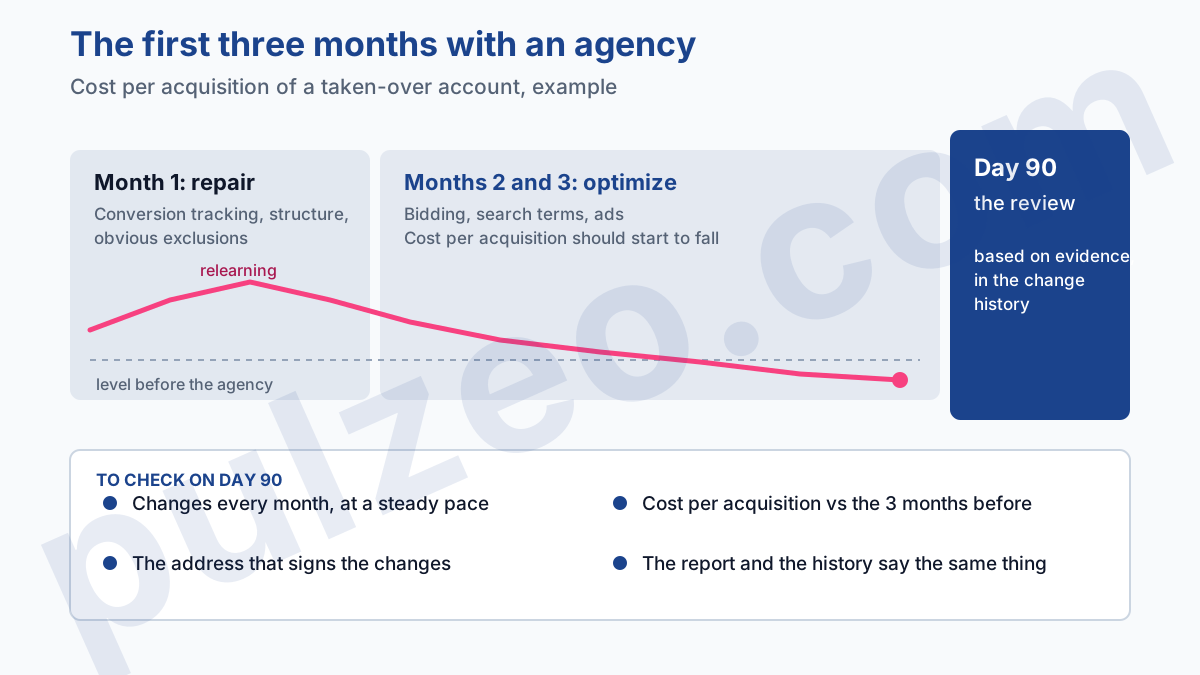
For the 90-day review, you don't need to take the report at its word. Google Ads change history keeps two years of changes, with, in the User column, the email address of the person who made each one. Four checks are enough:
- the number of changes per month, and how regular they are;
- the address that signs them, to know who is really doing the work;
- cost per acquisition compared with the three months before the agency;
- whether what the report says matches what the history shows.
An account where nothing moved for three weeks, while the report talks about "continuous optimization", tells you more than an hour of meetings. And if the address signing the changes isn't that of the person you met, ask the subcontracting question a second time.
What if no agency fits your budget
That's where many advertisers end up after this sorting: serious agencies don't go down to their budget level, and those that do fail the four tests. That finding says something about the size of the account, nothing more.
Three paths remain open. An independent consultant, first, whose monthly fee goes lower than an agency's, with its own limits when it comes to availability. A one-off audit, second: you pay once for the serious diagnosis described above, and you apply the fixes yourself.
Managing in house, finally, with a simple discipline: a weekly routine of half an hour on a simple account, which covers most of what an agency charges for monitoring.
On a small account, the real need is often monitoring more than strategy. That's what Pulzeo does for a fraction of an agency fee: it alerts you when a campaign spends without converting or when cost per acquisition climbs, and its pricing fits on one page.
And nothing forces you to choose: an advertiser who keeps their agency can use it to understand what's being done on their account, with numbers to set against the monthly report.
With or without an agency, the principle stays the same as the four tests. You keep ownership of the account, you keep access to the numbers, and you judge on what the account shows rather than on what you're told about it.
Common questions
What criteria should you use to choose a PPC agency?
Four criteria really separate two agencies: the person who will work on your account (and how many accounts they already handle), the quality of the audit done on your account before the quote, the absence of promises Google prohibits (guaranteed position, an effect on organic rankings), and how you will be able to check the work each month. Price comes next, once those four points have been compared.
Can a PPC agency guarantee the top position on Google?
No. Google says so in its guide for advertisers: it's not possible to guarantee a specific ad position on its search results pages, and its policy prohibits third parties from guaranteeing top placement. An agency that promises the top spot is promising something no provider controls.
Should you give an agency access to your Google Ads account before signing?
Yes, with read-only access. That access level lets the agency view campaigns and reports without being able to change the campaigns, which is enough for a serious audit. An agency that quotes without having looked at your account is selling you a standard package, designed before knowing your problems. Remove the access if you don't sign.
What's the difference between a PPC agency and an SEO and PPC agency?
A PPC agency only does paid search advertising, while an SEO and PPC agency also sells organic search work. The second one makes sense if both channels need to move forward together, for example to spot in paid search the queries worth targeting in SEO. It has a common weakness: PPC is sometimes a side business there, handled by a smaller team than SEO.
