
Microsoft Advertising in France: how big is Bing?

You've probably read that Bing holds 5% of the French search market, so it isn't worth your time. The figure is accurate. The reasoning is wrong, because Microsoft Advertising doesn't sell Bing: it sells a network, and Bing is only one piece of it.
The difference isn't cosmetic. It takes the real audience from a twentieth of the market to nearly a tenth, which is no longer quite the same decision. The figures below were measured in France, my home market. Here's the math, and above all what to do with it.
Microsoft Advertising's real weight in France
Microsoft describes its search network plainly: the ads show on Bing, but also on AOL, Yahoo, DuckDuckGo, Ecosia and other partners. Yet these engines are counted separately in market share rankings, and that's where the misunderstanding starts.
Here are the French figures reported by Statcounter for July 2026, with the ad network that sells each engine's ads.
| Search engine | Market share in France | Ad network |
|---|---|---|
| 88.85% | Google Ads | |
| Bing | 5.24% | Microsoft |
| Yahoo! | 2.48% | Microsoft |
| Ecosia | 1.26% | Microsoft and Google |
| Qwant | 0.82% | Microsoft |
| DuckDuckGo | 0.71% | Microsoft |
Qwant is the surprise on this list, but it belongs there: since its 2019 agreement, the French search engine has used Microsoft's advertising platform while keeping its own index. Ecosia is a shared case, since its help center says its ads can come from Microsoft Advertising as well as from Google AdSense.
Adding it up gives a range rather than a single figure: 9.25% counting only the engines fully monetized by Microsoft, 10.51% if you add Ecosia. Either way, it's a long way from the 5% everyone quotes.
And that's not even the most interesting figure.
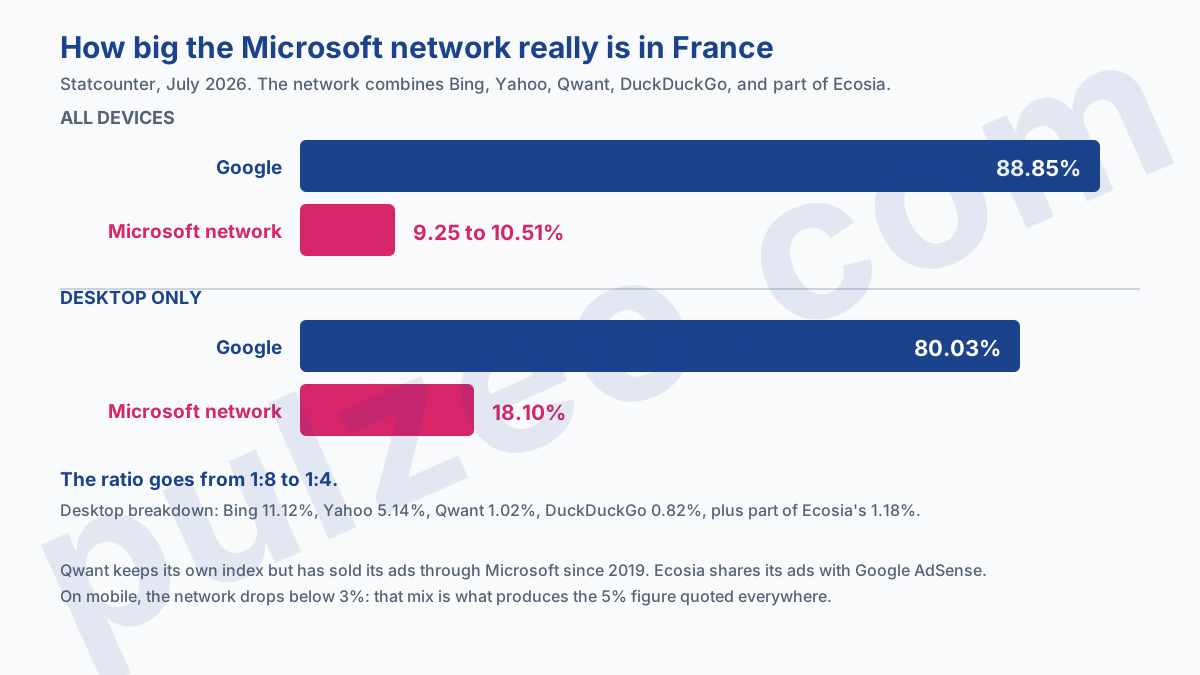
On desktop, the network is close to a fifth
The shares I just gave mix all devices together, and that mix is what makes the Microsoft network look small. Look at the same measure for searches made from a computer only, still in July 2026: Bing climbs to 11.12%, Yahoo to 5.14%, Qwant to 1.02% and DuckDuckGo to 0.82%.
That's 18.10% for the network, or 19.28% counting Ecosia. Almost a fifth of desktop searches in France, versus 80.03% for Google. The ratio is no longer one to eight but one to four.
It's the only statistic that should drive your decision, and it also explains why the Microsoft network gets such bad press: on mobile, it drops below 3%, and that's where most consumer searches happen.
Ten percent of what, exactly?
That's the question to ask before you get carried away, because a share of the market isn't a share of your sales. Three gaps separate one from the other.
- the device: the Microsoft network is strong on desktop and marginal on mobile, which matters depending on whether your customer orders from a desk or on the train;
- the intent: a market share counts every search, not just commercial ones, and nothing says your query follows the average;
- the absolute volume: a tenth of a market you already saturate is a real addition, while a tenth of a market where you're invisible won't change your quarter.
The first gap is the most telling, and you can check it in a minute: look at the share of your Google Ads conversions that comes from computers. If it's low, the question is already settled.
The targeting Google Ads can't do
There's one thing the Microsoft network lets you do that exists nowhere else, LinkedIn aside. Microsoft owns LinkedIn, and that ownership has a direct consequence in the ad interface: you can target on professional profile data.
Three criteria are available: company, industry and job function. In other words, you can push your bids up when the person typing the query works in finance, or holds a purchasing job. Google has nothing like it.
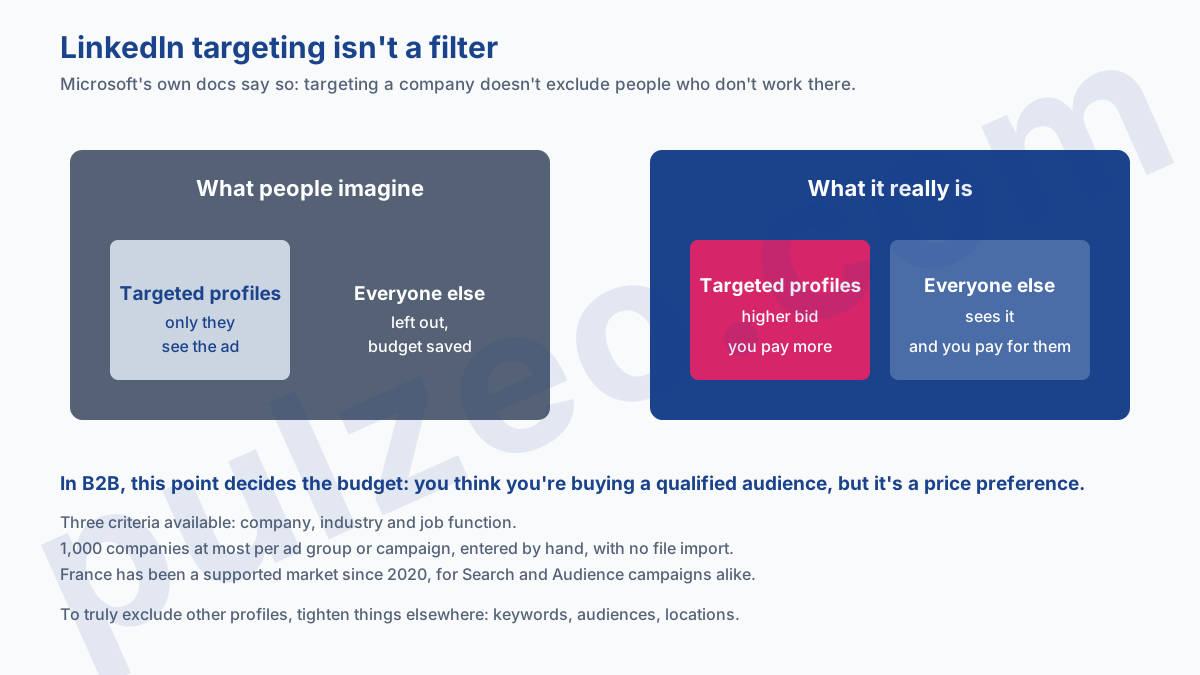
One caveat before you get excited, and it completely changes how you use it: this targeting doesn't narrow your audience. Targeting a company doesn't exclude the people who don't work there.
The mechanism is a bid adjustment: you pay more for the profiles you care about, and you keep paying for everyone else. The distinction is crucial in B2B, where plenty of advertisers think they're buying a qualified audience when they're really buying a pricing preference.
Finally, two technical limits that matter for serious use: you can't target more than 1,000 companies in a single ad group or campaign, and company lists are entered by hand, with no import from a file or another platform.
Importing your Google Ads campaigns
This is Microsoft's sales pitch, and credit where it's due, it's a solid one: you don't start from scratch. The platform can read a Google Ads account and copy it.
The three import modes
The simplest, Quick import, only needs you to sign in to your Google account and does everything else. It's meant for advertisers with a single account and no Merchant Center.
The second, Smart import, lets you name the import and set its schedule, then adjust bids, budgets and campaign status before you confirm. It's the one that fits as soon as you manage several accounts or a Merchant Center comes into play.
The third, Advanced import, opens everything up: you pick which items get imported, adjust bids, bid strategies and budgets, and associate your UET conversion tracking tags. It's the mode to use when your Google account has settings you don't want landing as they are.
The automatic sync trap
The import can be rerun automatically every day, every week or every month, so the changes you make on Google carry over on their own. It's convenient, and that's exactly where things go wrong.
An automatic sync copies your decisions, bad ones included, and it does so on an account you never open. It also copies budgets calibrated for Google's volume onto an inventory eight times smaller across all devices.
Add the fact that some items don't get imported, which Microsoft acknowledges by recommending you review your campaigns afterward, and you end up with a second account that looks like the first without behaving like it.
The prerequisite, then, is that the source account is healthy on the day you duplicate it. That's exactly what Pulzeo's action plan is for on your Google Ads accounts: knowing what's right before you make a copy of it somewhere else.
Do you get the same campaign types?
For the most part, yes, and that's what makes duplication credible. You'll find Search campaigns, Dynamic Search ads, Shopping, Audience campaigns and Performance Max. An advertiser coming from Google isn't facing a foreign tool.
There's even a desktop app equivalent to Google Ads Editor, for bulk changes offline, with the same download-then-post logic. If you're used to working that way on your Google accounts, the habit carries straight over.
So what differs isn't the tooling but the volume, and that difference has a practical consequence nobody mentions: automated bidding strategies need conversions to learn. On an inventory four times smaller, even when you focus on desktop where the network is strongest, what fed an algorithm properly on Google can leave it going hungry here.
When Microsoft Advertising is worth it
Three situations make it worthwhile, and they're easy to spot:
- your business sells on desktop, on weekdays, to professionals, which is where the Microsoft network is strongest;
- your Google campaigns are held back by competition rather than by your budget, in other words you pay a lot because everyone bids on the same queries;
- you've already worked through the optimizations on Google and you're after incremental volume, not a rescue.
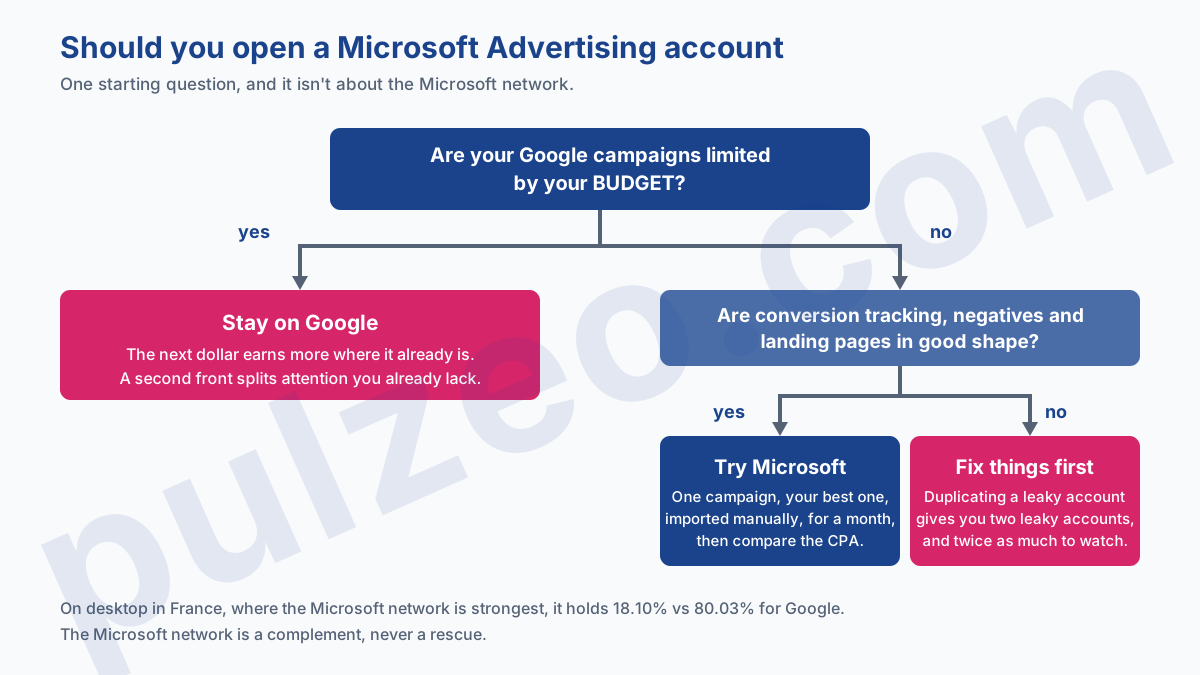
Conversely, adding Microsoft makes no sense if your Google campaigns are limited by budget. In that case, the next dollar earns more where it already is, and opening a second front means splitting attention that was already in short supply.
What Microsoft Advertising won't fix
Here's the point I want to spell out in black and white, because it's the mistake I see most often when an advertiser turns to another ad platform.
Conversion tracking that reports wrong numbers will stay wrong on Microsoft. Landing pages that convert at 1% will convert at 1% elsewhere. Missing negative keywords will let the same useless queries through, and you'll pay for them twice.
Switching platforms doesn't fix anything: it duplicates. Before you open a second account, check that the first one is clean, starting with conversion tracking and negative keywords, the two most common leaks.
Duplicate a badly tuned account and you get two badly tuned accounts, plus twice the time spent watching them.
Where to start if you test it
Take a single campaign, the one that converts best for you, and import it on its own. Not the whole account, not the automatic sync: one campaign, imported manually, just to see.
Set its budget at what you could lose without a second thought, let it run for a full month, and compare cost per acquisition, not cost per click. A cheaper click that doesn't convert isn't good news.
This kind of side-by-side comparison of two accounts is exactly what eats up time by hand, and it's work the Pulzeo dashboard already does for your Google Ads accounts, spend and conversions next to each other.
One last word, since this article strays from our usual ground. Google still holds 88.85% of the French market across all devices, and nothing you do elsewhere will make up for a poorly run Google account. The Microsoft network is a complement that deserves to stop being underestimated, not an alternative.
Common questions
What is Bing's market share in France?
5.24% in July 2026 according to Statcounter, versus 88.85% for Google. But that share only measures Bing, while Microsoft also sells the ads on Yahoo, DuckDuckGo and Qwant, plus part of Ecosia's. The network therefore accounts for 9.25 to 10.51% of searches across all devices, and 18.10% of those made from a computer alone.
Can you import your Google Ads campaigns into Microsoft Advertising?
Yes, and it's Microsoft's main sales pitch. There are three import modes, from the simplest, which only asks you to sign in to your Google account, to the most configurable, which lets you choose what gets brought over. The import can be scheduled to run again every day, every week or every month.
Are clicks cheaper on Microsoft Advertising?
That's what the platform highlights, and the logic of the auction points that way: fewer advertisers compete for the same inventory. But no general figure holds for your industry. The only way to find out is to duplicate a campaign that already converts for you and compare cost per acquisition at comparable volume.
Should you take on Microsoft Advertising before optimizing Google Ads?
No, in almost every case. An account with broken conversion tracking, missing negative keywords or landing pages that convert poorly will reproduce the same flaws elsewhere, with a second account to watch. Expanding to Microsoft makes sense when the foundation is clean and growth has hit a ceiling.
