
Is Google AI Max replacing Dynamic Search Ads?

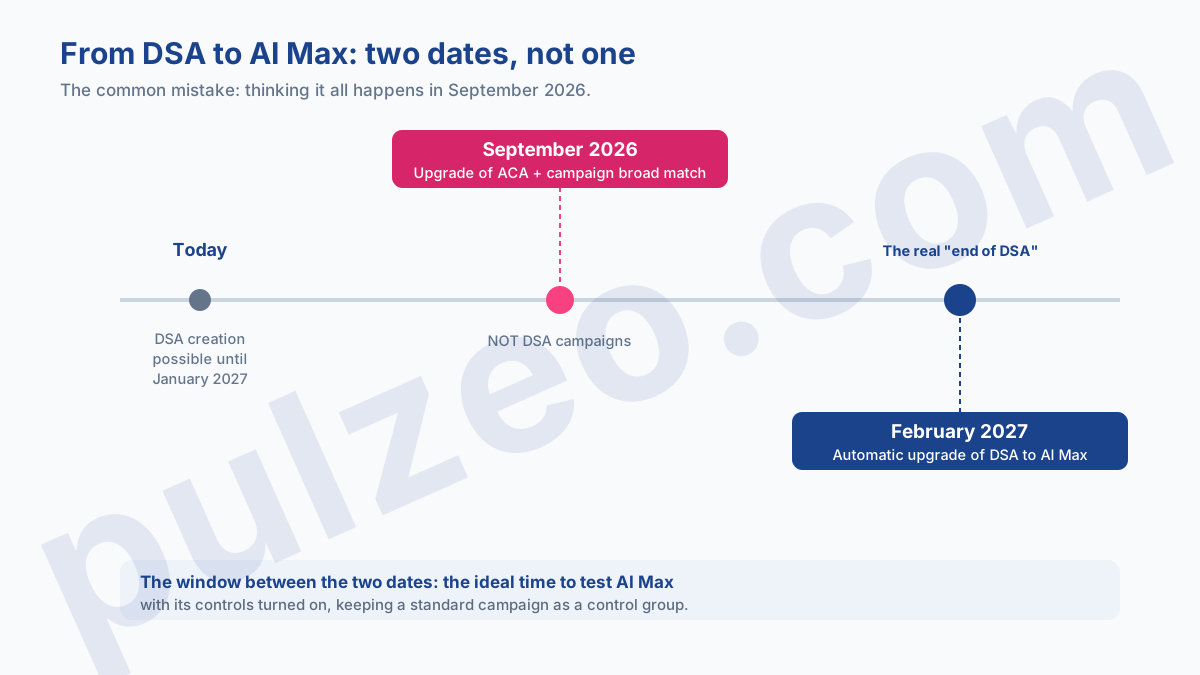
You've probably read that Google is killing Dynamic Search Ads in September 2026. It's wrong, and the mistake is everywhere. Google AI Max does replace Dynamic Search Ads, but the automatic upgrade of DSA campaigns has been pushed back to February 2027. What changes in September is two other settings, not your DSA campaigns.
This timeline mix-up isn't trivial: it pushes advertisers into a panicked migration of a feature they'd be better off setting up calmly. Here are the real dates, what AI Max actually adds to DSA, and why its guardrails aren't optional.
How AI Max works
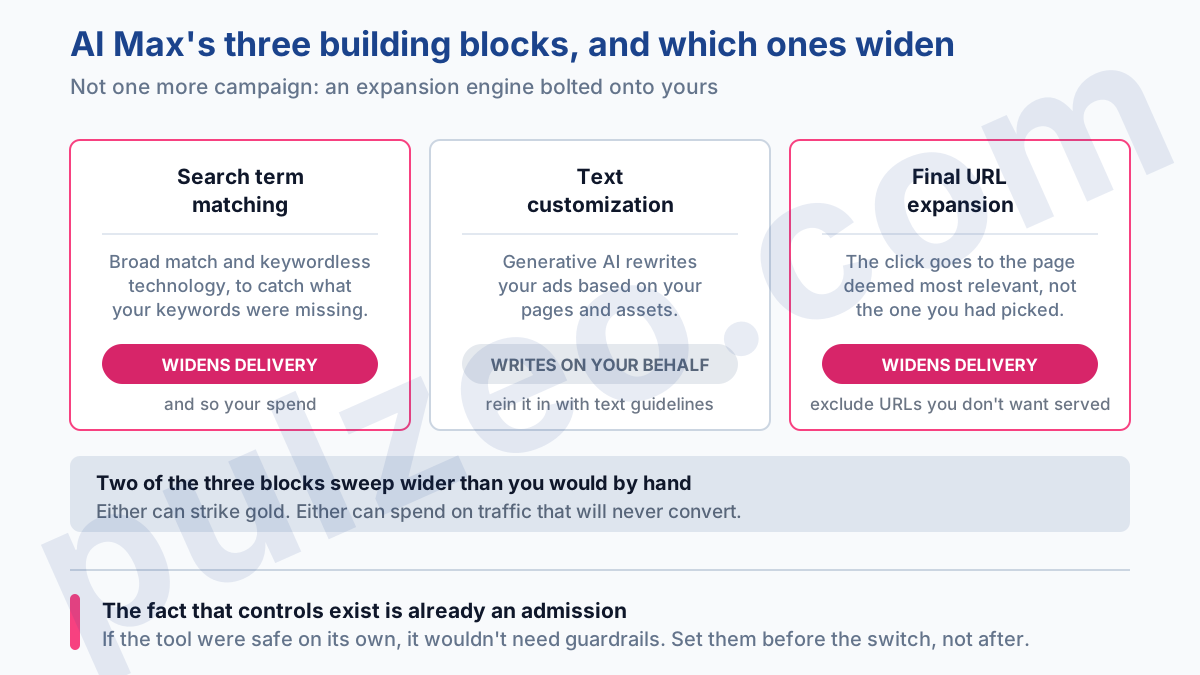
AI Max is an AI optimization layer that sits on top of your Search campaigns. It doesn't replace the campaign: it gives it a bigger engine. According to Google's documentation, it brings together three building blocks:
- search term matching, which relies on broad match and "keywordless technology" to go after queries your keywords weren't catching;
- text customization, which uses generative AI to rewrite your ads based on your pages and your existing assets;
- final URL expansion, which sends the click to the page on your site judged most relevant, not necessarily the one you had picked.
Remember this trio, because it says it all: AI Max is an expansion engine. It finds more queries, writes more variants, tests more landing pages. That's its strength, and it's also exactly where the budget can leak if nobody has a hand on the wheel.
Does AI Max replace Dynamic Search Ads?
Yes, but not as a simple name change. DSA already generated ads from your website content, without keywords. AI Max takes that principle and adds broad match, generative rewriting and URL expansion. Where a DSA was content to match a query to a page, AI Max actively tries to push the boundaries.
In fact, Google presents AI Max as a superset of DSA in its official announcement: the same benefits, plus richer signals to find untapped queries. That distinction matters for how you run your account.
Migrating a DSA campaign to AI Max isn't like ticking an equivalent box: you're switching on a bigger engine that, left alone, sweeps far wider than you would by hand. The replacement is real; the equivalence is a myth.
The exact timeline: September 2026 and February 2027
This is where almost every article gets it wrong, so let's be precise. There are two dates, not one, and they don't cover the same things. The confusion comes from Google first announcing September 2026 for everything, then pushing part of the timeline back in June.
What switches over in September 2026
Starting in September 2026, two settings move to AI Max automatically: automatically created assets (ACA) and the campaign-level broad match setting. If you use either one, AI Max will take it over without any action on your part. Your DSA campaigns, on the other hand, aren't part of this first wave.
That first wave did start in September, and what it switches on by default depends on where you started: I covered it in the September 2026 Google Ads news.
What waits until February 2027
The automatic upgrade of Dynamic Search Ads to AI Max doesn't begin until February 2027. Google explicitly reopened the creation and editing of DSA campaigns to give advertisers more time: to test, to migrate at their own pace, and to protect their campaigns' results. So you have several months to test AI Max on your own terms, rather than having it forced on you in a rush.
Google announced this delay on June 11, 2026, with one caveat: creating new DSA campaigns ends as early as January 2027. My July roundup covers it along with two other calendar changes worth knowing about.
AI Max and rising CPA
Back to the expansion engine, because it's the one deciding your bill. Two of AI Max's three building blocks widen delivery by design: broad match goes after peripheral searches, and URL expansion sends traffic to pages you hadn't chosen. Either one can strike gold. Either one can also spend on traffic that will never convert.
It's the same trap as regular broad match, the one I break down in the article on negative keywords: the wider the net, the more bycatch it hauls in unless you tighten it. And since AI Max relies on Smart Bidding, a flood of broad traffic that doesn't convert can push up the cost per acquisition before the algorithm learns to sort it out.
None of this is inevitable, but it's a consequence to keep an eye on. This ties directly into your Google Ads budget: an engine that widens delivery burns through the daily budget faster, and the algorithm needs enough conversions to find its way.
AI Max control settings
Here's what the alarmist articles leave out: AI Max isn't a sealed black box. Google has shipped a set of controls, and the fact that they exist is already an admission. If the tool were safe left to itself, nobody would need guardrails. The main ones should be in place from day one:
- brand settings, to include the brands you want your ads associated with and exclude the ones you don't want to appear alongside;
- URL exclusions, at the campaign level, to stop certain pages from being used as a destination;
- locations of interest, to focus delivery on real geographic intent;
- text guidelines, which set limits on what generative AI is allowed to write on your behalf.
Your negative keywords are still respected: Google confirms it on its myth-busting page. On that same page, Google writes in black and white that "human expertise is crucial to get the most out of AI Max." In plain English: it isn't an autopilot, and the vendor itself is telling you so.
The "Search terms and ad combinations" report (formerly "Search terms and landing pages from AI Max") is there for exactly that: it shows you where the traffic really goes, and it's the first thing to open every week after a switch.
Google's "+7%" conversions claim
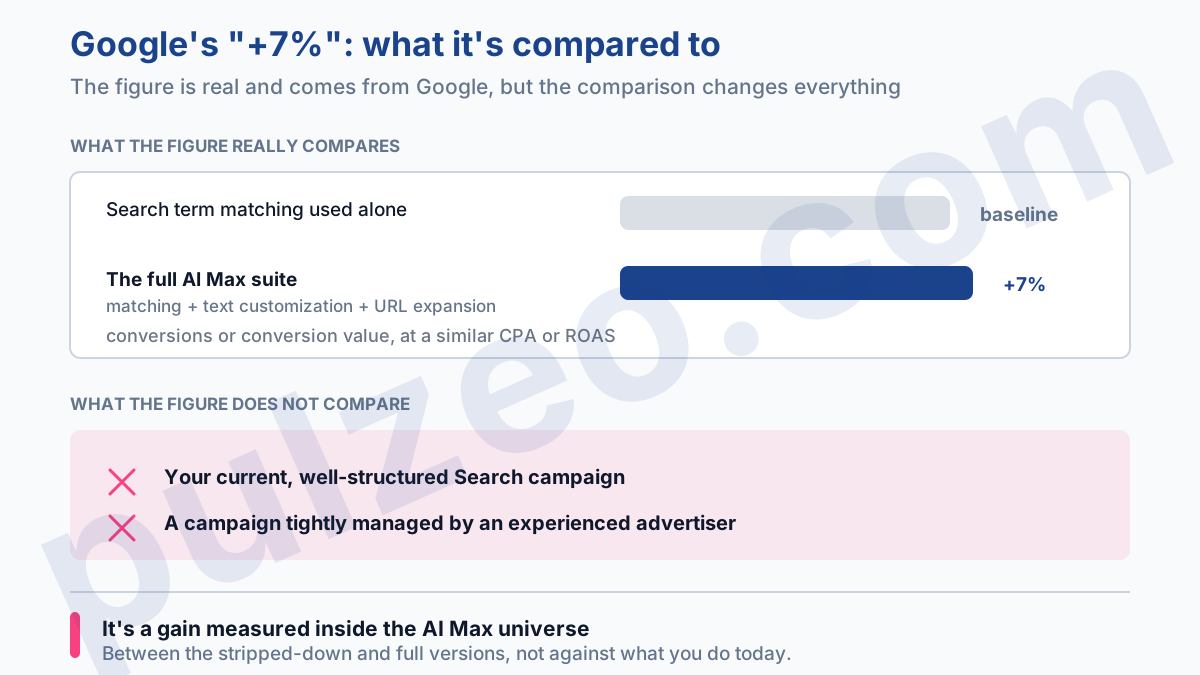
You'll see this figure everywhere, so let's put it in context. Google says that AI Max campaigns see an average of 7% more conversions or conversion value at a similar CPA or ROAS. The figure is real, and it comes from Google. But read what it's compared to, because that changes everything.
That +7% compares the full AI Max suite (search term matching, text customization, URL expansion) with search term matching used alone. It isn't a comparison with your well-structured standard campaign, let alone with a campaign tightly managed by an experienced advertiser.
It's a gain measured inside the AI Max universe, between the stripped-down version and the full one. Useful to know, but it isn't the "+7% versus what you're doing today" promise that so many people read into it.
Difference between AI Max and Performance Max
The similar names sow confusion, yet the two tools don't play the same role. Performance Max serves across all of Google's inventory at once (Search, Maps, YouTube, Discover, Gmail, and the Display Network), based on goals and asset groups. AI Max stays confined to the Search Network: it beefs up an existing Search campaign; it doesn't scatter it across six channels.
Day to day, the difference is very real. With AI Max, you keep the structure of a Search campaign, its keywords, its ads, and you add a layer of expansion on top. With Performance Max, you hand the split between channels over to the algorithm.
If Search is your bread and butter and you want to stay on that turf while keeping your bearings, AI Max is the right level of automation. If you want to cover every channel in one move, Performance Max is what you need, with the precautions I laid out in my article on it.
Should you switch to AI Max now?
No panic, no rush. You have until February 2027 to migrate your DSA campaigns, and the right way to approach AI Max isn't to migrate everything at once, but to test it while keeping a point of comparison.
Take a share of your Search budget, turn on AI Max with its controls from day one, and leave the rest in a standard campaign as a control group. Then you'll know what AI Max really brings to your accounts, not on average across everybody else's.
Three habits apply to this test. Set up the controls before launching, never after watching the budget slip away. Open the AI Max search terms report every week, to cut what doesn't convert. And judge by the actual cost per acquisition rather than by the Optimization score Google will show you.
That's exactly the kind of continuous monitoring Zeo automates: it tracks your accounts, spots when a switch sends the CPA jumping, and warns you before the week's budget is gone. AI Max is a good engine. Like any engine, it's only as good as the driver, and the same vigilance already applies to Performance Max.
AI Max automates part of your work; it doesn't do away with it. The difference comes from the controls you take the time to set.
Common questions
What is AI Max in Google Ads?
AI Max is an AI optimization layer for Search campaigns. It brings together three building blocks: search term matching (which relies on broad match and keywordless technology), text customization powered by generative AI, and final URL expansion, which sends the click to the most relevant page on your site. It's the feature that is gradually replacing Dynamic Search Ads, while widening their scope.
When are Dynamic Search Ads going away?
Not in September 2026, despite what you often read. Google pushed the automatic upgrade of Dynamic Search Ads to AI Max back to February 2027. What does switch over in September 2026 is two other settings: automatically created assets (ACA) and the campaign-level broad match setting. You can still create and edit DSA campaigns as usual, but creating new ones will no longer be possible from January 2027.
Does AI Max increase CPA?
It can, if you leave it without guardrails. AI Max relies on broad match and URL expansion, two levers that widen delivery, and therefore spend, toward queries you wouldn't have targeted. Without brand controls, URL exclusions and text guidelines, the budget goes to broad traffic and the cost per acquisition climbs. Google itself recommends measuring and adjusting: the tool isn't an autopilot.
How do you keep control of your budget with AI Max?
By turning on the controls before the switch, not after. AI Max offers brand settings (include or exclude brands), URL exclusions (stop certain pages from being used as a destination), locations of interest and text guidelines. Your negative keywords are still respected. And the "Search terms and ad combinations" report shows you where the traffic really goes: watch it closely during the first few weeks.
