
Google Ads for accountants in France: cost per client in 2026

Bidding €10 on a click scares off most advertisers. For a restaurant, it's untenable: you'd have to sell a lot of meals to pay back a single visitor. For a chartered accountant in France, it's the going rate, as French Keyword Planner data shows. Google Ads for accountants runs on economics other trades don't have.
The reason comes down to one thing: recurring revenue. A client you sign doesn't pay once, they pay every year, often for several fiscal years. Here's what a click really costs in this sector, measured in France across 210 keywords in August 2026, and the one number that decides whether your campaigns are profitable.
How much should an accounting firm bid on Google Ads?
First, a note on method that changes how you read the table. The amounts below are the bids Google estimates you need to aim for the top of the page, as Keyword Planner publishes them. They're amounts to bid, not amounts billed: what you'll actually pay will be lower, and will depend on the day's competition and the quality of your ads.
| Keyword (translated) | Searches / month | Estimated bid |
|---|---|---|
| chartered accountant | 49,500 | €2.97 to €10.64 |
| accountant | 27,100 | €3.45 to €13.08 |
| accountant near me | 5,400 | €2.13 to €8.27 |
| online accountant | 3,600 | €5.99 to €19.02 |
| LMNP accountant | 2,400 | €5.20 to €14.97 |
| accountant quote | 170 | up to €19.68 |
| works council accountant | 110 | up to €75.52 |
Across all 210 keywords in the sector, the median high bid comes to €8.67. For context, I pulled the same indicator for seven other trades on the same day: auto repair shops come out at €1.18 and personal trainers at €1.32, about seven times less. The profession is expensive, and it's expensive for a reason I'll come back to below.
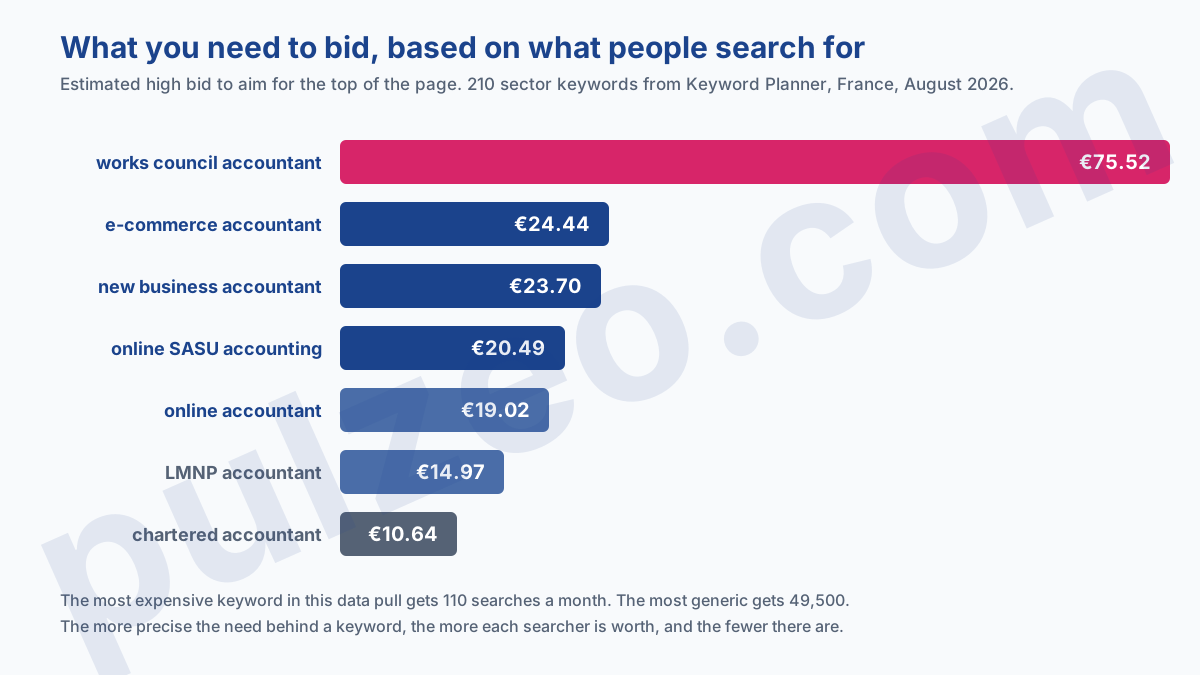
The specialties where the bid tops €20
Look at the bottom of the table. "Works council accountant" calls for a bid of up to €75.52 for only 110 searches a month. That's seven times the generic keyword, on a volume four hundred and fifty times smaller.
It's the sector's logic pushed to its limit. The more precisely a keyword describes a need, the more the person typing it is worth, and the more specialized firms are willing to pay for them.
What the firm bidding €75 is really paying for
It isn't buying a visitor. It's buying a CSE, the works council representing employees in a French company, which above a resource threshold set by decree must have its annual accounts presented by a chartered accountant. A recurring annual engagement, with a single point of contact. Certification falls to a statutory auditor and only applies to the largest councils. So the keyword describes a situation, not just a need for an accountant.
The same mechanism shows up in the other specialties I pulled in August 2026:
- e-commerce accountant, up to €24.44 for 320 searches a month;
- new business accountant, up to €23.70;
- online SASU accounting (a French single-shareholder company), up to €20.49;
- LMNP accountant (France's tax status for non-professional furnished rentals), €5.20 to €14.97 for 2,400 searches a month.
In each of these cases, the keyword says "I'm looking for an accountant who knows my situation." That extra detail makes all the difference to your signing rate.
Where to position yourself when you start out
Go for the niches, no question. The keyword "chartered accountant" draws all the sector's competition, including the online platforms spending budgets an independent firm can't keep up with. The bid there is a bit lower, but the client will cost you a lot more.
A specialty you've already mastered, on the other hand, puts you in front of someone whose need you know before they even say a word. You no longer have to convince them you're the right person, which is precisely the part that takes longest.
That leaves finding out which of your specialties people actually search for, and at what price. It's a data pull you have to redo for every market, and one that Pulzeo's keyword research produces for your geographic area, volumes and bids included.
From click to signed client
The bid amount tells you nothing until you've turned it into a cost per client. The calculation takes two rates only you know, so I'm laying down working assumptions here for you to replace with your own.
Take a hundred clicks. At a €10 bid, they cost €1,000 at most, and less in practice, since you rarely pay the amount you bid. With a well-built contact page, expect three to five appointment requests: that's the ballpark I see for this kind of service. Of those requests, a firm that calls back quickly signs about one in three.
So you end up with one signed client for €600 to €1,000 in advertising, taking the least favorable assumption on click cost. Put like that, the figure looks huge. It only is if you stop there.
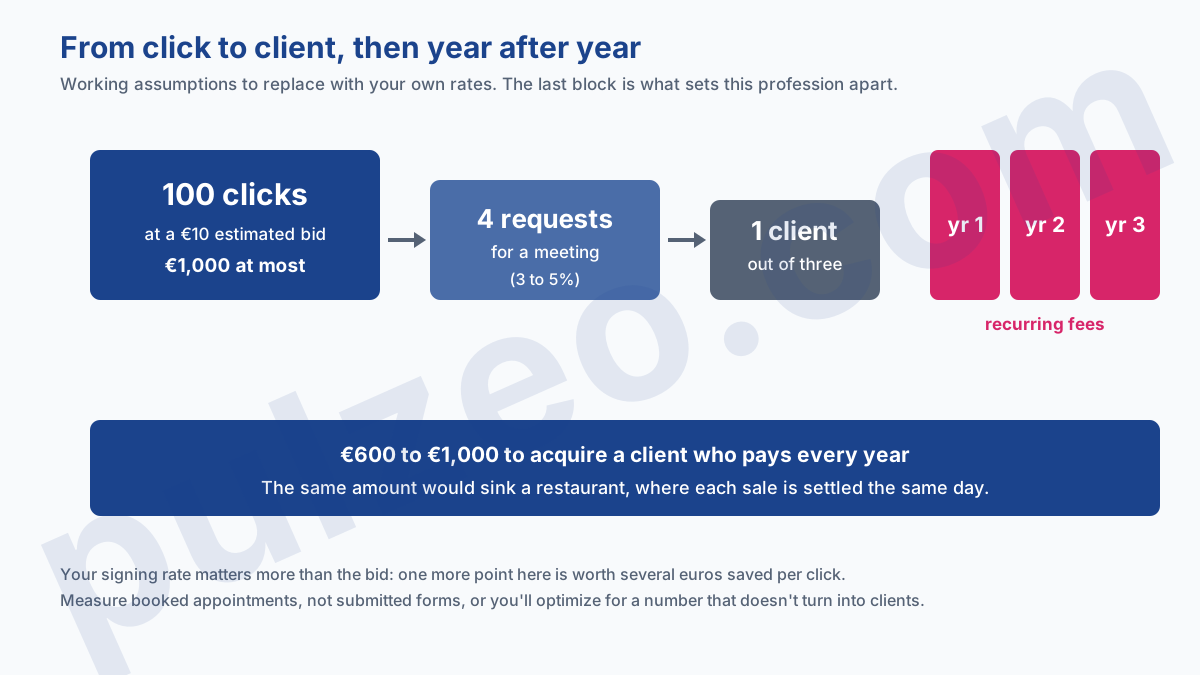
What changes when a client stays three years
Here's the difference from every other trade in this series. A restaurant owner who pays €30 to sell a single meal has lost money. A plumber who pays €150 to land a €200 repair call has made a bad deal. In both cases, the transaction happens once and the books are settled the same day.
Not so for an accounting firm. The client you sign comes back every fiscal year, with annual fees that run into the thousands of euros for a very small business, and much more as soon as the company grows. Over three fiscal years, the same client has paid three times.
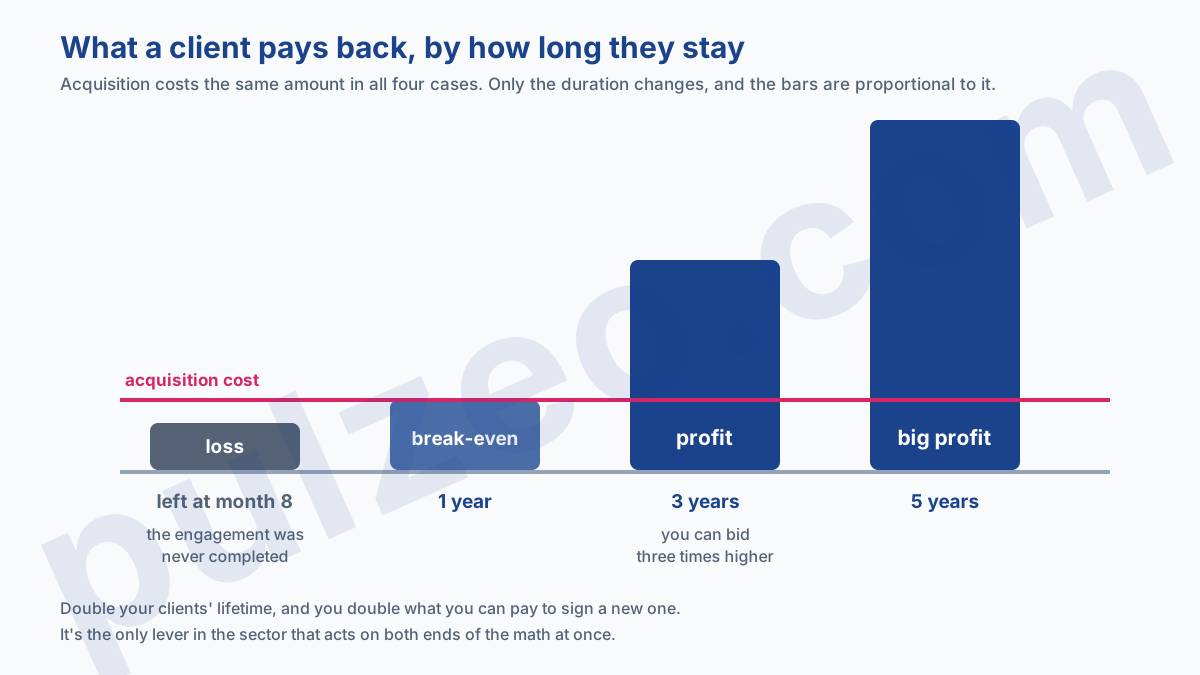
A thousand euros of acquisition cost on a client who brings in a few thousand euros a year for three years pays for itself in the first fiscal year, and earns money over the next two. That explains the level of bids in this sector: the firms paying them ran this calculation before you did.
In this profession, acquisition cost isn't measured against a sale. It's measured against what the client will pay before they leave.
This reasoning has a flip side, and that's what should be steering your campaigns.
The cost of a client who leaves too early
Take the same client, but gone after eight months. They only paid for part of a fiscal year, the engagement never ran its course, and the €1,000 of acquisition cost hasn't been paid back. The account is in the red, even though the click itself cost no more than it did the day before.
So a firm's profitability doesn't hinge on the bid amount, but on how long the client stays. Double that time, and you can double what you're willing to pay to win them. It's the only lever in this sector that works on both ends at once.
That has a direct consequence for targeting: better an expensive keyword that brings in clients who stay than a cheap one that brings in price shoppers. The keyword "cheaper accountant," whose estimated bid climbs to €31.29, is one I'd be wary of.
Can an accountant advertise in France?
Yes, and it's a misunderstanding I still run into in the profession. The French code of professional conduct for chartered accountants was reformed by the decree of August 18, 2014, and Article 152 sets the framework in four paragraphs. Translated from the French, the first one reads:
The purpose of promotional actions carried out by the persons mentioned in Article 141 is to provide the public they target with useful information.
The second paragraph covers "these promotional or solicitation actions," so both at once. It puts them under the same rules: they're carried out "with discretion, so as not to undermine the independence, dignity and honor of the profession," or professional secrecy, or loyalty toward clients and other members of the profession.
An ad triggered by a query someone types counts as promotion. Incidentally, solicitation isn't banned either: it's governed by the same conditions.
The fourth paragraph is the one that concerns you the day you write your ads, and it's the only one that can really cost you something.
These means of communication, like all others, are only permitted provided that their expression is decent and marked by restraint, that their content contains no inaccuracy and is not likely to mislead the public, and that they are free of any comparative element.
"Free of any comparative element": that rules out "best firm in the region," "cheaper than your current accountant" and any hook that positions you against a fellow accountant. It's a real constraint on writing ads, whereas most sectors lean on exactly that.
For a neighboring profession bound by similar rules, I went through the reasoning in the article on Google Ads for lawyers.
Where to start with a first budget
Three decisions are worth more than all the optimizations that follow:
- pick a specialty you've already mastered, and build the campaign around it rather than around "chartered accountant";
- exclude training, work-study and salary queries from day one: they make up a considerable share of the search landscape and will never bring in a client;
- measure booked appointments, not submitted forms, otherwise you'll optimize for a number that doesn't turn into clients.
The second point deserves a closer look. Across all the French keywords containing "comptable" (accountant) that I pulled in August 2026, job and training intent adds up to 102,580 searches a month, versus 174,660 for client intent. In other words, more than a third of the potential traffic is looking for a career, not a firm. On broad match with no negative keywords, a serious share of your budget will end up there.
It's the kind of leak that doesn't show up on a dashboard but jumps out at you in the Search terms report. Pulzeo surfaces these queries ranked by wasted spend and suggests the negative keywords to add, which saves you from combing through thousands of rows by hand.
That leaves the calculation nobody will do for you. Take your average annual fees and multiply them by the number of fiscal years your clients stay with you: that's what a client is worth over their lifetime. The threshold I apply on the accounts I take over is to spend at most a tenth of that on acquisition, which leaves room to absorb the clients who leave early and the ones who never sign.
Run this calculation with your own numbers before you decide a €10 bid is too expensive. That's often the moment the conversation changes entirely.
Common questions
Is the bid shown in Keyword Planner what I'll actually pay?
No, and the mix-up gets expensive in a forecast. Keyword Planner publishes the bid it estimates you need to aim for the top of the page, meaning an amount to bid. What you'll actually pay depends on the competition at the time and the quality of your ads, and will be lower. Across the sector's 210 keywords pulled in France in August 2026, that bid ranges from €2.13 on "accountant near me" to €75.52 on "works council accountant," with a median high bid of €8.67: treat these amounts as an upper bound.
Is an accountant allowed to advertise on Google in France?
Yes. Article 152 of the French code of professional conduct for chartered accountants has allowed promotional actions since its 2014 reform, as long as they give the public "useful information" and stay discreet, without undermining the independence or dignity of the profession. Solicitation isn't banned; it's governed by the same conditions. The constraint to know before you write an ad lies elsewhere: the fourth paragraph requires communications to be "free of any comparative element."
What Google Ads budget does an accounting firm need?
Start from the number of clients you want to sign, not from an amount. At a €10 estimated bid and with a form that converts properly, expect to spend several hundred euros to land a first qualified appointment. A budget of €400 to €600 a month is a realistic floor in an urban area, less in a quieter market.
Is it better to target "chartered accountant" or a specialty?
A specialty, almost always, when you're starting out. The generic keyword draws all the sector's competition and attracts visitors who are shopping around. A keyword like "LMNP accountant" or "e-commerce accountant" costs more per click but brings in someone whose need you already know, and you no longer have to convince them you're the right person to talk to.
